
Zero Degrees of Separation
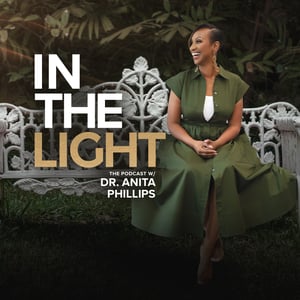
In The Light with Dr. Anita Phillips
Woman Evolve
4.8 • 1.6K Ratings
🗓️ 11 May 2020
⏱️ 29 minutes
🔗️ Recording | Apple Podcasts | RSS
🧾️ Download transcript
Summary
In this episode, Dr. Anita takes us back to the WILDERNESS for a glimpse of how she translates between theology and psychology. Turns out, mental health and illness is a contemporary conversation rooted in an ancient battle between the body and the mind. When it comes to human nature, there is nothing new under the sun and the life of Jesus is STILL breaking the shackles of shame! Any WILD WOMEN out there ready to join this conversation?
Transcript
Click on a timestamp to play from that location
| 0:00.0 | Hi, this is Dr. Anita, and we are excited over here at In The Light because it's May. |
| 0:18.9 | And May is Mental Health Month. Now technically is always Mental Health Month. Now technically is always Mental Health Month at In the Light, but I do love that our broader culture is taking this time to give it special attention. |
| 0:31.0 | I feel like we're actually doing a good job talking about |
| 0:34.0 | mental health and recognizing how critical it is to our overall well-being. Like we've |
| 0:39.5 | really elevated our self-care game, we know what's going on in our bodies, what's going on in our |
| 0:44.2 | feelings, what's going on in our thoughts, are all super important. |
| 0:48.2 | But we're not yet doing a great job talking about mental illness. One in 25 Americans lives with a serious |
| 0:56.8 | mental illness and one in five of us will experience a mental illness at some point |
| 1:02.1 | in our lives. Now the difference between |
| 1:04.7 | one in 25 and one in five is recovery. People do recover. Too often we talk about mental illness as a permanent state and that's just |
| 1:16.0 | not accurate, like it's not accurate to discuss our physical health that way. There are a number of |
| 1:22.0 | physical health conditions that you can be afflicted with and when you receive treatment, you can recover. It's not a permanent part of your life. |
| 1:30.0 | But there are other physical ailments that are chronic. |
| 1:33.3 | Othritis is an example of that. |
| 1:35.2 | There is no cure for it, but there is treatment and there are lifestyle changes that can |
| 1:39.7 | be made to allow you to still thrive with the condition. Mental illness is the same way. |
| 1:46.1 | There are some mental illnesses that are treated and then people recover and that is that part of |
| 1:51.4 | their life and it's now in the past. |
| 1:53.0 | And there are some mental illnesses that have a chronic presentation |
| 1:57.0 | but with treatment and lifestyle changes and other interventions you can still thrive. It's so important for us to |
| 2:05.5 | recognize that people do recover from mental illness. Misconceptions about |
| 2:12.0 | mental illness especially is one of the reasons that the mental health conversation must continue and at in the light that means continuing the faith and mental health conversation. |
... |
Please login to see the full transcript.
Disclaimer: The podcast and artwork embedded on this page are from Woman Evolve, and are the property of its owner and not affiliated with or endorsed by Tapesearch.
Generated transcripts are the property of Woman Evolve and are distributed freely under the Fair Use doctrine. Transcripts generated by Tapesearch are not guaranteed to be accurate.
Copyright © Tapesearch 2026.