
America's Shadow in Latin America: Venezuela, Oil, and the Return of U.S. Imperial Power
The Marianne Williamson Podcast
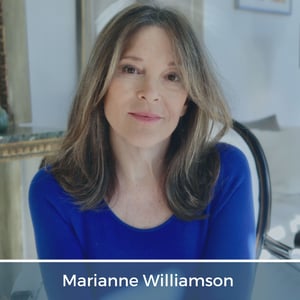
Marianne Williamson
4.8 • 1K Ratings
🗓️ 15 January 2026
⏱️ 44 minutes
🧾️ Download transcript
Summary
Why is the U.S. involved in Venezuela and what does oil have to do with it?
In this thoughtful conversation, Marianne Williamson interviews the Center for Economic Policy and Research's Alex Main about U.S. foreign policy, Venezuela's political crisis, economic sanctions, and the history of American intervention in the region.
They discuss Hugo Chavez, Nicolas Maduro, U.S. oil interests, Cold War ideology, and the growing fear among Latin American nations of renewed U.S. imperialism. This conversation provides crucial context missing from mainstream media coverage.
Center for Economic Policy and Research: CEPR.net
Subscribe to Marianne's Substack: MarianneWilliamson.Susbtack.com
Subscribe to Marianne's YouTube Channel
Follow Marianne on Instagram
Follow Marianne on Facebook
Follow Marianne on TikTok
Learn more at Marianne.com
Transcript
Click on a timestamp to play from that location
| 0:00.0 | Hi everybody, I assume that you, like me and millions of others, have a lot of questions about what's going on in Venezuela, why we did what we did, why Trump did what he did, what it all means, and historical context, and of course what we can expect going on from here. So I've asked someone who is my sort of go-to guy, someone who I always look to for answers when it comes to what's going on in Latin America to have a conversation conversation with us here today, his name is Alex Main. Alex Main is the director of International Policy at the Center for Economic and Policy Research. He monitors economic and political developments in Latin America and beyond. He regularly engages with policy makers and civil society groups. So he sort of knows the real skinny, so I asked him if he talked to us today. Here's Alex May. Alex, thank you so much for being with us. I'm really grateful. Great to be here. As I was saying to the audience, you are certainly my go-to person if I have any questions about what's happening in Latin America, I call you. But I know that I'm one of many millions of Americans |
| 1:06.5 | right now who have a lot of questions about our history |
| 1:09.5 | in Latin America, particularly as it pertains |
| 1:12.9 | to what is happening now with Venezuela. |
| 1:15.7 | And I think in order for people to have a greater |
| 1:17.8 | understanding about what's happening now, |
| 1:20.3 | we should go all the way back and do a little bit |
| 1:22.8 | of a catch-up. |
| 1:24.1 | You and I were talking before we came on about the Monroe Doctrine that people have been hearing about. That was back in 1823, you told me, right? That's right. All right. So what was the official position of the United States towards Latin America as per the Monroe Doctrine? Well, absolutely. I mean, it's the incredibly ironic thing about the Monroe doctrine is that I think it was extremely well received in Latin America originally. It was proclaimed right after a number of Latin American countries became independent, became republics. You know, they managed to secure their independence from the Spanish crown. And the US responded to this in present Monroe in particular by basically offering their support, saying we've all been in the same sort of anti-colonial struggle together. And you know, you can count on us to help keep those European powers from coming back in and trying to conquer, you know, countries of the hemisphere, trying to reconquer the lands that they used to control. And that was essentially the message of the Monroe doctrine in a nutshell, |
| 2:55.0 | that the US was not going to tolerate European intervention in the region |
| 3:00.0 | to try to reassert control in the region as it had before. |
| 3:27.6 | But over the years, this doctrine became sort of twisted to sort of make the US policeman of the region able to sort of intervene freely and using various pretexts. And we started to see heavy U.S. intervention in the region, primarily in Mexico originally, when of course, you know, the US government helped Texas secure its independence. And then, you know, annexed that land from Mexico. And then, you know, after that, there was a war with Mexico and following the war, you know, basically Mexico was weak, had a gun to its head, literally, and gave up an enormous amount of territory, a third of its territory, including all of the U.S. Southwest. And you know, basically the Monroe doctrine, you know, was used to justify all sorts of intervention in the region. For the good of the region, it was always, you know, to... Yeah, yeah, we always say that. It was always cloaked in... Yeah. Good intentions. Or not. So, most Americans, I think, have enough of an understanding of this sort of economic colonialism that has marked a lot of our relationship with Latin America, certainly over the last few decades. I remember when I was reading Doris Kern's Goodwin's book, An Unfinished Love Story, and she talked about her husband, the late Richard Goodwin, and how during a JFK's term, he had initiated something called the Alliance for Progress, which was almost like a George Marshall plan for Latin America. And then when Kennedy died, according to that book, Johnson got rid of that plan and instead went back to the, at that time, pretty covert, often CIA-related, as I said, economic colonialism by which Latin America was seen in very important ways as kind of good business opportunities, whether they liked it or not for American corporations. Is that a pretty good way to describe what the last few decades have been in terms of our relationship with Latin America? Sure. I just might not be as positive about the JFK presidency. It's true that the extent of intervention certainly grew much deeper after his demise and after LBJ took power. But, you know, we should remember that the embargo against Cuba began. Hello, right. Of course. Under JFK and the Bay of Pigs was also, you know, done as a covert action that was authorized by JFK. And, you know, he and the other leaders, I would say, of the post-World War II era went along with this Cold War logic, which was that any government that appeared to become more independent from the US in terms of its foreign policy, if it leaned too far leftward. It was very quickly branded potential communist threat, and that justified also all sorts of intervention, the support for right-wing military dictatorships in South America, And then, you know, later on during the Reagan years, you had support for these dirty wars, these sort of paramilitary actors like the Contras in Nicaragua, also death squads and El Salvador, so on and so forth, all justified, according to them, because there was a communist threat that threatened US national security. So that was sort of a constant for many decades following World War II, which followed by the way a period of, I think, very good relations between the US and Latin America under Franklin D. Roosevelt's Good Neighbor policy, which was a break with the previous policies that were very interventionist before Franklin D. Roosevelt. But that was almost a parenthesis in US history in the region. The exception rather than the rule. So obviously, if you and I were just talking over dinner, I would throw out the names of so many Latin American countries because what about this? What about Peru? What about the Levy? Or what about Brazil? However, for our purposes here today, I think Americans are pretty focused on a few countries that we've been hearing about. Number one, obviously Venezuela. People are concerned about Colombia. President Trump talking about Colombia. Petro has response. Cuba, Mexico. So I think we should come up to date a little bit, give a little bit of background, I guess, starting with Chavez. I don't know. In Venezuela, how we got to where we are, very curious, of course, the president, as we all know, is not... Democracy doesn't seem to be high on his list of reasons. In fact, not on the list at all. Apparently, for why we went into Venezuela, he says we're not going to have elections until we have time to fix things. He said only time will tell, etc. So bring us up today. Give us a little bit of a thumbnail. What has happened in Venezuela and what do you see happening now? Wow. So it's a complicated history that I'll try to summarize for your listeners. And I think you know it all started relationships kind of the relationship between the US and Venezuela really started to go off the rails when Hugo Chavez was elected president. And there were a few reasons for this. So Hugo Chavez was a military guy. You know, it didn't come across as a strong Democrat. But when he was elected, he was actually elected in the landslide. on a, you know and at the time, he's very progressive agenda. There was a new constitution that was drafted. And basically, the priority for the government internally became one of redistribution of the oil wealth to benefit lower income than as well, doing this through a number of social programs, education, healthcare, etc. externally it was to have good relations with other left-leaning governments in the region starting with Cuba and Hugo Chavez had had close relations with Fidel Castro. He made it clear that he wanted to continue to do that. And this sort of unfolded at the end of the Clinton administration, but more importantly, at the beginning of the George W. Bush administration, when you had a number of people running Latin America policy that were very, very anti-Cuba that wanted to see the overthrow of the Castro regime. And they saw Chavez through that lens. And that's when sort of a campaign of destabilization began. And that then became more intense when Chavez came out against the first chapter of Bush's war on terrorism, which began with the invasion of Afghanistan. That's something he'd announced, he'd announced the bombings that led to civilian deaths and so on. And that led to a real turn in the relations with the US. And the US ended up backing a short-lived coup against Chavez, who again had been elected democratically. He was removed from about 48 hours until there was literally a popular uprising against the coup and a sector of the military brought Chavez back back to power. And then following that, he won more elections. His presidency took place during a real oil boom globally when oil prices were very high. And this actually allowed him to follow through on a lot of commitments in terms of the social programs and so on. Now also Chavez had certainly an authoritarian streak. And I think a lot of people the wrong way because of that. And I think the US, they were able because of his his style, he had, you know, as a military guy and he had this sort of strong man style, I think they were able to sort of demonize him very quickly, even though, you know, Venezuela remained a democratic place in terms of its institutions, in terms of its elections and so on. But the the US continued to intervene very heavily, and then after Chavez died, and Maduro, who won an election after Chavez, and it was sort of appointed the successor by Chavez, when he came in, you know, the US, you know, became very involved again in sort of supporting, I would say, a sector of the opposition, and this is where Venezuela is complicated as well, because I think a lot of people are aware of Maria Cretan Machado, who won the Nobel Peace Prize recently. But I think people aren't necessarily aware of how the opposition within Venezuela is quite divided and where Maria Crita Machado actually represents the very hard line opposition and very right wing opposition that has sort of been opposed to dialogue and has wanted sort of to overthrow by any means the Chavista governments in Venezuela as well. As they've been referred, you know, ever since Chavis's death, it's referred to as a Chavista government. So she has a lot of friends in South Florida and in sort of the Republican, mostly the Republican sort of political leadership in South Florida that have sort of strongly supported her in the same way that they support, those the hardliners that oppose the government in Cuba. And over the years, there's been a hardening of US policy, and we saw it in particular under Trump in his first administration. He, I think largely due to the influence of Florida Republicans and Marco Rubio himself who was Senator at the time, he imposed sanctions against Venezuela on broad economic sanctions that began doing a lot of economic damage to the country. Okay, if I may, I'd like to go off a little bit. Sure. Okay, was it under Chavez that the American oil companies got thrown out? Or was it under Madora? So no, it was under Chavez. So, so Venezuela's experienced sort of different phases in terms of its oil industry. And it had a first phase of nationalization in the 1970s. And that's the first time that foreign oil companies were essentially given the boot. They were forced if they wanted to continue operating in Venezuela, they had to operate as minority shareholders in companies. So that happened way back in the 1970s during a period of sort of nationalism throughout the developing world and certainly in Latin America. And then you had following that a phase of a big opening of the oil sector when prices were very low, the Venezuelan government at the time in the 1990s was desperate for investment in the oil sector and basically gave a lot of foreign companies much more favorable terms and the ability to run oil operations themselves. And that was reversed under Chavez. That was sort of a period kind of referred to as the re-nationalization of the oil sector. And, you know, basically with terms similar to those that you'd seen before this opening of the 1990s, where companies had to agree to become, once again, minority shareholders. Okay. So, and you had some most US oil companies that left at that point. You had Chevron that agreed to the terms and that made a lot of money in the years that followed and other foreign companies that also agreed to the terms and stayed there. So it was a mixed bag. It was some some companies left some some stayed. So I have a couple of questions because even though we've all heard over and over again that they have more oil reserves in any place in the world, but we've also heard that Meduro ran the economy into the ground. How was the economy under Chavez? So the economy under Chavez was good and you know I think there you know certainly the commodities boom, the oil boom that the country benefited from explains some of that, but some would argue, I would argue that also the redistribution of some of the oil wealth and the investment in anti-poverty programs, millions of people were lifted out of poverty during the Chavez period, you know, something that people don't seem to remember, but you know, that is confirmed by the statistics. But there were some dysfunctions in the economy as well. We have heard over and over again about how Maduro ran the economy into the ground and how the people live in a horrible state because he's such a terrible dictator. Was was Chavez in that same vein or was there greater love and appreciation of Chavez than there is of Maduro among the people of Venezuela? Yeah, so just I think it's important to keep in mind that though the last presidential election in Venezuela had some very grave problems, the official results were never published and it does appear that Maduro lost those elections into Wundergund Solas in 2024. clear to that, he had won elections democratically. Now, was it a level playing field? A lot can be said about whether those were truly fair elections. And I think in the case of the 2018 elections, I don't think they were entirely fair. But they were largely democratic elections by sort of global standards. They were probably in the upper tier in terms of their transparency and so on. Now in terms of the economy, there were definitely problems. There was a problem with the capital controls that were in place under Chavez that led to dysfunctions, including a black market for the dollar, a parallel dollar rate that led to, you know, it sort of fed into corruption and it created inflation in the economy, high inflation. This problem was not corrected when Maduro came into power. It was still under control, I would say, when Chavez was still alive. It was definitely something that needed to be addressed, but it wasn't completely out of control. The economy hadn't gone haywire. But then in the years that followed, there were reforms that needed to take place that didn't take place essentially. And we've also heard, of course, that Maduro is absolutely cruel and a terrible dictator in relation to opposition in relation to journalists, etc. Now is your belief, because I know people are very curious about what's happening now. So is it your belief that what percentage of the reason that Donald Trump invaded and seized Maduro is because he wants to restore US oil companies to their former glory as it were in Venezuela. Do you think that oil is the primary reason he did this? So I think that became primary motivation for him. I think all of what he has done in Venezuela and what he's been doing in Latin America and his policy in the second administration is part of a new sort of imperialist policy towards Latin America. And in his national security strategy that was published |
| 20:46.7 | recently. There's a huge emphasis on the Western hemisphere of the US basically dominating by you know any means the hemisphere. And then we've seen it also in President Trump's rhetoric where he's |
| 21:06.0 | talked about seizing territory here and there and attacking other countries here and there. In a complete violation of their sovereignty and of international law and so on, none of that really seems to matter. So I think that's kind of the bigger picture. He's really seeing Latin America as his play pen and, you know, he's just willing to intervene right and left to show who's boss. So that's the general tone. In terms of Venezuela, I think that you have sectors of the administration. Again, you have sort of a South Florida Republicans that still have a lot of influence within the Republican Party that have been pushing and pushing for regime change in Venezuela. And of course, Marco Rubio, now Secretary of State and National Security Advisor, has sort of represented this sector within the administration. He's been for many years. He was largely responsible, I think, for the imposition of these broad economic sanctions on the country. And I think he's the one who pushed things in the direction that they've taken over the last few months where we saw the militarization of the Caribbean. And a lot of attacks, certain a lot of aggressive threats directed Venezuela that culminated in this attack and in the abduction of Maduro. So, immediately after the seizure of Maduro, the president on Air Force One, obviously almost giddy, this kind of adrenaline high that he was experiencing after what he considered the military, the success of the military operation. And he immediately started talking about other countries. He would talk about Colombia, would talk about Cuba, he would even talk about Mexico. And I think after what happened in Venezuela, no one doubts him anymore, whether he's talking about Greenland or any place else. When he says we might go in, I don't think anybody thinks he's just talking anymore. In your opinion, how concerned should President, let's say, Petro of Columbia B? Like you said, it's definitely an openly, it's an unabashedly imperialistic agenda. What do your sources tell you? Do you think we're going to go into Columbia? Do you think they're going to state something against Cuba? Do you think he's gonna override shine bombs, emphasis on staying away from the drug cartels? That's her business to handle. What do you think's gonna happen now? Yeah, well, I mean anything is possible now, right? And, you know, U.S. law doesn't seem to hold back Trump nor international law. And, you know, U.S. law because Congress never authorized an attack on Venezuela. It shouldn't, shouldn't have happened. It's illegal. The power to carry out war, you know, rests in Congress. That has never expected. Well, you asked the question there if I may. Forgive me for interrupting you. What would be your response to the obviously Trump supporting right wing Americans who would say, hey, wait a minute, this was a law enforcement operation due to the drug policies and so forth. Therefore, he didn't need to get congressional approval. What's your response to that? It doesn't matter if you try to present as a law enforcement operation, which is extremely dubious, by the way, but the fact that you have the military doing it, it becomes a military action from that very moment. And outside of the US jurisdiction, Venezuela is not part of the US. The US doesn't have any jurisdiction there. They can't carry out law enforcement activities without the consent of the government there. And so it's completely illegal. So let me ask you this question. There are obviously I think five senators, Republican senators who have now joined Democrats in saying that when they get back, they're going to try to block any further military action in Venezuela. How's that going and how do you see that unfolding? So yeah, I think the one thing that we can find some hope in at this time is that Congress has reacted, Democrats in particular, of course, they've introduced several war power resolutions now that would, if they passed, explicitly prohibit any further military action against Venezuela. They haven't passed yet, but they've come very close to passing. And last week, you had a new war power's resolution that was introduced, and then it went to a motion for discharge, which is the first step before it can actually go to a vote. And that actually got a majority support. So it had enough Republicans, it had four Republicans supporting it in the Senate to allow it to go forward. And of course, Trump was furious. He insulted these senators, threatened them, and so on. And in the current context, they did a very brave thing. They went against the will of the Almighty Trump. And the question is whether they're going to sort of maintain that stance going forward, which is a principled one of, we're not at war with Venezuela. We can't allow any further military action with this country. There's nothing justifying it. Okay. Now, I want to talk about this a little bit. First of all, would you say that that sort of part of the Republican, certainly senatorial, wing is led by Rand Paul, correct? It's Rand Paul who's been the most vocal in opposition to the militarization of the Caribbean and then the threats against Venezuela and then the attacks against Venezuela. He was pointing out early early, no fentanyl. Comes from Venezuela and so forth. But even that reflects a larger break within Maga, in terms of some Maga who say, if Trump wants it, we want it versus others who say we elected him to stop the foreign wars. So, this is a very real thing going on, both electrically as well as just in the general population where you've got this real break within MAGA or do you not consider that your beef? Well, we'll have to see whether MAGA really represents in any way a sort of fixed set of principles or whether it's completely pliable and just goes along with whatever Trump wants it to be, right? Because certainly in its inception under the influence of Bannon and other far-right thinkers, there was, for some of us, a silver lining to Maga, which is that there was a sort of a pro-restraint movement that was very strong within MAGA, and against needless unjustified US interventions abroad. Now Trump is reinterpreting that and saying, oh no, I'm not going to do as much further a field across the sea, but here in our hemisphere, you know, this, this is our backyard. You know, this is part of Fortress America. This, this all belongs to us somehow. And, you know, the question is how much of MAGA is going to go along with that. Certainly, there, there's been resistance. It's not just Rand Paul. You have also Thomas Massey in the House of Representatives, a Marjorie Taylor Greene who came out against it. Of course, she's leaving Congress now. It doesn't really matter in terms of congressional strength. But you've had some people that were always seen as sort of epitomizing MAGA as coming out against this. And people like Carlson. So, it's anybody's guess. I don't have a lot of intel on what's going on inside of Maga, if I'm people that are thinking. But one would hope that people would point to this enormous contradiction that we're seeing under the current Trump administration, in terms of what he said and keeping U.S. out of forever wars and not intervening without a real strong justification for self-defense. Would you say that what the Trump administration sees in terms of its role that wants to take in Latin America as analogous to the way the neo-concuring the George Bush administration saw the Middle East that we're going to just redesign this whole thing according to our will. Is that a fair analogy? Well, I sure hope not. I mean, you know, we're certainly seeing some creepy parallels with Iraq right now because it is, you know, all about oil. There's this discourse of, okay, we now control Venezuela, Trump himself, actually, it's not clear whether it's a joke or not, but putting out this sort of fake meme of him being the acting president of Venezuela now. So, you know, if all that is true, then yeah, we're in trouble. We're looking at, you know, another sort of scenario like in the Middle East. But at the moment, there are no US boots on the ground in Venezuela, and I don't know how he and others in the administration plan on, you know, implementing this new, you know, sort of tutelage of Venezuela if they don't actually have any boots on the ground. It's one thing to threaten the country, but it's another to take over its institutions and to run the whole thing. Well, apparently he sees, at the moment, Delce Rodriguez as a compliant acquiescent partner who is willing to do whatever he wants. So he's not, you know, it seems to me, Alex, that the United States is very good at destroying things, very bad at putting them back together, and also such short term thinkers. To me, there are so many analogies with Iraq. We ended up basically creating ISIS for the most part. |
| 31:05.0 | And there is just no sense that, well, we could have an insurgency here, at least one that they couldn't control. And as you said, he said he's not afraid of putting boots on the ground. It's beyond regime change. It's not even if we're going to change regime. It's we're going to put Marco Rubio in charge. Is that the kind of thing that we'd want to do in Cuba as well to sort of take over Cuba and make it ours? Well, certainly if Marco Rubio is in charge of policy, that's the way things are going. But that's not entirely clear right now. And I think there's something that's worth noting, which is that right now what Trump appears to be proposing to Venezuela, I mean, he's saying US oil companies need to come back in the Venezuela. You know, Maduro and now Delcy have been saying we want them here and the only reason that they're not in Venezuela is because of these sanctions. And you know, US oil companies have actually been telling the administration that, you know, we want to get back into the game there. There, you know, you have the biggest proven reserves of oil in Venezuela in the world. you want to be part of that action. Of course, these sanctions that have been imposed since 2017 under the first Trump administration have prevented that. If Delcy goes along with allowing U.S. oil corporations back into Venezuela, that's actually their plan. I think the bigger question is, what happens to the oil revenue? If in fact that plan moves forward, is the Trump administration gonna take over the oil revenue? Are they gonna try to siphon it off of Venezuela and then use it for their own purposes? So the question of US oil companies going in, that's not contentious at all in Venezuela. They want US oil companies there. They've been begging for US oil companies. US sanctions have prevented that from happening. But the devil is in the details here with whatever agreement that they're negotiating with Delcy. Of course, at the moment, they have an oil blockade in place. They are seizing tankers with oil from Venezuela. This could lead to an enormous economic crisis very quickly in the country if the U.S. doesn't lift this blockade. Well, that, of course, brings up Iran and Russia and China. I mean, when he sees that oil tanker the other day, it was the Russian submarine that then turned around. So a lot of this seems to have to do with limiting, particularly Chinese in the States, in Latin America, correct? But Marianne, yes, that's correct, but the reason that then as well as selling hundreds of thousands of barrels of oil to China at an extreme discount is because of US sanctions on oil. The, that as well wants to sell its oil and it has historically sold the vast majority of its oil to the U.S. because the U.S. is right nearby, low shipping costs. You have refineries in the Gulf of Mexico that are designed to receive the heavy crude from Venezuela and to refine it, that would also like to see for their own local economies see that oil come back. And it's, of course, Trump himself and his sanctions that have prevented that happening. And then Oz, all this oil will go to China instead of to the US. So given what you just said, why do you think he did this? You know, there are a lot of questions that I have with white white is Trump done X Y and Z. And I think in this case I'm not sure he really realized what he was doing when he imposed these sanctions in the first place. And I think the whole idea of the sanctions policy came principally from Marco Rubio, who's senator. That proud you were talking about before we're telling you about the teeth and Cuba. They wanted to do what they've done with Cuba, this failed embargo, which has only resulted in the suffering of millions of people and the out migration of millions of people. And we've seen the same thing now happen with Venezuela, the same failed strategy. You know, maybe I like to think, maybe he's realizing, oh, this policy didn't work and he wants to flip it on its head and present this as a new policy that he's gonna be the one to allow, you know, US oil companies to go back because he's gonna force Venezuela to take them back. Well, you know, that's a very twisted version of what's happened, but if that's what he has to say to sell this to his base, then so be it. It'll result at least in some economic relief for Venezuela. And I think down the road, it will help with, you know, resolving the political crisis in that country as well. So basically, none of us know what he's going to do now. He seems to sort of have his eye more in Greenland now. He sort of shifted his vision a little bit to a different part of the world for now. But I'm sure neither Cuba nor Mexico nor Colombia are exactly I doubt that their leaders are sleeping easy at night. Absolutely not. No, he's made threats to all those leaders. Petro in particular and Petro President Petro because President Petro has been a big antagonist. He's been very critical of U.S. policy. And I think that's why he's being targeted now. And of course, I think Petro understandably is extremely nervous after what just happened in Caracas, this illegal incursion attack, which led to, by the way, more than 100 people dying among them a number of civilians, something that doesn't get talked about very much. So war crimes on top of everything else. And so, you know, Petro wonders whether he might be next. And of course, Trump is threatened him. And Petro has done what other Latin American leaders have done, which is basically to bow to Trump. And he called him. And they had, you know, this very nice call. nice call, but basically he's doing it with a gun to his head. And yeah, it's an extremely dangerous precedent for the whole region. We could see more military attacks and even without more military attacks, they're using this one attack on Venezuela to basically, you know, blackmail all the other countries into going along with Trump's agenda, whatever it might be. You know what I'm fascinated by is the sort of characterological facet of the American people that we think imperialism is maybe okay. You know, we talk about, like you said, Latin America is our backyard. Well, we're their front yard yard And there are twice as many of them as there are of us I think a lot of people don't realize that the population of Latin America is twice the size of The United States. Well, I so appreciate you are giving us the scoop as it were in a larger larger picture Anything else first of all I have for you. Number one, if God forbid anything major outside Venezuela occurs, will you come back and give us a little elimination? Oh, yeah. And, yeah, well, God forbid, but yeah, I'll be here. God forbid. Do you have anything else that you think people should know about? Should think about at this point about what's happening and what might happen going forward. Well, I think people are maybe just discovering Ben as well and it's recent fraught history with the US. I think it would be good for everyone to do a little bit of homework, go beyond the headlines. Find out what the place was really about. It's not all black and all black and white. It's not about, you know, evil chavez, evil Maduro. There's good and bad in these leaders. And they came to be because of a certain context, a context of enormous inequality. Thank you. Not just in the region, but in Venezuela. But we contributed to. That yeah, absolutely, through economic policies that the US supported throughout the region, which led to inequality, just as we've seen in the US, but on an even greater scale. And basically that created a huge thirst for enormous change, sort of revolutionary change. It's why we saw the Cuban revolution occur and so on. And I think we need to look at the US's role in fueling these movements and how by just systematically attacking them, undermining them, trying to carry out coups and so on. If anything, you're just leading to their hardening. You're creating a state of siege within these countries. And it becomes impossible really to successfully have political dialogue. It gets completely polarized. And so I think the US, I think we all need to just look at our own history. It's not just Trump. It's, you know, long before Trump, our own history in Latin America that many, many leaders of the US have seen as our backyard where we should do what we see fit and where our US corporations should be able to do whatever they want. We need to revisit that history to understand what's happening today. It seems to me that what's so fascinating about Trump is it's sometimes it's not even that he's doing what others haven't done. It's that he admits it. He brags about things that past presidents tried to keep very cover. Oh, they won't talk about the CIA. He'll say, oh yeah, the CIA is a fault. It's like outrageous. And he says it's all about the oil, right? I mean, I've never seen that before. And, you know, so he kind of has lifted the veil a little bit on, you know, the past justifications, you know, before it was anti-communism, you know, it all sorts of pretexts have been used to try to intervened in the But you know Trump is putting it out there. It's oil. We want access to oil That's one who yeah, we probably find that attractive because he's honest Yeah One more thing a lot of us you mentioned the Cold War before but a lot of that that obsessive anti-communist cold war mentality contributed to what you were just talking about, which is the absence of space for real political dialogue. I mean, I see that in the Middle East as well. Let people, like you can go back to Iran, right? Moza-deck replacing Moza-deck once again, oil, British petroleum, the cup at the Shah, the whole thing. And the United States needs a, God knows, we're not handling our own business very effectively. We certainly should keep our nose out of other people's as well. So Alex, if people want to know more, can you think of just even one book that people should read that you think would give them a really good sort of overview of sort of an elementary understanding of what's going on in Latin America? Sure. So one recent book that I think is very insightful on, you know, the history of Latin America, but also the history of relations between the U.S. and Latin America. And why they are in the state they are in now. And, you know, what the Monroe Doctrine has really meant for Latin America. It's called America. America, in the second America is with an accent on the E, the Spanish spelling, a new history of the new world and it's by Yale professor Greg Grandad. And it's a big book, it's a big read, but you know you can lot out of it. It tells really the history of the whole region over the last few hundred years. And, you know, why we are where we are now in terms of our relations with Latin America. We'll put the link to that book, everybody down below. I think a large part of our being conscious citizens right now has to do with our |
| 43:05.6 | educating ourselves. We have just assumed certain other people, if they were our political party or whatever, they knew what they were talking about in too many cases. I think it's clear that the American people needed to weigh in a whole lot more on what we think. Latin America is no exception to that. Alex, thank you very, very much. |
| 43:27.2 | I so appreciate it. |
| 43:28.2 | I think people are welcome for information and wisdom. |
| 43:32.9 | And to me, you're the guy. |
| 43:34.7 | So thank you very, very much. |
| 43:35.9 | Keep up the good work. |
| 43:37.2 | And if you ever have stuff that you think people need to know, |
... |
Please login to see the full transcript.
Disclaimer: The podcast and artwork embedded on this page are from Marianne Williamson, and are the property of its owner and not affiliated with or endorsed by Tapesearch.
Generated transcripts are the property of Marianne Williamson and are distributed freely under the Fair Use doctrine. Transcripts generated by Tapesearch are not guaranteed to be accurate.
Copyright © Tapesearch 2026.