
Use Cognitive Simulation Therapy at Home: Three Essential Tips / Alzheimer’s and Other Dementias
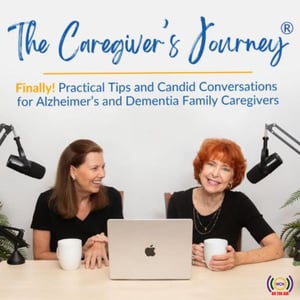
The Caregiver's Journey
Sue Ryan and Nancy Treaster
5.0 • 3.7K Ratings
🗓️ 21 April 2026
⏱️ 27 minutes
🧾️ Download transcript
Summary
"While we can't reverse aging, regular mental activity — these exercises, regular cognitive engagement — helps keep cognitive skills stronger for longer. It's like exercising your body." — Dr. Daniel Fenton
What if you could make small changes and have more intentional conversations with your loved one that actively stimulate their brain? You're not doing one more thing — you're simply being more deliberate about conversations you're already having and sneaking in more benefits along the way.
We are Sue Ryan and Nancy Treaster. As caregivers for our loved ones with Alzheimer's and other types of dementia, we understand how meaningful it is to find ways to help our loved ones function at their best for longer. We're sharing insights about cognitive stimulation therapy (CST) from Dr. Daniel Fenton, head of neuropsychological services at New Days, a virtual clinic specializing in care for people with mild cognitive impairment and early-stage dementia.
Let's explore three essential tips for bringing cognitive stimulation therapy into your everyday conversations at home.
Connect with us and share your tips:
- Website: https://thecaregiversjourney.org/
- Donate: https://give.cornerstone.cc/thecaregiversjourney
- Instagram: https://www.instagram.com/thecaregiversjourney/
- Facebook: https://www.facebook.com/thecaregiversjourneys/
- Linkedin: https://www.linkedin.com/in/suearmstrongryan/, https://www.linkedin.com/in/nancytreaster/
- Email: sue@thecaregiversjourney.org, nancy@thecaregiversjourney.org
Full Show Notes
Additional Resources Mentioned
- Support the nonprofit The Caregiver's Journey: https://give.cornerstone.cc/thecaregiversjourney
- https://www.newdays.ai/
- The Caregiver’s Journey Navigating Dementia Caregiving Roadmap: https://roadmap.thecaregiversjourney.org/ Available as an interactive page on our website that walks you through the three stages of your dementia family caregiver journey. Includes the option to download the guide for free.
Takeaways
We shared 3 tips:
Tip 1: Create A Simple Structure
Tip 2: Leverage These Types Of Activities
Tip 3: Don’t Forget To Wrap Up And Reflect
Read More in This Blog
https://thecaregiversjourney.org/60-three-tips-for-using-cognitive-stimulation-therapy-at-home/
Transcript
Click on a timestamp to play from that location
| 0:00.0 | This is the Whole Care Network, helping you tell your story one podcast at a time. |
| 0:16.0 | Content presented in the following podcast is for information purposes only. |
| 0:22.7 | Views and opinions expressed in this podcast are solely those of the host and guests |
| 0:28.1 | and may not represent the views and opinions of the Whole Care Network. |
| 0:33.2 | Always consult with your physician for any medical advice. |
| 0:36.8 | And always consult with your attorney for any legal advice. And always consult with your attorney for any legal advice. |
| 0:40.5 | And thank you for listening to the Whole Care Network. |
| 0:53.0 | What if you could make small changes and intentionally have conversations with your loved one that |
| 0:59.5 | stimulates their brain? In this episode, Sue and our talking with Dr. Daniel Fenton, head of |
| 1:06.3 | neuropsychological services at New Days about how we can structure conversations we have with our |
| 1:12.4 | loved one to keep their brains active, socially engaged, and mentally challenged. |
| 1:18.7 | We're sharing three tips. |
| 1:22.1 | Welcome. We're Sue Ryan and Nancy Treister. This podcast brings our years of experience in a variety of family caregiving roles to prepare |
| 1:30.5 | you to navigate your caregiving journey. |
| 1:33.2 | We're sharing our personal experiences, not medical advice, and because it's our passion |
| 1:38.7 | to support you on your journey, we believe no topic is off limits. |
| 1:43.3 | Let's get started. Welcome, Daniel. We're excited to bring |
| 1:51.1 | the concept of cognitive stimulation therapy through structured conversations to our listeners. |
| 1:57.9 | While we know they don't reverse dementia, they do help people function at their |
| 2:04.0 | best for longer. Today, we're discussing how to use conversations on fun and engaging topics |
| 2:11.7 | to keep the brain alive, socially engaged, and mentally challenged. |
| 2:23.9 | It's a way we can maximize the time we're already investing in our care receiver. |
... |
Please login to see the full transcript.
Disclaimer: The podcast and artwork embedded on this page are from Sue Ryan and Nancy Treaster, and are the property of its owner and not affiliated with or endorsed by Tapesearch.
Generated transcripts are the property of Sue Ryan and Nancy Treaster and are distributed freely under the Fair Use doctrine. Transcripts generated by Tapesearch are not guaranteed to be accurate.
Copyright © Tapesearch 2026.