
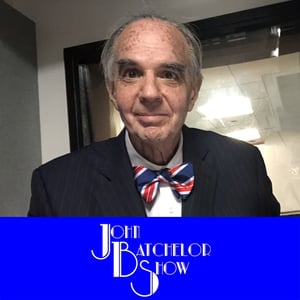
S8 Ep632: SHOW SCHEDULE THE JOHN BATCHELOR SHOW, MONDAY 3-23-2026 1572 HORMUZ CASTLE BUILT IN 1507 BY PORTUGESE MERCHANTS.
The John Batchelor Show
John Batchelor
4.5 • 2.8K Ratings
🗓️ 24 March 2026
⏱️ 10 minutes
🧾️ Download transcript
Summary
SHOW SCHEDULE THE JOHN BATCHELOR SHOW, MONDAY 3-23-2026.
1572 HORMUZ CASTLE BUILT IN 1507 BY PORTUGESE MERCHANTS.
1. Husain Haqqani and Bill Roggio Haqqani and Roggio analyze President Trump’s claims regarding Iranian talks and potential strikes on energy infrastructure. They highlight a lack of policy clarity and the risks associated with ground troop deployment or amphibious assaults. (1)
2. Husain Haqqani and Bill Roggio Haqqani describes the surprising resolve of Gulf States while noting Europe’s refusal to join the US war effort. Roggio expresses concern over the lack of post-war planning and the survival of the regime. (2)
3. David Daoud and Bill Roggio Daoud and Roggio discuss Israel’s offensive against Hezbollah in Lebanon. Daoud notes the Lebanese government's inaction and the IRGC’s advisory presence within Beirut's command structures, predicting a new security buffer zone will be established. (3)
4. David Daoud and Bill Roggio Daoud evaluates the threat from Hezbollah’s drone swarms, which penetrate Israeli defenses. He notes the Lebanon campaign may continue independently of any ceasefire negotiated with Iran because the conflicts are on separate strategic tracks. (4)
5. Malcolm Hoenlein and Thaddius Marter Hoenlein and Marter discuss the war's impact on Israeli tourism and missile strikes near the Dimona nuclear facility. Hoenlein emphasizes Iran's goal of controlling the Strait of Hormuz to dominate global energy markets. (5)
6. Malcolm Hoenlein and Thaddius Marter Discussion covers Iranian strikes on Jordan and the rise of anti-Semitic attacks in Europe. Hoenlein reports that Gulf nations are privately urging Israel to finish the job and eliminate the Iranian regime. (6)
7. Ernesto Araujo and Alejandro Peña Esclusa Guests discuss potential transitions in Cuba and Venezuela, highlighting Marco Rubio’s role. Peña Esclusa details the departure of Cuban operatives from Venezuela as Maduro’s grip on power weakens following his capture. (7)
8. Ernesto Araujo and Alejandro Peña Esclusa Araujo analyzes the Brazilian presidential race, noting Lula’s alignment with totalitarians in Iran. Flavio Bolsonaro campaigns on a Western alliance against organized crime and regional terror networks instead of domestic economic issues. (8)
9. Jonathan Sayeh and Bill Roggio Sayeh and Roggio report that the Iranian regime is embedding military launchers in residential neighborhoods. Sayeh stresses that Iranians want the regime removed and view the current intervention as a necessary humanitarian effort. (9)
10. Jonathan Sayeh and Bill Roggio Sayeh and Roggio discuss the diverse ethnic composition of Iran and the celebratory mood following regime officials’ deaths. Sayeh anticipates uprisings once major bombing campaigns transition to localized waves of protest. (10)
11. Edmund Fitton-Brown and Bill Roggio Fitton-Brown and Roggio dismiss Pakistan as a mediator, arguing US and Iranian positions are light years apart. Fitton-Brown warns the Strait of Hormuz remains a flashpoint if the regime survives the war. (11)
12. Edmund Fitton-Brown and Bill Roggio The guests explore European support for the US following Iran’s domestic crackdown. Fitton-Brown argues that Iranian missile strikes on Diego Garcia have driven Western allies together against potential nuclear and ballistic missile threats. (12)
13. John Hardy and Bill Roggio Hardy discusses Russia’s rejected offer to trade support for Iran for a cessation of aid to Ukraine. He analyzes the failing Russian spring offensive and Ukraine’s deployment of drone experts to the Gulf. (13)
14. Ahmad Sharawi and Bill Roggio Sharawi reports on Syrian forces' hostility toward Hezbollah and the imposition of Sharia law. He highlights Jordan’s vulnerability to Iranian strikes aimed at regional destabilization through its "ring of fire" strategy. (14)
15. Gordon Chang and Charles Ortell Ortell describes economic paralysis caused by 3,400 ships trapped in the Persian Gulf. Chang reports that Trump-Xi summits have been postponed as deglobalization processes accelerate and China’s economic hand weakens. (15)
16. Gordon Chang and Mark Simon Simon updates Jimmy Lai’s deteriorating health in prison, advocating for humanitarian parole. He argues Beijing gains nothing from his incarceration, as Lai has become the world's most significant human rights martyr. (16)They highlight a lack of policy clarity and the risks associated with ground troop deployment or amphibious assaults. (1)
2. Husain Haqqani and Bill Roggio Haqqani describes the surprising resolve of Gulf States while noting Europe’s refusal to join the US war effort. Roggio expresses concern over the lack of post-war planning and the survival of the regime. (2)
3. David Daoud and Bill Roggio Daoud and Roggio discuss Israel’s offensive against Hezbollah in Lebanon. Daoud notes the Lebanese government's inaction and the IRGC’s advisory presence within Beirut's command structures, predicting a new security buffer zone will be established. (3)
4. David Daoud and Bill Roggio Daoud evaluates the threat from Hezbollah’s drone swarms, which penetrate Israeli defenses. He notes the Lebanon campaign may continue independently of any ceasefire negotiated with Iran because the conflicts are on separate strategic tracks. (4)
5. Malcolm Hoenlein and Thaddius Marter Hoenlein and Marter discuss the war's impact on Israeli tourism and missile strikes near the Dimona nuclear facility. Hoenlein emphasizes Iran's goal of controlling the Strait of Hormuz to dominate global energy markets. (5)
6. Malcolm Hoenlein and Thaddius Marter Discussion covers Iranian strikes on Jordan and the rise of anti-Semitic attacks in Europe. Hoenlein reports that Gulf nations are privately urging Israel to finish the job and eliminate the Iranian regime. (6)
7. Ernesto Araujo and Alejandro Peña Esclusa Guests discuss potential transitions in Cuba and Venezuela, highlighting Marco Rubio’s role. Peña Esclusa details the departure of Cuban operatives from Venezuela as Maduro’s grip on power weakens following his capture. (7)
8. Ernesto Araujo and Alejandro Peña Esclusa Araujo analyzes the Brazilian presidential race, noting Lula’s alignment with totalitarians in Iran. Flavio Bolsonaro campaigns on a Western alliance against organized crime and regional terror networks instead of domestic economic issues. (8)
9. Jonathan Sayeh and Bill Roggio Sayeh and Roggio report that the Iranian regime is embedding military launchers in residential neighborhoods. Sayeh stresses that Iranians want the regime removed and view the current intervention as a necessary humanitarian effort. (9)
10. Jonathan Sayeh and Bill Roggio Sayeh and Roggio discuss the diverse ethnic composition of Iran and the celebratory mood following regime officials’ deaths. Sayeh anticipates uprisings once major bombing campaigns transition to localized waves of protest. (10)
11. Edmund Fitton-Brown and Bill Roggio Fitton-Brown and Roggio dismiss Pakistan as a mediator, arguing US and Iranian positions are light years apart. Fitton-Brown warns the Strait of Hormuz remains a flashpoint if the regime survives the war. (11)
12. Edmund Fitton-Brown and Bill Roggio The guests explore European support for the US following Iran’s domestic crackdown. Fitton-Brown argues that Iranian missile strikes on Diego Garcia have driven Western allies together against potential nuclear and ballistic missile threats. (12)
13. John Hardy and Bill Roggio Hardy discusses Russia’s rejected offer to trade support for Iran for a cessation of aid to Ukraine. He analyzes the failing Russian spring offensive and Ukraine’s deployment of drone experts to the Gulf. (13)
14. Ahmad Sharawi and Bill Roggio Sharawi reports on Syrian forces' hostility toward Hezbollah and the imposition of Sharia law. He highlights Jordan’s vulnerability to Iranian strikes aimed at regional destabilization through its "ring of fire" strategy. (14)
15. Gordon Chang and Charles Ortell Ortell describes economic paralysis caused by 3,400 ships trapped in the Persian Gulf. Chang reports that Trump-Xi summits have been postponed as deglobalization processes accelerate and China’s economic hand weakens. (15)
16. Gordon Chang and Mark Simon Simon updates Jimmy Lai’s deteriorating health in prison, advocating for humanitarian parole. He argues Beijing gains nothing from his incarceration, as Lai has become the world's most significant human rights martyr. (16)
Transcript
Click on a timestamp to play from that location
| 0:00.0 | Good evening. The day was a display of how Donald Trump, the man who is controlling the U.S. military and therefore the war in Iran, |
| 0:09.7 | keys off the markets. The statements over the weekend, you have 48 hours, |
| 0:16.3 | alarmed the markets because of the uncertainty, not because of the violence. There's been plenty of violence. There'll be more. However, right before the opening in New York, well into the |
| 0:27.8 | trading day in Europe, Donald Trump put out one or more tweets I can't remember now on social |
| 0:35.7 | media, calling off the ultimatum of 48 hours, extending it to five days. |
| 0:43.4 | In other words, the key on the market was before it opened in New York with a thud as it had been trading in Europe and Asia. |
| 0:52.5 | Donald Trump gave it a reason to reverse course. |
| 0:55.6 | It was up a little bit. |
| 0:58.1 | Wasn't down. |
| 0:59.5 | And then said five days more, which is the trading day in New York. |
| 1:08.1 | Keying off the markets, something for some time I've read speculation about how Trump obeys the markets. |
| 1:17.1 | When the markets say this is a wrong direction, he backs off. They call it the taco trade that Trump always chickens out. |
| 1:25.1 | In fact, he goes the direction the market wants him to, after experimenting, |
| 1:31.4 | or perhaps just having fun. Can't tell. Uncertainty remains, and the markets are not happy with it. |
| 1:39.7 | There was an oddity that I'll explore tomorrow, I believe, with my guess. Fifteen minutes or so before |
| 1:47.6 | the tweet that said I was calling off the ultimatum from Donald Trump, you have five days, that sort of |
| 1:54.3 | thing. It was a heavy trading in oil futures. More than $500 million worth changed hands. Will it be investigated? I don't know. |
| 2:07.0 | The Financial Times reported it. Maybe there'll be more. There's more to learn about it. |
| 2:12.4 | The commentary from traders was, this is unusual. It's a heavy amount of trading. And somebody made some |
| 2:21.6 | money. Who can they find out? Well, it says in the notes they can. I'll watch for it. The day was also |
| 2:31.9 | dominated by the story of the humanitarian crisis in the Gulf. |
| 2:37.7 | There are 3,400 ships out there, more probably now. |
... |
Please login to see the full transcript.
Disclaimer: The podcast and artwork embedded on this page are from John Batchelor, and are the property of its owner and not affiliated with or endorsed by Tapesearch.
Generated transcripts are the property of John Batchelor and are distributed freely under the Fair Use doctrine. Transcripts generated by Tapesearch are not guaranteed to be accurate.
Copyright © Tapesearch 2026.