

PTSF 32 (with Will Hall)
Psychedelics Today
Psychedelics Today, LLC
4.6 • 598 Ratings
🗓️ 6 November 2020
⏱️ 93 minutes
🧾️ Download transcript
Summary
In today's Solidarity Fridays episode, Joe and Kyle continue their conversation from last week with Will Hall: therapist, host of the Madness Radio podcast, author of Outside Mental Health: Voices and Visions of Madness, and previous psychiatric patient diagnosed with schizophrenia.
This week, Hall compares how the medical industry treats those seeking therapy and growth vs. how they treat the homeless and victims of sexual abuse, how the framework for mental disorders disrespects the individual, neoliberalism and why capitalism and the free market shouldn't be the answer for everything, Grof's focus on etiology and why his model of spiritual emergence is problematic, the future of psychedelic advertising in a world where anything that can be sold will be sold, and the 3 biggest factors towards successful therapy.
And he focuses a lot on what we should be doing: creating and promoting individualized medicines and healing techniques over mass-produced Band-aid medicine, not reducing a difficult psychedelic experience to biology and instead focusing on getting to the root of what is causing the issue and working through it, not solely researching the effects of drugs, and most importantly, researching how people have bettered themselves without drugs- if the long-lasting effects of psychedelics and integration work are the catalyst for change, how can we get to those effects and integrations without the drug?
Notable Quotes
"Drugs are drugs. I don't believe in psychedelic exceptionalism. I don't believe in psychiatric drug exceptionalism. Drugs are drugs. There's no exceptionalism for drugs. If they change your consciousness, they're getting you high in one way or another, and that is what is either beneficial or nonbeneficial to you, based on your experience."
"The people who are having successful treatment with MDMA psychotherapy- they aren't just reporting 'oh, my depression is down;' they're reporting all these wonderful benefits of MDMA. Why should we wait until you have a diagnosis of PTSD to give access to MDMA [to someone] if they want to experience those benefits as well? The people who are having the experiences of psychedelics are not having the experiences of disease-treatment, they're having the experiences of psychedelics, which can be, for many people, very positive. So why are we gate-keeping the access? And if we don't gate-keep the access, then we have to admit that, actually, it's not a disease treatment; it's actually something that many people find beneficial and some people don't."
"What is the commitment? Is the commitment to get psychedelic drugs accessible at all costs? And we're going to lie, cheat, and steal our way to get there? Or is the commitment to trust that truth is the way? And if we just stick with the truth, that is how we change society?"
"I think you're onto it. I mean, this is the key thing- psychedelics, in the best of contexts, is the pathway towards that. So why not study that? Why not research that? Why not invest the resources to exploring how we can create contexts for that which you've just described- create more spaces in society for successful encounters and engagements with openness, deeper relatedness, developing more trust, learning to communicate better, learning to form better community bonds, learning to develop our loyalties for each other, overcome our traumas together, tell our stories, overcome our shame, find ways that we can accept each other and support each other? That's what we should be researching. That's what we should be investigating, not psychedelic treatments that might have the effect of this, because this is what we're really after."
Links
Outsidementalhealth.com (info on his book, Outside Mental Health: Voices and Visions of Madness)
The Heart and Soul of Change Project
Dreamshadow.com: Holotropic Breathwork, Personal Development, and Transpersonal Education
About Will Hall
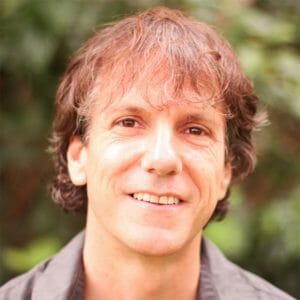
Will is a counselor and facilitator working with individuals, couples, families and groups via phone and web video (Zoom). He has taught and consulted on mental health, trauma, psychosis, medications, domestic violence, conflict resolution, and organizational development in more than 30 countries, and has been widely featured in the media for his advocacy efforts around mental health care. His work and learning arose from his experiences of recovery from madness, and today he is passionate about new visions of mind and what it means to be human.

Support the show
- Patreon
- Leave us a review on Facebook or iTunes
- Share us with your friends
- Join our Facebook group - Psychedelics Today group – Find the others and create community.
Navigating Psychedelics
Transcript
Click on a timestamp to play from that location
| 0:00.0 | Hello, everybody. |
| 0:11.0 | Welcome back to psychedelics today, Solidarity Fridays. |
| 0:15.0 | We were joined again by Will Hall. |
| 0:17.2 | How are you doing well? |
| 0:18.4 | Good to be back. |
| 0:20.2 | Yeah. |
| 0:24.0 | It's been only a few minutes, but a week for everybody else. So I'm excited to continue this conversation because there's some really interesting |
| 0:29.6 | points that you've raised. One, so I really want to come back to this medicalization thing. |
| 0:40.1 | And, you know, I don't know that we've really challenged the paradigm here enough for people to kind of understand where we're going. |
| 0:46.3 | So everybody's saying like, okay, cool. Like, I can go, I can go to the doctor. I pay them money. |
| 0:51.4 | I get whatever I need over there. And that's how doctors work. |
| 0:55.2 | In a lot of ways, that's how therapy works too. You make a phone call. Hopefully your insurance |
| 0:59.7 | covers it. Mine doesn't, because I don't have any. But I would love it if it did. And then you go |
| 1:05.5 | get some service and for whatever your indication is. Like, I hope, do either of you know offhand if people need a prescription to get therapy with some |
| 1:15.5 | prescriptions or insurance packages or is it always included in their insurance? |
| 1:20.5 | Usually your first session is an assessment. |
| 1:23.2 | And then the first session, the therapist has to report to the insurance company, what your |
| 1:27.3 | diagnosis is and what the treatment is. |
| 1:30.8 | Okay. |
| 1:31.3 | So people might only get like four to five sessions a year, if that on their insurance, |
| 1:37.3 | which is pretty wild to consider. |
| 1:39.4 | And that's kind of the system, this kind of garbage that we're dealing with now. |
... |
Please login to see the full transcript.
Disclaimer: The podcast and artwork embedded on this page are from Psychedelics Today, LLC, and are the property of its owner and not affiliated with or endorsed by Tapesearch.
Generated transcripts are the property of Psychedelics Today, LLC and are distributed freely under the Fair Use doctrine. Transcripts generated by Tapesearch are not guaranteed to be accurate.
Copyright © Tapesearch 2026.