

PT217 - Erika Dyck - Canadian Psychedelic History
Psychedelics Today
Psychedelics Today, LLC
4.6 • 598 Ratings
🗓️ 10 November 2020
⏱️ 73 minutes
🧾️ Download transcript
Summary
In this episode, Joe interviews Ph.D., Professor at the University of Saskatchewan, and author specializing in the history of psychedelics and their relation to the medical industry, Erika Dyck.
Dyck talks about her interest in Canadian history and specifically Saskatchewan, which was the first jurisdiction in North America to elect a socialist government. She talks about how it was clear in the early days of governmental support that they were reaching out to people with bold ideas, leading to Humphry Osmand coming there in 1951 to commence research that he felt was being stifled in London.
They talk extensively about the work of Osmand and Abram Hoffer, early experiments with giving staff in mental hospitals LSD to encourage empathy toward patients, a hospital architect taking LSD and learning that tiled, checkerboard-esque floors may be a challenge to patients with depth perception issues, a "Hollywood hospital" where wealthy film stars were flown to deal with addiction largely in secret, the concept of having patients write out an autobiography before a medicine session in order to reflect back on their life afterward, Osmond's participation in a peyote ceremony and his subsequent report, why the Timothy Leary model of dropping out of the scientific/academic world isn't helpful, why time passed and changed public opinion have led to old research coming to light, and why it's more important to talk to people who aren't sold on psychedelics yet instead of those who are already bought in and live in our psychedelic bubble.
Notable Quotes
"Even people like Humphry Osmond or Abram Hoffer who were on the frontlines of that psychedelic heyday in the 1950s- they were quite careful (and obviously they were sort of practiced at this), but they were quite careful about how I might characterize their work with psychedelics, and they insisted that what they were doing was not unethical, they did not have money from the C.I.A., they had lots of checks and balances, and they were clearly responding to that very heavy reputation and characterization of psychedelics. And I reflect on that every once in a while, and wonder, 'what would they would say today?'"
On Osmond and peyote: "It was the question of whether or not these chemicals and these rituals using chemicals should be allowed more broadly. And I think that the federal government in Canada was thinking that, again, this white-coated British guy would walk in and behave like the colonialist that they expected him to be, and come out and say 'these are rotten ceremonies,' but that was absolutely not who Humphry Osmond was. He participated fully. He chewed the buttons, he threw up, he participated in the feast afterwards, he participated in the drumming circle. ...So Osmond then made a statement (and he's published about this in a variety of different places) saying this was an absolutely beautiful ceremony, it was absolutely sacred, it should be protected, it should be promoted, [and] people should be given access to peyote so that they continue this sacred ceremony. And the Canadian government was not impressed with this reaction."
"Our governments are addicted to the war on drugs."
"I think that part of what the psychedelic world needs to do, in my humble opinion, is to reach out and seek these kinds of bridges and these alliances, because I think that there's a risk that we can just convince ourselves that psychedelics are good and that it won't actually break through the psychedelic bubble, if you will, to convince regulators that in fact, there is real merit here. There's still a sense that-- even just saying LSD- I gave a presentation last week to a group of retired physicians and these are people with medical training and who've spent their careers doing medical education and medical work, clinical work. And they're like 'oh, but LSD, that's the one that fries your brain, right?' I mean, these were disproven studies in the 70s, and yet it's very interesting that that characterization is so strong."
Links
Chacruna.net: Women in psychedelics
Mescaline: A Global History of the First Psychedelic, by Mike Jay
About Erika Dyck
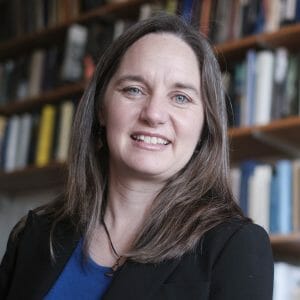
Erika Dyck is a professor and Canada Research Chair in the Department of History at the University of Saskatchewan. Her work focuses on 20th century medical history, especially the history of psychedelics, psychiatry, eugenics and population control. Her books include Psychedelic Psychiatry: LSD from Clinic to Campus (2008); Facing Eugenics: Reproduction, Sterilization, and the Politics of Choice (2013); Managing Madness: Weyburn Mental Hospital and the Transformation of Psychiatric Care in Canada(2017); and she is editor of A Culture's Catalyst: Historical Encounters with Peyote and the Native American Church in Canada (2016) and co-editor of Psychedelic Prophets: The Letters of Aldous Huxley and Humphry Osmond (2018). She is a guest editor at the Chacruna Institute for Psychedelic Plant Medicines. You can email her at Erika.dyck@usask.ca.

Support the show
- Patreon
- Leave us a review on Facebook or iTunes
- Share us with your friends
- Join our Facebook group - Psychedelics Today group – Find the others and create community.
Navigating Psychedelics
Transcript
Click on a timestamp to play from that location
| 0:00.0 | Hello, everybody. Welcome back to psychedelics today. This is Joe Moore. And today we have a really interesting guest. |
| 0:21.9 | I'm happy she agreed to come on. |
| 0:24.9 | It's a long time coming because I'm a big fan of history. |
| 0:28.5 | And I think it's important for us to understand where psychedelics came from |
| 0:34.8 | and might help us shape where we want them to go. |
| 0:39.5 | So here's a little bit of a background on Erica Dick, PhD and historian, medical historian. |
| 0:46.6 | And so Eric Dick grew up in Saskatoon and started a BA in history at the University of Saskatchewan before transferring to Dalhuis, |
| 0:57.4 | probably murdered that word, to complete her degree in history, she returned to Saskatchewan |
| 1:02.4 | and completed a master's with Valerie Kornick in 2000. After a year working at a law firm in Toronto, she began her PhD in History |
| 1:13.1 | of Medicine at McMaster University. Her dissertation has now been published as a book, a book |
| 1:19.4 | titled Psychedelic Psychiatry, LSD from Clinic to Campus, published by John Hopkins |
| 1:25.9 | University Press in 2008, and republished by the University of |
| 1:30.7 | Manitoba Press in 2011. Her 2013 book Facing Eugenics was shortlisted for the Canada Prize |
| 1:38.0 | in Social Sciences for the John A. McDonald Prize from 2005 to 2008. Erica was the co-director of the History of Medicine |
| 1:47.7 | Program at the University of Alberta, where she was cross-appointed to the Departments of History |
| 1:54.1 | and Classics and the Faculty of Medicine and Dentistry. In Alberta, she taught history |
| 2:00.6 | courses for medical students as well as history |
| 2:03.7 | of medicine courses for undergraduate and graduate students in the Faculty of Arts, with particular |
| 2:10.4 | emphasis on the history of psychiatry and mental health. At the University of Saskatchewan, |
| 2:15.9 | Erica teaches courses in the history of medicine, madness, and methodology. |
| 2:20.0 | She is particularly interested in making history inclusive and learning about people who have been written about but rarely listen to. |
| 2:28.1 | Some of the community engage in collaborations have created spaces for these discussions. |
... |
Please login to see the full transcript.
Disclaimer: The podcast and artwork embedded on this page are from Psychedelics Today, LLC, and are the property of its owner and not affiliated with or endorsed by Tapesearch.
Generated transcripts are the property of Psychedelics Today, LLC and are distributed freely under the Fair Use doctrine. Transcripts generated by Tapesearch are not guaranteed to be accurate.
Copyright © Tapesearch 2026.