
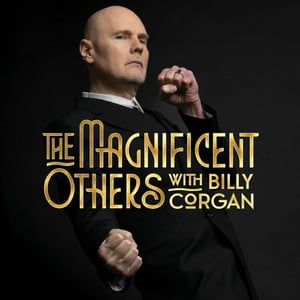
Penn Jillette | The Magnificent Others with Billy Corgan
The Magnificent Others with Billy Corgan
Billy Corgan
4.6 • 731 Ratings
🗓️ 14 January 2026
⏱️ 101 minutes
🧾️ Download transcript
Summary
Billy Corgan sits down with Penn Jillette for a sprawling, razor-sharp conversation that moves from magic to morality. What begins as a discussion about deception quickly becomes something deeper: why consent turns lying into art, and why Penn proudly calls himself an “honest liar.” Penn traces his path from a strict Christian upbringing to agnosticism and atheism, shaped by mentors like James Randi, a teenage crisis of faith in science, and a romantic (and very real) stint as a street performer inspired by Bob Dylan. Along the way: clown college, illegal busking, Vegas stages, and a 50-year creative partnership with Teller performing magic without disrespecting the audience.
Learn more about your ad choices. Visit podcastchoices.com/adchoices
See Privacy Policy at https://art19.com/privacy and California Privacy Notice at https://art19.com/privacy#do-not-sell-my-info.
Transcript
Click on a timestamp to play from that location
| 0:00.0 | When you go to the pen and tell the theater, we tell you we're gonna lie to you. We tell you we're gonna break out of that morality and you are okay with that. What is it about the human ego that will say no, I'm gonna override a sense that says no I should trust this person. You don't get into magic because you like fooling. You get into magic because you're like being fooled. We're going deep here, I love it. And all life, one of the most enjoyable experiences is the all. Um, clown challenge. Ha ha ha ha ha ha. Big leap there. I'm sorry, gotta run. Pendulate, thank you very much for being on my magic show. Thank you for having me. Usually when I talk to someone of your accomplishment, it's a bit of a life review. I kind of like to do my own take on people's lives. But it didn't feel apropos with you for this reason. Not that you don't deserve a life review, you certainly do. But I thought, here's a rare chance to talk with a very unique person, with a very unique mind. So I would call it, like, let's call it the softball interview where I want to kind of throw you some softball. Oh, good. And we'll just go wherever we want to go. So not a lot of mathematics then. No, sir. Most easy stuff. Okay. Here, James Randi, oh sure. |
| 1:28.8 | He doesn't really call... What would you call me? I know he does magic, but he's more of a rank contour. He was, you know, he was a very good and very successful magician. And he had done some... It's kind of a beautiful cinematic story like like Kudini, like many people. And I mean, not at the same level, but also, also we kind of tell her did some stuff like that. He was doing things that pretend to be supernatural. And was it like a fake mysticism and then you then you would reveal the con or something? No, no, no, no, he was doing it for reals. Okay, I'll tell you what, when he was like 19. Okay, and that thing, if you are a good person, it immediately breaks your heart and crushes yourself. Oh, I see. When you see how vulnerable people are, and how scared they are, and how lonely they are, and that you can just control them and steal from them. It's an amazing feeling. Now, it's even more amazing that some people don't recoil from that, but jump into it and continue doing it. People that do fall, fake psychic stuff. But it built up a rage as to one kind of word. But it built up an anger for people who take advantage of other people. Okay. So Randy, like O'Dinney, went from being a very skilled and successful magician, Randy nod at the level of O'Denney, but still very good, to being a kind of crusader or scientist in terms of... Okay. I mean, one of the quick things you should call would be Ghostbuster, but that, you know, sure. Not in the sense of the TV show, but just saying, there seems to be nothing supernatural, you know, that was kind of Randy's point. So his opinion there was no supernatural? Yeah, and the thing is that he searched for it so conscientiously, you know, that's the thing that when people deal with skeptics, they often talk about being closed-minded, not being open to faith. And the truth seems to me to be quite the opposite. The people that I've known that have worked hard on skepticism have been the ones that most investigate. And you end up being, you know, in I'd been a, I was a follower of James Randini, he was a mentor and a hero and a very good friend of mine from the time I was 18. And all that time I just saw him searching out every single chance. There was something so natural and finding out there was nothing, which is also a daily, who did the same story. Yeah. There was this quote attached to him, but I don't know if it was just more of a descriptor clever deception over mysticism. Yeah. Yeah. I don't know of that quote. Sure. But I just thought it was interesting because it's because in looking you up and trying to do something to kind of approach this interview from a slightly different. What Randy would call himself was an honest liar. And what's fascinating about mad... I feel like I'm an honest liar. What's fascinating to me about me is you take something that is deeply and profoundly immoral in every culture, which is lying to people of your own tribe, and you put a pricinium around it, and all of a sudden it becomes a moral, beautiful act. I see. And that's all because of consent. When you go to the Penantella Theater, we tell you we're going to lie to you. We tell you we're going to break out of that morality, and you are okay with that. And it's also, it's very clear and focused in magic, but it's really true in all the arts. I mean, Timothy Shalamey comes out and says, I'm Bob Dylan. He's not Bob Dylan, but that's not immoral because he's doing it within a framework. Yeah, I have this discussion sometimes. I have very young children and 10, 7 and a baby.. And I was trying to explain to them the Artifix of Show Business. And so the way I would explain it. My parlance is you think every time Daddy goes on stage, he wants to be on stage. That is the big lie, sure. Yeah. And when I explain to them, I said it's ultimately more about duty, which is is people have got babysitters They traveled and I have a responsibility to try to find it myself to it's so you know, basically the parable is just because I don't want to be there doesn't mean I'm not gonna try where I'm not gonna try to show up in the moment I did a at a bigger level of course you do want to be there of course I mean but but we're human beings And there's ups and downs, yeah. And you know with of course, you do want to be there. Of course. |
| 6:25.1 | But we're human beings. |
| 6:26.4 | And there's ups and downs, yeah. And you know, with the stars, you know? You never know what mood I'm gonna be in, but we'll get to that in a second. Do you think you were born in a Nate? I don't want to call you a skeptic, but your discernment maybe is better way to put it. Were you born with the sense of discernment, |
| 6:46.2 | or is that something that somebody in your life taught you? |
| 6:48.5 | Ah, yeah. I mean, my parents never had a drink about hall and they're like wow nor have I wow, never puffed marijuana this really sober From the outside looking rather dour Kind of what's the word? Critrician is that this is a very word right and And so I was you know, I was I was I was raised Christian and took it very seriously and read the Bible and said, you know, I just don't take this. I just thought it was immoral. And I also thought it was immoral. Can you break that down a little bit because I'm curious? Because I had my own experiences. I want to cure a soul. The way women, the way different races and the way humanity is treated in the Bible is offensive to me And anti-human. I mean once you are I don't know whether to quote the Bible or Bob Dylan But God said Abraham kill me a son Yeah, he said man he must be putting me on yeah God said no, he said what? Yeah, so, you can do what you want but the next time you see me coming to bed or run. I mean, the idea that some supposedly benevolent being would have someone kill their son in order to demonstrate their filthy is bothersome. And it also didn't make sense. And then I don't know if I wanted to go into this |
| 8:26.8 | whole story, but I'll tell you a truncated version. There was this guy, let's use a word dip named Crescan, who was this magician. I remember Crescan, yeah. And he was on Carson a lot, or am I making that? Never on Carson. Why do I think he was on Carson? Because he was on every other show. Okay. But Carson would not let him on. Okay. For the following reason, because |
| 8:47.6 | he claimed to have supernatural powers and he didn't. And Johnny was very, very strong about that. I mean, Erie Geller was not able to do anything on the Carson show because Johnny brought in Randy. They were friends and made sure that he was not able to cheat. So Erie Geller comes out and does nothing. It's amazing. You know, I'm national TV. Yeah, Johnny made sure of that. But Kresson was on some show and I saw him do this thing, which he called science. He called an experiment. And it was in mind reading, you know, ESP. And I watched that. I was 12, took it at face value. He's doing science. And my dad was a jail guard. I was not from a wealthy family. And they, because I was, they respected my love of science, they bought me his little ESP kit and I studied that. And then I'm good at the library often when I was a child and you know the Dewey decimal system of course the juggling books from the Magic books are right next to each other. In the what's called the arts that section there. Yeah. Ventriloquism in mind and I was a juggler at that time, even at 12, I juggled all the time and did not have much interest in magic. Now, the way I remember this, which we also know was not true, because we tell stories to ourselves, and every time we remember them, we changed them some. But the vision I have in my head, which is completely honest to me, but I don't believe it could be true, is I pulled out a book by Dunn and Jer, which seems believable. But I then remember opening to the page that had the trick that Crest can have done on TV. And it's just too improbable. What it means is I must have looked through it and found tricks that |
| 10:45.7 | were done like this. And I had the kind of reaction that only an adolescent boy can have, which is I completely flipped out. And my all A's in school went to all these. And I considered scientists to be liars and I hated scientists and magicians and I just thought that lying to |
| 11:08.7 | people on TV about their universe was about as immoral as I could think. Interesting. And so I rebelled against that, and it wasn't until I met Randy, and Randy said, you know, you can be honest and still do tricks. And when Tether told me, when I first met him, I met Tether when I was 17, magic is essentially intellectual, which was incredible to me, because all magic was to me, was a greasy guy in a tux torturing women in front of mylar to bad rip off Motom music. That was stopping me from seeing the hoogies we're going to be on later in that show. That experiment, can you do magic without lying to people and without insulting them and descending to them is that possible became the 50-year experiment that's |
| 12:06.0 | kind of telling. Okay, so set that aside for a second. So I heard you when you said you |
| 12:14.5 | grew up Christian Catholic whatever it was. Oh, excuse me, process. |
| 12:18.9 | The Western mass. Catholics. Oh, that's right. That's Chicago working class. I mean, the word the word with you is thrown around as atheist should, but but you know my father when I was young, you know, I would ask him about God and he would say I'm an atheist and then he later he changed to agnostic and then he later changed to believer, |
| 12:47.2 | which was an interesting progression. But at one point, was the idea of atheism take hold in you or did you have a piphany moment or is it like a moment where you go, okay, that's it, I know. And people say they're exploring atheism. |
| 13:05.3 | We tell them read the Bible. |
| 13:07.8 | In art. That's it on out. When people say they're exploring atheism, we tell them read the Bible in our culture. Another culture you read the Quran, but read the Bible. And if that seems groovy to you, then stay with it. I'm going to be, forgive me, a little bit pedantic. Atheist and agnostic are not in the same continuum. Okay. Okay. Atheist answers the theological question and agnostic answers the epistemological question. Okay. So agnostic says, I don't think things can be known. And then atheist says, this is what I believe. Okay. So I am certainly agnostic, 100%. I don't think things can be known. And then Atheist says, this is what I believe. Okay. |
| 13:45.6 | So I am certainly agnostic, 100%. I don't think it can be known as my friend Christopher Hitchens used to say, I don't know, but I don't think you do either. Okay. Which is the important next step, right? I see. You're talking to a priest and you say, you know, I don't know, but neither do you. So the question is what is your default setting? |
| 14:08.3 | Okay, so that's kind of what I was after you. We don't know, but in the absence of any information, do I actively believe? And if you don't actively believe the term is atheist. Now, I'm being very pedantic and unpleasant about this, the way it's used colloquially is very, very different. Agnostic is usually considered to be just atheist light. But for me, it's a very important philosophical thing. I don't know, so I don't actively believe. So, to use an absurd example, I can't prove to you there aren't elves that live in my toaster, but until I see some evidence, I'm not believing that. I said, the instant there's evidence, the instant I become a believer. I see. So, because I was curious because you don't strike me as somebody who would defend all knowing knowledge that there is no God. You know, I, that is, I believe a straw man. I'm friends with Richard Dawkins. I know Lawrence Krauss. I know Sam Harris. I know the horsemen of the atheists, the four horsemen |
| 15:27.1 | of the atheists, the Apocalypse. You throw Hitchens in there, but you know Hitchens died. And even Hitchens, even Dawkins, who are usually held up as the bad guy atheists, I never heard either of them in conversation, hanging out loosely or in any of their writings, say, I know there's no God. Yeah. They say, I don't believe in God. And those may seem like a distinction without a difference, but they are profoundly different. |
| 17:49.6 | Yeah, I'm a believer, but we'll get to that in a second, but, but just because of the monkeys and Michael Mesmith, right? Mickey Dolan sang it to you. He said, that sounds okay to me. We're not there yet, but we'll get there. But, no, I just, because in my years of talking to atheists, some famous, you know, they invariably try to flip the question, which is how do you know? And my answer is always, well, how do you not know? Yeah, it's like, so I appreciate that that's your, because that seems more in line with your intellect, which is, I'm only familiar with your public channels, but it's been fairly consistent. I get along or have gotten along. You know, when I wrote my book... Some of my best friends are... Exactly. When I wrote my book, God, no. You know, you go out to try to pimp it, sell the God damn thing. I would speak to atheist groups, but more often I would speak to really strong Christian groups like whom the South and stuff. And it struck me, it was really interesting, but when I worked for atheists, they were really hostile and pleasant to me. You consider yourself a spokesperson for atheists, but you said this and this, and I would say, well, I've never set up as a spokesperson. You know, all that stuff. And Christians would just be so kind. Oh, we love you coming and giving your point of view when you're so honest. And people will often say, you didn't say this, I don't want to create a false argument. But I think it's an interesting thing. People often say to me, you know, how did you become atheist? the Christians treat you badly? And I always say, I think the problem is Christians treated me too well. I have a perfect relationship with my mother and father, both dead now, but a perfect relationship with them. My sister, I had the most loving family you could have. The church that I went to was wonderful, full of tremendous people. The pastor that when I was in youth group was a fabulous, intelligent and kind and open. And I just believe maybe psychologically I get so much love that I didn't have the craving. You know what I mean? I get that. I think a lot of people find a great deal of comfort in God, in religion. Sure. And I never felt the need for that comfort. I mean, I don't know how to say this in a way that isn't unpleasant. I don't mean it unpleasant. Yeah, I just mean that throughout my life, the number of religious people who've treated me badly has been single digits. And the number of believers who have treated me well have been thousands. I used to get a little angry, Hitchens and Dawkins and I would sit around and Dawkins and Hitchens would whip out their death threats in their hate mail, like whipping out their dicks. There's this guy who threatened to kill me here. And I had death threats and... Because of religious positions it because of religious positions. Oh, no, no, no, this is what I'm gonna. Okay, so I I confused myself. Um You'll get death threats from people who give death threats You don't get death threats because of religion you get death threats threats in spite of religion. I see. So when people say that terrorists did these things because of Islam or you have to remember it's such a small group. The people, for instance, serial killers in this country are such incredibly small number that we can't know anything about them. We don't know what that does. Once you have something that happens less than one in a million to people, then we have very little science on it. That means in the United States, you've got 350 examples of its one in a million. So that's useless. So I would always say to them, you know, you're getting these death threats from mentally ill people, you're not getting them from Christians. And I believe that's a distinction that's incredibly important on both sides. Clown College? Big leap there. I'm sorry, I got leap there. I'm sorry. Gonna run. Um, first of all, let me correct you a fine day. Ringley Brothers, Barnum and Bailey Gritt is show on Earth, clown college. I was impressed by that. They would, they would make us say that every time. Like if we were doing an interview, there was an interview class. Every time we brought this Barnum, Bailey at the cloud college And if we said anything short of that we were reprimanded. Okay, but anyway if you say the show they would go no No, no, because you're always advertising. Yeah, you know, I was um I was not as I explained earlier. I was not a good high school student and I happen to do fairly well on the SATs and so I was a national merit to go to any college. And at the time I, you know, had hair down the middle of my back and was every kind of hippie except drugs in alcohol and music that I didn't think was good. By that I mean the grateful dad. And so I had a free ride when he college, but they all seemed like it would be more of high school to me. I now know that if I'd gone to a serious college it wouldn't have been that way, but I didn't know that at the time. I'm a rural guy who didn't know anything. I was always talking about comedy, and I'm from a, you know, a little high school in Massachusetts. I wanted to talk about comedy seriously and nobody wanted to. I heard that there was this, it's not really a college, it's a training program to get people to work for cheaper, in Florida, that was wicked hard to get into. And I was a really good jugular at the time. And I was the youngest person to go, and also the last person picked, because I wasn't good, I'm not physically funny. Who judges who's physically funny? Me. So you'd already assessed that you were not physically funny. No, I hadn't assessed that, but I was good. I was going to find out. Okay. And I was wonderful because I was down there with 40 people who took comedy more seriously than I did. And we did a lot of acrobatics. You know, I became in the, it's only a three month, four month program. And I became in really good, really good shape. I was doing trapeze, I was doing tumbling. I was thinking a lot about comedy. And I realized during that, that whenever there was a laugh to get I would get verbally which of course was useless in the circus because when you're playing for 20,000 stadiums, I mean that's the purpose of the makeup. So I wasn't good. They wanted to bring me on to do mostly juggling but I wasn't into that either. Did you have a clown name? I was curious about that. Fondles. No. That's a good one. That's a good one from Jay Marshall, who's out of Chicago. One of my real mentors is from Magic Incorporated Jay Marshall. That was his joke. He was fondles of the clown. No, I didn't. I never got good enough and I also saw, you know, you can, it was also my experience with music, you know. My first love was always in music and then you see someone who's actually good. I see what you're saying. And you go, boy't do that Yeah, and compete is kind of the wrong word, but it's close enough. I can't compete with that You know if you aren't the best musician in your high school You shouldn't go into me. Yeah, and I never had a fabulous ear and I never had I had a love for it, you know, but I didn't have the ability to generate. I mean, now I play, I play upright pace. I play. We're getting to that. It's in my nose. Okay. Now, I was thinking when you were talking, you know, in mutuality, you know, we all grew up in Chicago with Marshall Brodine, who played Wizzo on Boso, the clown show Show, which was the apocryphal kid show in Chicago. We had the most famous Bose of which Bob Bell. We all got the Marshall Brodine match-up. I learned very quickly how it was not good at match. Because I couldn't even do the simple, the Goli strip-up. I was like, okay, I'm out on magic. So I'm with you on that. |
| 25:46.1 | I'm always taken, yeah, I've had a couple moments of my life where I stood on a quarter in bus, but it's not really my personality. I was always in awe of people who could do street performing. So is it true you kind of got into the street performing? Oh, that's all I did, yeah. Can you just if you know my if you can walk me through because I think it must be a fascinating |
| 26:06.2 | Front window to humanity. Well, I had a few, you know, I didn't live anywhere. I was hitchhiking for about three years all over the country. Wow. Any, was there a particular goal other than just I'm just going to live like a vagabond? It's an embarrassing goal. Yeah, I was a particular goal other than just I'm just gonna just live like a vagabond or It's an embarrassing goal, but yeah, I was a Bob Dylan nut still am by the way and I'm with you when Bob Dylan was Can we can we have talk Bob Dylan for a second? Sure Because I'm all in on the Bob Dylan train whatever that is So. So to the uninitiated, because I'm curious for your take as someone who's, you know, I know you play music, but your life has not been about music. What would you say to the people who don't understand Dylan since you're a lifelong Dylan person? You were even in a Dylan movie. Yeah. You've heard the argument against Bob as an artist, Bob as a singer and all that. But what do you say to the uninitiated what they don't understand about Bob? Well, the first thing you have to understand is Bob is one of the best singers we have. And you have to understand that it's a singer of Americana. What's really fascinating is the best voice of the 20th century, the best interpreter of songs, Sonatra, right? Yeah. And I think that's kind of one question. Dylan did the Sonatra records. What was that 10, 15 years ago? He did. He took on the standards. He did, he did five records, you know. A lot of material, you know, four hours. And he did the Sinatra songs at, he was 70 years old, I believe Bob was. And the same key that Bob did, that Sinatra did them when he was 40. Now, you know, one of the things that was so great about Sonotra was so little air in the voice, clear tone, and Bob has a lot of air in the voice. But one of the things that Sonotra was so good at, you know, the opposite side what the Beatles were so bad at was understanding what the words meant and really telling a story while hitting every note. Although some people notice it comes in flat and goes up sometimes. But Sinatra, we won't talk about his donation. It's better than anyone else's except Karen Carpenter's. But we're going deep here, I love it. But when Dylan, first of all, Dylan's pitch is always very good, which people don't need ever comment on, because the voice is so eccentric. But when he tells a story in the song, even something like strangers in the night, which seems like a hack piece. Even when synatra sings it doesn't hold together. But when Dylan sings it, there's always a story, you know, Dylan is... I get that, okay. And there's always a ghost in the song. There's always something that's not being said. That's always... I like that. You're gonna send me back to those records. |
... |
Please login to see the full transcript.
Disclaimer: The podcast and artwork embedded on this page are from Billy Corgan, and are the property of its owner and not affiliated with or endorsed by Tapesearch.
Generated transcripts are the property of Billy Corgan and are distributed freely under the Fair Use doctrine. Transcripts generated by Tapesearch are not guaranteed to be accurate.
Copyright © Tapesearch 2026.