

Navigating Racial Trauma & Identity with Gliceria Pérez & Debra Chatman-Finley Part 1 (SRIW Series, Ep 1, 203)
Therapist Uncensored Podcast
Sue Marriott LCSW, CGP & Ann Kelley PhD
4.7 • 1.5K Ratings
🗓️ 2 May 2023
⏱️ 56 minutes
🧾️ Download transcript
Summary
Secure Relating in an Insecure World (SRIW) Series episode #1.
Debra Chatman-Finley LPC and Gliceria Pérez LCSW highlight their similarities and differences of being BIPOC women in the United States and encourage an open discussion about racism in our institutions. As they reflect on their careers and experiences, they provide perspectives on how they have navigated their identity and health amidst microaggressions and help us unravel the whitewashing of their cultures. From corporate America to working in child protective services, this discussion is full of painful yet common experiences of discrimination, intimidation, and blatant inequality against people of color – including in “safe” mental health spaces.
“Being authentic is the key piece in working with people of color – because of our intergenerational traumas and all of the racism – we’ve had to learn how to detect whether we’re gonna be safe or not.” – Gliceria Pérez
Time Stamps for Authentically BIPOC: Racial Trauma Part 1
1:32 – Gliceria’s background
5:03 – Debra’s background
11:12 – Gliceria’s anecdote about racial discrimination while working at CPS
13:12 – Debra’s experience with racism in a corporate setting
23:27 – Debra’s catalyst for switching to private practice
28:44 – How microaggressions affect your sense of self
30:49 – Understanding colorization
33:35 – Similarities and differences of experiences as a POC
43:31 – The importance of working on your racial identity
44:35 – Microaggressions in Everyday Life
50:50 – “Your story is as much in the room as your client”
Resources for Authentically BIPOC: Racial Trauma Part 1
About Our Guests – Debra Chatman-Finley, LPC & Gliceria Pérez, LCS
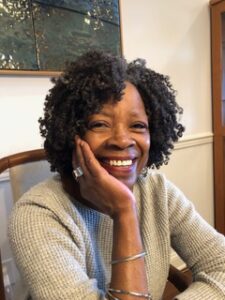 Debra Chatman- Finley is a Licensed Professional Counselor and National Board-Certified Counselor in private practice in Montclair, NJ. She is an Adjunct professor at New York University where she teaches Racial and Social Micro Aggression in Clinical Practice. She is the former Director of Clinical Services for a domestic violence agency, that provides counseling services for domestic violence victims. Debra earned her bachelor’s degree in Psychology from Seton Hall University and her Master’s degree in Counseling Psychology from the College of Saint Elizabeth. She is also a graduate and former Associate Faculty at the Multicultural Family Institute. Debra is trained in Eye Movement Desensitization and Reprocessing (EMDR) and received her Certification in Traumatic Stress from the Trauma Center at the Justice Resource Institute in Boston, Mass. Debra’s study in traumatic stress strengthened her desire to integrate trauma and racial justice. She has devoted much of her practice and studies to the impact of race in the therapeutic process and the effects of racial trauma on POC, specifically, African American women, and parenting. Debra has also facilitated numerous workshops such as Racism, Culture, and Dissociation, Being BIPOPC: The Ongoing Challenges of Visibility vs Invisibility, Wounded Parenting: The Intersection of Complex and Racial Trauma in Parents of Color, A Therapist Path to Exploring Implicit Bias and Racial Trauma, Micro-Aggressions In Clinical Practice, Unmasking Race With Interracial Couples, Making the Invisible Visible, Beyond 20/20Vision: Examining Racism Through Trauma Lens. Debra and her colleague are in the process of writing about their non-Eurocentric facilitation of a support Group for Women of Color. She also provides Clinical consultation for BIPOC Clinicians around issues of race and trauma as well as other clinical concerns.
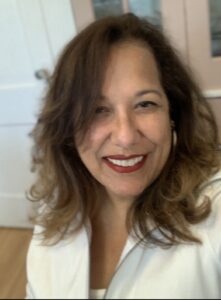 Gliceria Pérez is a bilingual trauma-focused therapist who is a Licensed Clinical Social Worker with a Master of Social Work degree from Fordham University Graduate School of Social Service. She has over 30 years of experience in social work fields of mental health, trauma, domestic violence, adoption, immigration, and child abuse/neglect. Gliceria has provided case management and therapeutic services to immigrant children, adolescents, and adults in various community settings, in-home, and schools. She is committed to providing high-quality therapeutic services with a social justice perspective. Gliceria maintains a private practice in New Jersey where she works passionately with Black, Indigenous People of Color as well as other individuals/communities who have suffered from mental health issues (depression, anxiety, PTSD, etc.) in addition to racial trauma. Before becoming a therapist, Gliceria was a Director of Residential Services at a domestic violence program where she worked collaboratively to improve the services to include underserved communities. Since 2015, Gliceria has been an Adjunct Faculty at New York University Silver School of Social Work where she teaches Racial and Social Class Microaggressions in Clinical Practice. Gliceria is trained in Eye Movement Desensitization Reprocessing (EMDR) and has completed the Certificate Program in Traumatic Stress Studies at JRI (Boston, MA), the Certificate Program at the Multicultural Family Institute Program, and the second level of the Sensorimotor Psychotherapy for Trauma Program at the Sensorimotor Psychotherapy Institute (New York, NY). She’s in the process of completing the third level of Janina Fisher’s Trauma-Informed Stabilization Treatment (TIST) Program. Gliceria has facilitated workshops/presentations which include: “Being BIPOC: The Ongoing Challenges of Visibility and Invisibility,” “A Therapist Path for Exploring Implicit Bias and Racial Trauma,” “Adelantar La Raza/Advance the Race: An Afro-Cuban American Experience,” “Micro-aggressions: Making the Invisible Visible,” and “Wounded Parenting: The Intersections of Complex and Racial Trauma in Parents of Color.” Gliceria is in the process of co-writing a book with Debra Chatman on their non-Eurocentric facilitation of a support group for Women of Color.
Articles & Books Recommended by Debra & Gliceria
Anderson, C. and Gibson, P. (2016). White rage: the unspoken truth of our racial divide. Bloomsbury USA.
Degruy, J. (2018). Posttraumatic slave syndrome: America’s legacy of enduring injury and healing. Joy Degruy Publications Inc.
DiAngelo, R. (2021). Nice Racism: how progressive white people perpetuate racial harm. Penguin Books.
Fisher, J. (2017). Healing the fragmented selves of trauma survivors: overcoming internal self-alienation. Routledge.
Niemann et al. (2020). Presumed incompetent II: race, class, power and resistance of women in academia. Utah State University Press
Gutiérrez, N.Y. (2022). The pain we carry: healing from complex PTSD for people of color. New Harbinger Publications.
Hardy, K.V. (2023). Racial Trauma: clinical strategies and techniques for healing invisible wounds. W.W. Norton & Company.
Hardy, K.V. (2022). The enduring, invisible, and ubiquitous centrality of whiteness implications for clinical practice and beyond. W.W. Norton & Company.
Heiman, M. (2022). Learning to live in harmony with ourselves A primer for trauma survivors & those who dissociate. Mermaid Publisher.
Menakem, R. (2017). My grandmother’s hands: racialized trauma and the pathway to mending our hearts and bodies. Penguin Books.
Saad, L. (2020). Me and my white supremacy: how to recognize your privilege, combat racism and change the world. Quercus.
Sue et al. (2020). Microaggressions in Everyday Life. John Wiley & Sons, Inc.
Click here to view the Racial Trauma Pt 1 Transcript
We support mental health access to those traditionally left out of mainstream healthcare and use a portion of the income we receive from corporate sponsors to do just that! We can only do that with the help of our Patrons – joining as a TU Neuronerd Podsquad premium subscriber, you support this mission and get a dedicated ad-free feed plus occasional very cool and unique study opportunities, reading groups and unique surprises! We invite you to join our community. Click here to join!
We are a Supporter, please be one, too!
Mental Health Liberation is our charity of choice – please consider giving whatever you can to support mental health access for those traditionally left behind and support training for BIPOC therapists
Transcript
Click on a timestamp to play from that location
| 0:00.0 | We have a journey and our journey has brought us to this place where we are, where we need to talk about these things. |
| 0:09.7 | We need to write about these things and we're going to. We're in the process of doing that because there's just so much that is out there and trying to integrate all of the information so that we could be helpful to our clients but be helpful to our colleagues so that we can do that in the period of time that we have left in this world. |
| 0:29.0 | There's so many moving pieces, you know, there's so many things that happen to us and even on the |
| 0:34.5 | train, the last train stop from Boston, we upgraded to first class and this man |
| 0:41.5 | kept checking our tickets. |
| 0:43.2 | He kept checking the tickets and we were like, |
| 0:45.1 | what's going on? |
| 0:46.1 | He's not checking anybody else, but nobody else in first class looked like us. |
| 0:49.0 | And he was an African American male, like 70s, 80s, |
| 0:52.4 | whenever. And so when we got off he said, no I'm really |
| 0:56.7 | sorry I just had to make sure checking your ticket and we're like no that's okay we |
| 1:00.9 | know that you were doing your job. He's like I don't know what you girls do, but I want to just tell you that I'm proud of you. |
| 1:06.5 | I'm proud of you for sitting up there because it's not often that people like us sit up here and I just want to thank you for what you do. |
| 1:18.6 | Welcome to therapist uncensored. Building on decades of professional experience, this podcast tackles |
| 1:24.0 | neurobiology, modern attachment, and more in an honest way that's helpful in |
| 1:28.3 | healing humans. Your session begins now with Dr. Ann Kelly and Sue Marriott. This is the second of a two-part conversation with Glyceria Perez and Deborah Chapman Finley. |
| 1:48.0 | Deborah Chapman Finley is a licensed professional counselor and National Board certified counselor in private practice in Monclare, New Jersey. |
| 1:56.4 | She's the former Director of Clinical Services at a domestic violence agency and she has facilitated numerous workshops on race and trauma. |
| 2:07.0 | There's a wonderful big list of them including racism, culture, and |
| 2:12.0 | dissociation, micro-ag, culture, and dissociation, |
| 2:13.6 | micro-aggressions in clinical practice, |
| 2:15.8 | unmasking race with interracial couples, |
... |
Please login to see the full transcript.
Disclaimer: The podcast and artwork embedded on this page are from Sue Marriott LCSW, CGP & Ann Kelley PhD, and are the property of its owner and not affiliated with or endorsed by Tapesearch.
Generated transcripts are the property of Sue Marriott LCSW, CGP & Ann Kelley PhD and are distributed freely under the Fair Use doctrine. Transcripts generated by Tapesearch are not guaranteed to be accurate.
Copyright © Tapesearch 2026.