

Dr. Daniela Peluso - Guidelines for the Awareness of Sexual Abuse in Ayahuasca Ceremony
Psychedelics Today
Psychedelics Today, LLC
4.6 • 598 Ratings
🗓️ 8 October 2019
⏱️ 78 minutes
🧾️ Download transcript
Summary
In this episode, Kyle joins in conversation with Dr. Daniela Peluso, Cultural Anthropologist and Associate Director at Chacruna. In the show, they discuss guidelines for the awareness of against sexual abuse in Ayahuasca ceremony.
3 Key Points:
- Ayahuasca settings bring together shamans and participants, and with the increasing occurrence of such encounters, there is an alarming rate of incidences where shamans make sexual advances toward participants during or following ceremonies.
- Ayahuasca is a commonly used substance for seducing participants looking for healing, whom then return from their retreats needing additional healing from sexual abuse.
- This guideline reviews some of the key behaviors to look out for and ways to prepare before attending an Ayahuasca retreat to avoid and protect oneself against sexual abuse.

Support the show
- Patreon
- Leave us a review on iTunes
- Share us with your friends – favorite podcast, etc
- Join our Facebook group - Psychedelics Today group – Find the others and create community.
Navigating Psychedelics
Show Notes
Daniela
- Daniela has a PhD in Anthropology
- She was living with Indinenous people in Amazonia
- She conducted field work in the Amazonian regions of Peru over the last two decades, particularly Ese Eja
- She is on the board of Directors at Chacruna's Institute for sexual abuse
- She wrote an article on Ayahuasca and was noticed
Guidelines
- There was an initiative that made a guideline for doing Ayahuasca but it was held back because there are so many different ways ceremony can be performed and it wasn't accurate
- Drinking with friends is wise
- Drinking with experienced women or a couple is another wise move
Abuse mainly happens to women but it does happen to men as well
There is a higher chance for a person to speak up when they have someone they know and trust there with them
Ayahuasca tourism is why sexual abuse is such a problem
When someone doesn't know that touch is out of the norm in ceremony, they might accept it because they were never informed that it's wrong
They may think that being touched sexually is just a part of the ceremony, and it's not
AyaAdvisors and Tripadvisor are both decent resources for reviews on Ayahuasca centers/ceremonial retreats
Unless something goes terribly wrong, you will usually get good reviews
Places also change over time - It's not necessary for healers to touch intimate parts of your body or any area to which you do not consent
There are forms of healing where the body is touched, so it's important for the person to make known what is okay and not okay from the start - Curaciones, Sopladas and Limpiezas do not require you to remove your clothes
If a shaman removes clothing, that may be a warning sign because that is not a part of tradition - Look out for warning signs that a healers intentions with you might be sexual
When healers start to talk about how they aren't married or that they can give you 'special treatment' or that sexual or 'love magic' is necessary for healing, that is a warning sign
Use common sense and draw the line immediately if anything sexual comes up - Sexual Intercourse between healer and patient during ceremonies or directly after the ceremony is not acceptable in Ayahuasca tradition
- Sexual intercourse with a healer does not give you special power or energy
- Consider cultural differences and local behavioral norms when interacting with native healers, letting go of ethnocentrism Having an understanding of what is culturally normal is important
- Consider cultural differences and local clothing customs
- Protect your personal space, physically and spiritually
Each person has a right to know their body and know what feels right and wrong to them
No means no - Be wary if healers offer psychoactive substances other than those used during ceremonies
- He is a Shaman, not a Saint! There is a lot more "I am a Shaman" these days, where it used to be more of "I am not a Shaman"
Ayahuasca tourism definitely romanticized what being a Shaman really is - If violation occurs, get support
People should speak up as quickly as they are able to, vocally or physically
"There is no need to suffer in silence" - Daniela - Beware of what might appear to be consensual sex
It has a lot to do with having the same form of communication, trust, and power dynamics - Beware of getting romantically involved
- If you are aware of or witness sexual abuse, speak up
Final Thoughts
"Individuals have to accept that Ayahuasca has become a business and an industry as much as it is a spiritual practice, and that it includes the trappings of capitalism like exploitation and inequality." - Daniela
Links
Email: d.peluso@kent.ac.uk
About Daniela Peluso, PhD
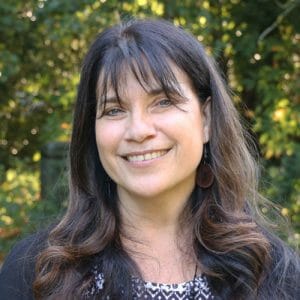
Daniela Peluso is a cultural anthropologist whose current research focuses on indigenous Amazonian communities. She has worked over the last two decades in Lowland South America, mostly with communities in in the Peruvian and Bolivian Amazon. She is actively involved in various local efforts on issues relating to health, gender, indigenous urbanization and land-rights and works in close collaboration with indigenous and local organizations as reflected in her publications. She also specializes on the anthropology of finance. She received her PhD in 2003 from Columbia University and is a senior lecturer in social anthropology at the University of Kent. She is an Associate Director of the Chacruna Institute for Psychedelic Plant Medicines and on the board of the Society of Lowland South America (SALSA) and People and Plants International (PPI).
Transcript
Click on a timestamp to play from that location
| 0:00.0 | Hello, everybody. Welcome back to psychedelics today, a weekly podcast exploring the science and culture of the emerging psychedelic field with your host, Kyle Buller and Joe Moore. |
| 0:17.9 | Today on the show, we are joined by Dr. Daniela Paluso. Dr. Paluso is a cultural |
| 0:22.9 | anthropologist whose current research focuses on indigenous Amazonian communities. She's worked |
| 0:29.8 | over the last two decades in lowland South America, mostly with communities in the Peruvian |
| 0:35.1 | and Bolivian Amazon. She is actively involved in various local efforts on issues relating to health, |
| 0:41.4 | gender, indigenous urbanization, land rights, and works in close collaboration with indigenous and local organizations |
| 0:48.7 | as reflected in her publications. |
| 0:51.6 | She specializes on the Anthropology of finance. Daniela received her PhD in 2003 |
| 0:58.5 | from Columbia University and is a senior lecturer in social anthropology at the University of Kent. |
| 1:04.9 | And Dr. Paluso is an associate director at the Chakruna Institute for Psychedelic Plant Medicines and is on the board |
| 1:15.5 | of the Society of Lowland, South America, and then also at People on Plants International. |
| 1:22.8 | So in this episode, Dr. Paluso and I explore a document that was published on Chakruna called the Ayahuasca |
| 1:29.5 | Community Guide for the Awareness of Sexual Abuse. So we go over, I think there's about 14 different points |
| 1:38.9 | in this article, 17. And the document goes over safety guidelines for participating in ceremonies, if you're |
| 1:49.6 | traveling to ayahuasca retreat centers or anything like that. This is a really great document. |
| 1:55.8 | Definitely check it out. If you're planning on participating in ceremonies in another country or even if you're |
| 2:02.8 | participating in underground stuff, I think the stuff that's in here is just really important. |
| 2:09.9 | And this also kind of helps follow up on our episode with Laura Northrop about sexual abuse |
| 2:16.2 | that happens in these spaces. So the more that we can |
| 2:19.6 | raise awareness that these things are happening and also educate folks on, you know, how to maybe |
| 2:26.4 | set boundaries and just the little nuances of, you know, the community and the medicine space that, |
| 2:32.9 | you know, if this is your first time going to another |
... |
Please login to see the full transcript.
Disclaimer: The podcast and artwork embedded on this page are from Psychedelics Today, LLC, and are the property of its owner and not affiliated with or endorsed by Tapesearch.
Generated transcripts are the property of Psychedelics Today, LLC and are distributed freely under the Fair Use doctrine. Transcripts generated by Tapesearch are not guaranteed to be accurate.
Copyright © Tapesearch 2026.