
Brian Keating- The Big Bang, Understanding The Universe And Losing The Nobel Prize
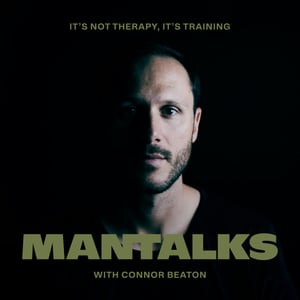
ManTalks Podcast
Connor Beaton
4.8 • 591 Ratings
🗓️ 21 May 2018
⏱️ 49 minutes
🧾️ Download transcript
Summary
Transcript
Click on a timestamp to play from that location
| 0:00.0 | Welcome guys and gals to the MANT Talks podcast. |
| 0:12.3 | I'm Connor Beaton, the host and founder of Mantox. |
| 0:15.5 | This podcast brings together some of the best thought leaders, teachers, and extraordinary |
| 0:20.1 | individuals to help teach |
| 0:21.6 | and mentor you on how to be a top performer in life, love, and business. |
| 0:26.4 | Joining me today is Professor Brian Keating, who is an astrophysicist with the University of California |
| 0:31.6 | San Diego's Department of Physics. He and his team developed instrumentation to study |
| 0:36.2 | the early universe at radio, microwave, and |
| 0:39.7 | infrared wavelengths. |
| 0:41.5 | He's also the author of over 100 scientific publications and holds two U.S. patents. |
| 0:47.6 | He's also received an NSF Career Award in 2006 and a 2007 presidential early career award for scientists and engineers at the |
| 0:57.0 | White House from President Bush for a telescope that he invented and deployed at the U.S. |
| 1:02.7 | South Pole Research Station called Biceb. Brian is also a commercially licensed pilot with a single |
| 1:08.5 | and multi-engine instrument and turbine ratings. |
| 1:11.4 | He's a trustee of the National Museum of Mathematics or MoMath, less problems or more problems, |
| 1:18.0 | I'm not too sure, and a member of the board of directors of the Arthur C. Clark Center for |
| 1:24.2 | Human Imagination, Math of America, San Diego, and the San Diego Air and Space Museum. |
| 1:32.0 | Recently, he's also the author of a book called Losing the Nobel Prize, a story of cosmology, |
| 1:37.1 | ambition, and the perils of science's highest honor. So he was put forward to be a Nobel Prize winner. He didn't end up |
| 1:47.1 | winning. There was a whole bunch of, uh, you know, drama around that. Uh, and he shares a little bit |
| 1:52.4 | of experience. But the whole point of today's conversation, oh, and by the way, before I forget, |
| 1:56.8 | he's also married and the father of five kids. Like this guy, this guy does everything. In fact, |
... |
Please login to see the full transcript.
Disclaimer: The podcast and artwork embedded on this page are from Connor Beaton, and are the property of its owner and not affiliated with or endorsed by Tapesearch.
Generated transcripts are the property of Connor Beaton and are distributed freely under the Fair Use doctrine. Transcripts generated by Tapesearch are not guaranteed to be accurate.
Copyright © Tapesearch 2026.