

223-The Prince of Forgers
Futility Closet
Greg Ross
4.8 • 748 Ratings
🗓️ 5 November 2018
⏱️ 33 minutes
🧾️ Download transcript
Summary
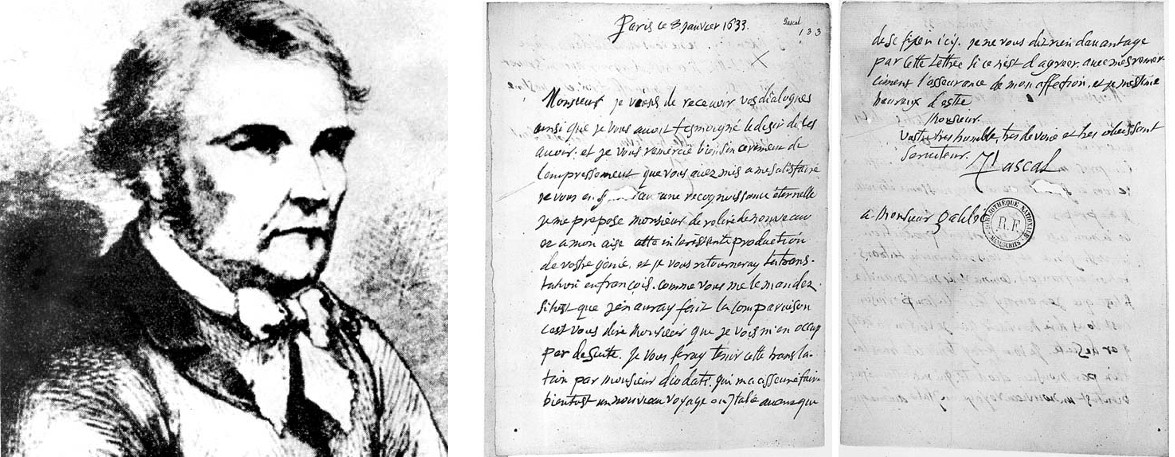
Denis Vrain-Lucas was an undistinguished forger until he met gullible collector Michel Chasles. Through the 1860s Lucas sold Chasles thousands of phony letters by everyone from Plato to Louis the 14th, earning thousands of francs and touching off a firestorm among confused scholars. In this week's episode of the Futility Closet podcast we'll trace the career of the world's most prolific forger.
We'll also count Queen Elizabeth's eggs and puzzle over a destroyed car.
Intro:
In 2011 Australian architect Horst Kiechle sculpted a human torso from paper.
English historian Thomas Birch went angling dressed as a tree.
Sources for our feature on Denis Vrain-Lucas:
Joseph Rosenblum, Prince of Forgers, 1998.
Michael Farquhar, A Treasury of Deception, 2005.
John Whitehead, This Solemn Mockery, 1973.
James Anson Farrer, Literary Forgeries, 1907.
Rebekah Higgitt, "'Newton Dépossédé!' The British Response to the Pascal Forgeries of 1867," British Journal for the History of Science 36:131 (December 2003), 437-453.
Stephen Ornes, "Descartes' Decipherer," Nature 483:7391 (March 29, 2012), 540.
R.A. Rosenbaum, "Michel Chasles and the Forged Autograph Letters," Mathematics Teacher 52:5 (May 1959), 365-366.
Ken Alder, "History's Greatest Forger: Science, Fiction, and Fraud along the Seine," Critical Inquiry 30:4 (2004), 702-716.
Bruce Whiteman, "Practice to Deceive: The Amazing Stories of Literary Forgery's Most Notorious Practitioners, by Joseph Rosenblum," Papers of the Bibliographical Society of Canada 39:1 (2001).
"Missives Impossible: Fake News Is Nothing New -- Even Isaac Newton Was a Victim, Says Stephen Ornes," New Scientist 236:3157/3158 (Dec. 23, 2017), 76-77.
Steve Kemper, "Signs of the Times," Smithsonian 28:8 (November 1997), 134-140.
Cullen Murphy, "Knock It Off," Atlantic Monthly 294:5 (December 2004), 187-188.
Paul Gray, "Fakes That Have Skewed History," Time 121:20 (May 16, 1983), 58-61
Matthew Adams, "Archivist Talks About History of Forgery," University Wire, Oct. 24, 2014.
Charles Whibley, "Of Literary Forgers," Cornhill Magazine 12:71 (May 1902), 624-636.
"Literary Frauds and Forgers," Washington Times, Aug. 13, 1907.
"Literary Forgers," New York Times, May 17, 1902.
"Personal Gossip," Charleston Daily News, Oct. 20, 1869.
Listener mail:
Ben Zimmer, "Particitrousers of the Revolutionary Movement," Language Log, Sept. 7, 2015.
Ben Zimmer, "Incorrections in the Newsroom: Cupertino and Beyond," Language Log, Feb. 1, 2008.
Ben Zimmer, "Hugh Jackilometresan," Language Log, Jan. 4, 2017.
Ben Zimmer, "It Was As If a Light Had Been Nookd ...," Language Log, June 1, 2012.
Eddie Wrenn, "eBook Replaces All Mentions of the Word 'Kindle' With Rival 'Nook' -- and Ends Up Destroying War and Peace," Daily Mail, June 7, 2012.
"Poor Mr Anus, the Council Candidate Given a Bum Deal by Facebook," Guardian, Sept. 28, 2018.
Kevin Jackson, "Illusion / Right Before Your Very Eyes: Penn and Teller Do Magic, but the Real Trick Is That They Like to Give the Game Away," Independent, Jan. 30, 1993.
Wikipedia, "Japanese Name: Imperial Names" (accessed Oct. 25, 2018).
Wikipedia, "Akihito: Ichthyological Research" (accessed Oct. 25, 2018).
Russell Goldman, "5 Things to Know About Japan's Emperor and Imperial Family," New York Times, Aug. 8, 2016.
Akihito et al., "Speciation of Two Gobioid Species, Pterogobius elapoides and Pterogobius zonoleucus Revealed by Multi-Locus Nuclear and Mitochondrial DNA Analyses," Gene 576:2 (2016), 593-602.
Rob Beschizza, "Joachim Rønneberg, Saboteur Who Wrecked Nazi Nuke Program, Dies at 99," Boing Boing, Oct. 22, 2018.
"Joachim Roenneberg: Man Who Stopped Nazi Germany's Nuclear Ambitions Has Died, Aged 99, Norwegian Authorities Confirm," Reuters, Oct. 21, 2018.
"Joachim Ronneberg: Norwegian Who Thwarted Nazi Nuclear Plan Dies," BBC News, Oct. 22, 2018.
Robert D. McFadden, "Joachim Ronneberg, Leader of Raid That Thwarted a Nazi Atomic Bomb, Dies at 99," New York Times, Oct. 22, 2018.
This week's lateral thinking puzzle was contributed by listener Christopher McDonough. Here are three corroborating links (warning -- these spoil the puzzle).
You can listen using the player above, download this episode directly, or subscribe on Google Podcasts, on Apple Podcasts, or via the RSS feed at https://futilitycloset.libsyn.com/rss.
Please consider becoming a patron of Futility Closet -- you can choose the amount you want to pledge, and we've set up some rewards to help thank you for your support. You can also make a one-time donation on the Support Us page of the Futility Closet website.
Many thanks to Doug Ross for the music in this episode.
If you have any questions or comments you can reach us at podcast@futilitycloset.com. Thanks for listening!
Transcript
Click on a timestamp to play from that location
| 0:00.0 | Welcome to the Futility Closet Podcast, forgotten stories from the pages of history. |
| 0:14.1 | Visit us online to sample more than 10,000 quirky curiosities from a papered torso to a fishing tree. |
| 0:20.7 | This is episode 223. I'm Greg Ross. |
| 0:23.6 | And I'm Sharon Ross. |
| 0:25.4 | Denis Ron Lucca was an undistinguished forger until he met the ideal mark. |
| 0:30.4 | Through the 1860s, Lucca sold him thousands of phony letters by everyone from Plato |
| 0:35.5 | to Louis XIV, earning thousands of francs and |
| 0:38.9 | touching off a firestorm among confused scholars. In today's show, we'll trace the career of the |
| 0:44.4 | world's most prolific forger. We'll also count Queen Elizabeth's eggs and puzzle over a destroyed |
| 0:51.0 | car. |
| 1:03.0 | Doniv Fran Luca was born in 1818 to a peasant family at Chateaun in northern France. |
| 1:07.7 | He got little formal education, but he spent hours inhaling the knowledge in the great library there. |
| 1:11.5 | For many years, he worked as a law clerk copying deeds and wills, |
| 1:17.1 | but his dream was to work with books. In 1852, at age 34, he traveled 80 miles to Paris, |
| 1:21.4 | with a letter of recommendation to the head of the Imperial Library. But he didn't know Latin, |
| 1:25.8 | and he had no diploma, so they turned him away. He tried to find work at publishing firms and retail bookshops, but here again his lack of education |
| 1:28.4 | ended his chances. |
| 1:30.2 | At length he fell in with a dubious genealogical firm run by a man named Letellier, who would |
| 1:34.9 | provide doctored family pedigrees to anyone who would pay a fee. |
| 1:38.5 | If you wanted to find out whether you were related to some illustrious person in the past, |
| 1:41.9 | you'd pay me a fee and we would discover that indeed you were, and I'd give you documents and letters that seemed to prove this. In a job like |
| 1:48.8 | that, the temptation to forge is obvious, and Luka became unusually good at it. Eventually, he managed |
... |
Please login to see the full transcript.
Disclaimer: The podcast and artwork embedded on this page are from Greg Ross, and are the property of its owner and not affiliated with or endorsed by Tapesearch.
Generated transcripts are the property of Greg Ross and are distributed freely under the Fair Use doctrine. Transcripts generated by Tapesearch are not guaranteed to be accurate.
Copyright © Tapesearch 2026.