
2/4: Equality of Opportunity: A Century of Debate Hardcover – by David Davenport (Author), Gordon Lloyd (Author)
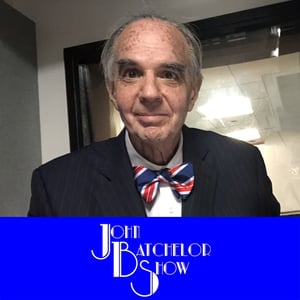
The John Batchelor Show
John Batchelor
4.5 • 2.8K Ratings
🗓️ 23 September 2023
⏱️ 8 minutes
🧾️ Download transcript
Summary
https://www.amazon.com/Equality-Opportunity-Century-David-Davenport/dp/0817925848
For over one hundred years, Americans have debated what equality of opportunity means and the role of government in ensuring it. Are we born with equality of opportunity, and must we thus preserve our innate legal and political freedoms? Or must it be created through laws and policies that smooth out social or economic inequalities? David Davenport and Gordon Lloyd trace the debate as it has evolved from America's founding into the twentieth century, when the question took on greater prominence. The authors use original sources and historical reinterpretations to revisit three great debates and their implications for the discussions today. First, they imagine the Founders, especially James Madison, arguing the case against the Progressives, particularly Woodrow Wilson. Next are two conspicuous public dialogues: Herbert Hoover and Franklin Delano Roosevelt's debate around the latter's New Deal; and Ronald Reagan's response to Lyndon B. Johnson's Great Society and War on Poverty. The conservative-progressive divide in this discussion has persisted, setting the stage for understanding the differing views about equality of opportunity today. The historical debates offer illuminating background for the question: Where do we go from here?
1890 PA
Transcript
Click on a timestamp to play from that location
| 0:00.0 | I'm John Batchewood, David Davenport of the Hoover Institution has new book along with |
| 0:09.6 | the late Professor Gordon Lloyd, Equality of Opportunity. |
| 0:13.5 | Woodrow Wilson, president of Princeton, eventually the governor of New Jersey. |
| 0:18.2 | He's not a political thinker. |
| 0:20.2 | He's trained in political science, of which was at that time frontier thinking, but he |
| 0:25.5 | comes to the presidency in a country that's divided between the progressives and the |
| 0:32.6 | conservatives, the reactionaries, the way life used to be. |
| 0:37.4 | One progressive is Woodrow Wilson. |
| 0:39.5 | One progressive is Theodore Roosevelt and his colleague, right, quite charmingly. |
| 0:46.8 | Wilson just happened to be a Democrat. |
| 0:48.3 | He was mostly a progressive and the thinking here is the opportunity of the frontier is |
| 0:54.6 | now ended. |
| 0:55.6 | They're dating the close of the frontier in 1890. |
| 0:59.4 | What did that mean to the progressive? |
| 1:01.2 | David, why did they believe that was a driver for their reforms? |
| 1:05.4 | There are argument, John. |
| 1:07.8 | It is an interesting one and that is that, yes, individualism and equality might have |
| 1:13.9 | worked rather naturally without a lot of government intervention when we had a free and open |
| 1:19.1 | frontier. |
| 1:20.1 | When Americans who wanted a greater opportunity could simply move west and make cases get |
| 1:25.9 | free land, begin their lives in the new place, my home state of Kansas was heavily populated |
| 1:32.2 | by people who came and claimed free land, but by 1890, the U.S. Census Bureau declared |
... |
Please login to see the full transcript.
Disclaimer: The podcast and artwork embedded on this page are from John Batchelor, and are the property of its owner and not affiliated with or endorsed by Tapesearch.
Generated transcripts are the property of John Batchelor and are distributed freely under the Fair Use doctrine. Transcripts generated by Tapesearch are not guaranteed to be accurate.
Copyright © Tapesearch 2026.