
Why Longer Prison Sentences Don’t Work
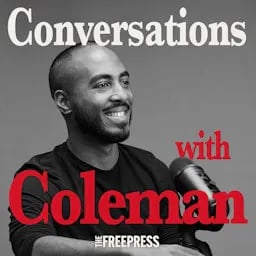
Conversations with Coleman
The Free Press
4.5 • 610 Ratings
🗓️ 23 February 2026
⏱️ 64 minutes
🧾️ Download transcript
Summary
Transcript
Click on a timestamp to play from that location
| 0:00.0 | Welcome to another episode of Conversations with Coleman. My guest today is Jennifer Dolyak. |
| 0:06.5 | Jennifer is an economist whose research focuses on crime and criminal justice policy. Her new book is |
| 0:12.3 | called The Science of Second Chances, a revolution in criminal justice. In this episode, we talk about |
| 0:18.1 | why economists tend to produce the best research about crime. |
| 0:21.4 | We talk about whether people commit crime because of human nature or because of social and |
| 0:25.8 | economic causes. We talk about Michelle Alexander's famous book, The New Jim Crow, and |
| 0:31.1 | what it gets wrong. We talk about why hiring more policemen is a much better way to reduce crime |
| 0:36.6 | than doling out longer prison sentences. |
| 0:39.2 | We talk about why ban the box doesn't work and much more. So without further ado, |
| 0:45.2 | Jennifer Doleak. |
| 0:53.8 | Okay, Jennifer Doleak. Thanks so much for coming on my show. |
| 0:57.4 | Thank you so much for having me. |
| 0:59.7 | As I was just telling you before we started, I've been following your work for a very long time. |
| 1:04.6 | You are an economist who studies crime, and a lot of people might wonder, okay, why would an economist study crime are an economist |
| 1:12.7 | people who study the stock market and GDP and economic growth? So what, first of all, why would an |
| 1:21.9 | economist study crime and what special tools do you bring to the study of crime as an economist that other |
| 1:29.9 | people who study crime don't bring? Yeah. So economists, it turns out, study lots and lots of |
| 1:38.2 | things that the general public don't realize we're interested in, everything from education to |
| 1:42.7 | health care to crime and criminal justice |
| 1:45.5 | policy, all the way to monetary policy and GDP, which I think are the traditional econ |
| 1:50.5 | ideas that people know of. I would put what the economics lens brings to this conversation |
| 1:58.6 | into three buckets. So one is that economists love to think about |
... |
Please login to see the full transcript.
Disclaimer: The podcast and artwork embedded on this page are from The Free Press, and are the property of its owner and not affiliated with or endorsed by Tapesearch.
Generated transcripts are the property of The Free Press and are distributed freely under the Fair Use doctrine. Transcripts generated by Tapesearch are not guaranteed to be accurate.
Copyright © Tapesearch 2026.