
meta_pixel
Tapesearch Logo
Log in
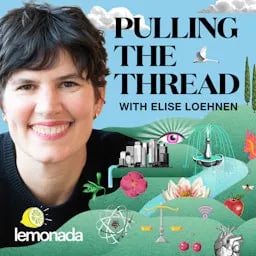
Pulling The Thread with Elise Loehnen

Why Closure is a Myth (Pauline Boss, PhD)

Pulling The Thread with Elise Loehnen

Lemonada Media

Self-improvement, Education

4.81.2K Ratings

🗓️ 31 March 2022

⏱️ 57 minutes

🧾️ Download transcript

Summary

You have to have something new to hope for sure. You might still keep hoping that somebody with a terminal illness might get better and indeed they do sometimes. Or you might hope as after 9/11, that somebody will be found who was in the trade towers when they fell down. And in fact, a few people were found in another country or in a psychiatric ward and not being able to remember who they were, but for the most part, you keep hoping and you move forward with life in a new way. Without that missing person, you must do both. You cannot just hope because that means you're immobilized, you're frozen in place and the children will suffer, the family will suffer, you will suffer from that. It has to be both/and.” So says, Dr. Pauline Boss, emeritus professor at University of Minnesota and world-renowned as a pioneer in the interdisciplinary study of family stress management as well as for her groundbreaking research on what is now known as the theory of ambiguous loss. Dr. Boss coined the term ambiguous loss in the 1970s to describe a very particular type of loss that defies resolution, blocks coping and meaning-making and freezes the process of grieving. With death, she says, there is official certification of loss, proof of the transformation from life to death, and support for mourners through community rituals and gatherings. In ambiguous loss, none of these markers exist, the lingering murkiness leaving individuals unnerved and stressed out.  In her forty years of clinical experience as a family therapist, Dr. Boss has worked with individuals, couples and families dealing with some kind of ambiguous loss - from families in New York who lost family members during 9/11 and are experiencing the physical kind of ambiguous loss, to those dealing with the psychological ambiguous losses of a parent with Alzheimer’s disease, a loved one with an addiction, or someone who is changing as a result of aging or transitioning. Drawing on research and her immense cache of clinical experience, Dr. Boss has developed six guiding principles for building the resilience to both bear the trauma of ambiguous loss and to move forward and live well, despite experiencing a loss with no certainty or resolution.  She joins me today to discuss this often unrecognized, but ubiquitous type of loss, particularly as it relates to closure - the subject of her most recent book, The Myth of Closure: Ambiguous Loss in a Time of Pandemic and Change. Our conversation touches on our collective grieving following the pandemic and our country’s awakening to the concept of systemic racism; how we can begin to increase our tolerance for ambiguity, and the importance of discovering new hope in the face of grief that has no end. Our search, she tells us, must not be for the elusive concept of closure, but rather for a sense of meaning and a new way to move forward.  EPISODE HIGHLIGHTS: Unnerving ambiguity… Using both/and language around loss… Pillars of processing… Moving forward, not moving on… MORE FROM PAULINE BOSS: The Myth of Closure: Ambiguous Loss in a Time of Pandemic and Change Ambiguous Loss: Learning to Live with Unresolved Grief Loving Someone Who Has Dementia: How to Find Hope While Coping with Stress and Grief What if There’s No Such Thing as Closure? - NYT Magazine, December 2021 Learn more about your ad choices. Visit podcastchoices.com/adchoices See omnystudio.com/listener for privacy information. Learn more about your ad choices. Visit megaphone.fm/adchoices

Transcript

Click on a timestamp to play from that location

0:00.0

Hi friends. Throughout this holiday season, you will find me right here per normal. We will keep

0:06.6

publishing new episodes every week and a few solos thrown in as well. So when you just need to escape

0:14.2

from the business of the holiday shuffle or take a break from mom or dad or who knows who,

0:19.8

we'll be here as we always are.

0:21.9

Hi, it's Elise Lunan, host of pulling the thread. I'm an author, podcast host,

0:37.3

and parent who built a long career

0:39.1

in media. I grew up in a state of perpetual curiosity, investigating the world and asking a lot

0:45.4

of questions. In this show, I chat with culture-defining leaders, thinkers, and experts about

0:51.4

this rare moment that we find ourselves in and how to think about our own lives

0:55.5

and experiences within a larger social and spiritual construct.

1:00.6

You have to have something new to hope for. Sure, you might still keep hoping that somebody

1:09.1

with a terminal illness might get better.

1:11.6

And indeed they do sometimes.

1:13.6

Or you might hope as after 9-11 that somebody might be found

1:19.6

who was in the trade towers when they fell down.

1:22.6

And in fact, a few people were found in another country

1:26.6

or in a psychiatric ward and not being able to

1:30.3

remember who they were. But for the most part, you keep hoping and you move forward with life

1:41.3

in a new way without that missing person.

1:52.8

You must do both. You cannot just hope because that means you're mobilized, you're frozen in place,

2:00.0

and the children will suffer, the family will suffer, you will suffer. It has to be both and. So says Dr. Pauline Boss, Emeritus Professor at University

2:04.9

of Minnesota and world-renowned as a pioneer in the interdisciplinary study of family stress

...

Please login to see the full transcript.

Disclaimer: The podcast and artwork embedded on this page are from Lemonada Media, and are the property of its owner and not affiliated with or endorsed by Tapesearch.

Generated transcripts are the property of Lemonada Media and are distributed freely under the Fair Use doctrine. Transcripts generated by Tapesearch are not guaranteed to be accurate.

Copyright © Tapesearch 2026.