
What is education for?
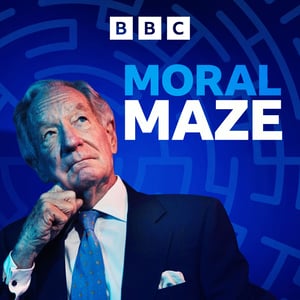
Moral Maze
BBC
4.4 • 626 Ratings
🗓️ 9 April 2026
⏱️ 58 minutes
🔗️ Recording | Apple Podcasts | RSS
🧾️ Download transcript
Summary
Universities across the country are cutting back on humanities courses – philosophy, history, modern languages – subjects long seen as central to a well-rounded education. The reason is familiar: falling student numbers, financial pressure, and a growing insistence that degrees must demonstrate clear economic value. If a course doesn’t lead to a well-paid job, why should anyone fund it?
That points to a deeper divide about what education is for. Is it an intrinsic good: valuable in itself, shaping critical thinking, moral judgment, and an understanding of the world? Or is it an extrinsic one: a means to an end, justified by the jobs it produces and the growth it delivers?
For centuries, from Socrates onwards, education has been tied to human flourishing – to forming citizens, not just workers. But today, the language has shifted. Students are consumers. Universities compete. Courses are judged by salary. And the tensions don’t stop there. If education is a public good, why does access remain so uneven, divided between state and private schools, with women significantly underrepresented in STEM (science, technology, engineering, mathematics) – opportunity shaped as much by background as by ability? And as our understanding of neurodiversity deepens, a further challenge emerges. What if the system itself – built around standardisation, testing, and conformity – has actively hindered the prospects of many it was meant to serve?
So what, ultimately, is education for? Is it possible to maximise economic potential and enable every individual to flourish? And if our system does the former at the expense of the latter, can it still claim to be a moral one?
Chair: Michael Buerk Panel: Mona Siddiqui, Tim Stanley, Carmody Grey and Giles Fraser. Witnesses: Maxwell Marlow, Julian Baggini and Jess Wade and Chris Bonnello. Producer: Dan Tierney Editor: Tim Pemberton.
Transcript
Click on a timestamp to play from that location
| 0:00.0 | BBC Sounds, music, radio, podcasts. |
| 0:07.3 | Their company's success helped build a nation. |
| 0:10.9 | The company is such a big part of Korea's economy. |
| 0:13.5 | But who are the family behind one of the world's tech giants? |
| 0:17.2 | They often say, look, we built the nation. |
| 0:19.2 | And without us, South Korea as it exists today, |
| 0:22.6 | would simply not be here. Inheritance, Samsung, explores the real-life dramas of the Lee family |
| 0:28.3 | and their company. They are the equivalent of royalty. Listen first on BBC Sounds. |
| 0:34.1 | Good evening. More than 4,000 university courses have been closed down in what amounts |
| 0:39.6 | to a startlingly sudden redefinition of what education should be about. Most of those being cut |
| 0:45.9 | are in the humanities, arts, history, philosophy, languages. Subjects long considered not just to be |
| 0:51.3 | essential to a well-rounded education, but as Socrates would have put it |
| 0:55.2 | to human flourishing. Instead, the emphasis now is on the economic value of what you're studying. |
| 1:02.7 | With the average graduate in England racking up 53,000 pounds in student debt, it's a hard-headed |
| 1:08.8 | calculation of what return you can get on that investment, |
| 1:12.4 | or as one Midlands University promises in its ads, degrees that get you hired. |
| 1:18.3 | So is education an intrinsic public good valuable in itself, producing rounded, thoughtful citizens, |
| 1:26.2 | or an extrinsic one to be measured by the future salary the |
| 1:30.0 | individual can command and his or her contribution to economic growth. Either way, does everybody |
| 1:36.6 | get a fair crack at it, or does wealth and class still dictate elite access? Gender play a part in the |
| 1:44.0 | employable STEM subject science, technology, |
| 1:47.0 | engineering, maths. Are they man things? What is education for? Who is it for? Does it still |
... |
Please login to see the full transcript.
Disclaimer: The podcast and artwork embedded on this page are from BBC, and are the property of its owner and not affiliated with or endorsed by Tapesearch.
Generated transcripts are the property of BBC and are distributed freely under the Fair Use doctrine. Transcripts generated by Tapesearch are not guaranteed to be accurate.
Copyright © Tapesearch 2026.