
The Artificiality of Natural Intelligence with David Bates
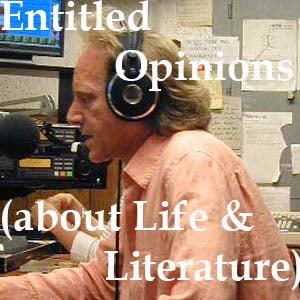
Entitled Opinions (about Life and Literature)
Robert Harrison
4.8 • 589 Ratings
🗓️ 1 February 2024
⏱️ 39 minutes
🧾️ Download transcript
Summary
Transcript
Click on a timestamp to play from that location
| 0:00.0 | I'm Robert Harrison for entitled opinions and we're coming to you from the |
| 0:06.1 | Elysian fields of KZSU. Our topic today is artificial intelligence and what it says about |
| 0:13.2 | who we are and who we are not. The guest who joins me in the studio has just finished a book |
| 0:20.0 | called an artificial history |
| 0:21.5 | of natural intelligence. |
| 0:24.0 | Do out later this year. |
| 0:27.1 | Those of you who've heard our previous shows on this topic know that I, for one, believe |
| 0:31.7 | that machine learning is a world historical event that calls for thinking. |
| 0:37.9 | My guest is someone who responds to that call. |
| 0:41.3 | He thinks beyond the technical and sociological aspects of AI and asks how its technology |
| 0:47.7 | relates to, indeed, how it arises from within our human way of being. |
| 0:58.0 | That human way of being is through and through historical, |
| 1:01.0 | but what exactly does that mean and what does machine learning have to do with being historical? |
| 1:06.6 | What, for that matter, does it have to do |
| 1:09.2 | with what Heidegger called the history of being? |
| 1:13.1 | Stay tuned, friends, an existential analytic of AI coming up. |
| 1:46.0 | Music My guest is David Bates, a professor in the Department of Rhetoric at UC Berkeley, whose most recent work deals with the intersections between technology, |
| 1:49.0 | science, and the history of human cognition. |
| 1:56.5 | In his aforementioned new book to be published by the University of Chicago Press this spring, |
| 2:03.6 | David Bates makes a compelling case for how the human mind is not simply a product of the brain, but is instead the site of operations for several different systems, biological, sociopolitical, and technical, among others. |
| 2:13.6 | These systems, which are always entangled in the human condition, often conflict with one another, |
| 2:20.3 | even as they work together to maintain the cohesion of social groups and the survival of biological individuals. |
... |
Please login to see the full transcript.
Disclaimer: The podcast and artwork embedded on this page are from Robert Harrison, and are the property of its owner and not affiliated with or endorsed by Tapesearch.
Generated transcripts are the property of Robert Harrison and are distributed freely under the Fair Use doctrine. Transcripts generated by Tapesearch are not guaranteed to be accurate.
Copyright © Tapesearch 2026.