
meta_pixel
Tapesearch Logo
Log in
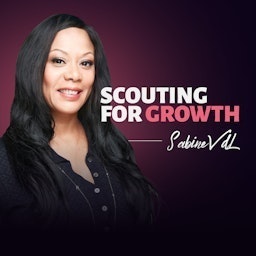
Scouting for Growth

Sterling Parker: Why Tech at Work Is Reshaping Flexible Work

Scouting for Growth

Sabine VanderLinden

Entrepreneurship, Business, Business:entrepreneurship, Technology

4.8 • 35 Ratings

🗓️ 6 August 2025

⏱️ 75 minutes

🧾️ Download transcript

Summary

On this episode of Scouting For Growth, Sabine VdL speaks with Sterling Parker, SVP of Global Solutions & Services at Ivanti, to unpack a leadership challenge that’s quietly reshaping every enterprise operating model: Flexibility is now a talent requirement… but most workplaces still treat it like a perk. Sterling brings insights from Ivanti’s latest Technology at Work report, revealing why the future-ready workplace won’t be built by chasing productivity alone — it will be built by designing work that’s efficient, human, and sustainable. The flexibility gap leaders can’t ignore The report uncovers a striking disconnect: 73% of office workers and 83% of IT professionals say flexible working is high value or essential but only 23% of employees describe their current job as highly flexible That gap isn’t just a culture issue — it’s a competitive one. Because when flexibility expectations rise and workplace reality doesn’t, talent doesn’t “wait it out.” They leave. And when top talent exits (or never joins), innovation slows. Sterling calls it out clearly: losing talent creates innovation stagnation—and the cost compounds fast. Flexibility isn’t free — but inflexibility is expensive Sterling highlights something leaders often underestimate: employees calculate flexibility in real-life terms. There’s a cost in commuting. A cost in time away from family. A cost in burnout. Post-COVID, people are simply more willing to switch employers to regain control over their time. Refusing to adapt doesn’t preserve performance — it increases attrition risk. Listening is the strategy A key message in this episode: don’t design flexibility from the boardroom. Sterling stresses that leaders must hear directly from teams what’s blocking flexibility — whether it’s perception, policy, or workflow reality. Without that feedback loop, it becomes almost impossible to align employee demand with business objectives. Flexibility is not “one-size-fits-all.” It’s negotiated at the team level, shaped by goals, responsibilities, and trust. Define success or you can’t scale flexibility Sterling also offers a practical leadership test: if you haven’t defined what success looks like for an individual, how will you measure whether flexible work is producing outcomes worth continuing to invest in? This is where flexibility becomes operational — not ideological. Clear expectations + measurable outcomes = flexibility that works for both the business and the employee. The shadow AI warning The report also points to the rise of shadow AI—tools employees adopt without formal governance, often to move faster and work smarter in environments that aren’t meeting their needs. That’s both an opportunity and a risk: opportunity, because teams are hungry for efficiency risk, because unmanaged AI introduces security and compliance exposure Why this episode matters For enterprise leaders — especially in highly regulated sectors like insurance and financial services — this episode is a wake-up call: The workplace isn’t just competing on salary anymore. It’s competing on time, autonomy, and trust. Because the future of work won’t be won by the companies that demand presence. It will be won by the ones that build workplaces people don’t want to escape from.

Transcript

Click on a timestamp to play from that location

0:00.0

Welcome to Scouting for Growth.

0:18.5

On today's podcast, I'm delighted to welcome Sterling Parker,

0:23.6

senior vice president of global solutions and services at Iventi.

0:30.2

Sterling is recognized as a leader in workplace technology and digital transformation

0:36.1

with deep expertise in helping organizations of all sizes,

0:41.5

from global enterprises to fast-growing startups, navigate the evolving world of work.

0:48.1

At Iventi, Sterling leads, global teams that empower businesses to create secure, flexible and productive

0:56.3

environments for their employees. It has been at the forefront of some of the most pressing

1:02.9

issues facing today's workforce, including the return to the Office of Alema, the growing

1:09.1

demand for flexibility, and the rapid adoption of generative AI.

1:16.2

Stalin played a key role in the recent or the latest inventives report called Technology at Work,

1:24.2

which reveals a striking insight, while 73% of office workers and 83% of IT professionals

1:34.3

consider flexible working high value or essential, only 23% of employees say their current job is highly flexible.

1:46.7

This highlight a major flexibility gap that organization must address to attract and retain

1:53.0

top talent.

1:54.9

The study also explores the widening flexibility gap, the rising danger of shadow AI and the critical balance

2:04.9

between optimizing technology and empowering people.

2:10.2

Is hands-on experience, whether it is implementing AI to streamline workflows or advising on secure digital experiences, for instance,

2:21.2

gives Sterling a unique perspective on how organizations can thrive in this new era.

2:29.3

Sterling, thank you for joining me today. I am excited to dive into the findings of the report and hear your insight on how leaders can build workplaces that are not only more efficient, but also more human, flexible and future ready.

2:54.1

Hi, Sterling.

2:55.3

So good to have you on the Scouting for Growth Podcast.

...

Please login to see the full transcript.

Disclaimer: The podcast and artwork embedded on this page are from Sabine VanderLinden, and are the property of its owner and not affiliated with or endorsed by Tapesearch.

Generated transcripts are the property of Sabine VanderLinden and are distributed freely under the Fair Use doctrine. Transcripts generated by Tapesearch are not guaranteed to be accurate.

Copyright © Tapesearch 2026.