

Show 1434: Digital Doctoring: Will AI Save Lives or Cause Medical Mayhem?
The People's Pharmacy
Joe and Terry Graedon
4.6 • 1.2K Ratings
🗓️ 12 June 2025
⏱️ 70 minutes
🧾️ Download transcript
Summary
In this episode, Joe & Terry speak with two physicians who have examined ways that artificial intelligence might contribute to patient care. Can AI help with better diagnoses? Is robotic surgery better? Could AI save lives or is it more likely to cause trouble?
You could listen through your local public radio station or get the live stream on Saturday, June 14, 2025, at 7 am EDT on your computer or smart phone (wunc.org). Here is a link so you can find which stations carry our broadcast. If you can’t listen to the broadcast, you may wish to hear the podcast later. You can subscribe through your favorite podcast provider, download the mp3 using the link at the bottom of the page, or listen to the stream on this post starting on June 16, 2025.
Digital Doctoring:
We begin our conversation with Dr. Jonathan Chen, who has found that chatting with a robot made him a better doctor. (He challenged ChatGPT with an ethically difficult conversation and was surprised at the sensitivity of the observations it offered.) When researchers studied diagnostic acumen pitting human doctors against AI, the results were surprising. Some doctors did the diagnosis without help, while others used ChatGPT-4 to help them. The investigators also had the AI do the diagnosis unaided (or unhindered) by humans. Doctors got a score of 74 percent on their own and 76 percent when using AI. But ChatGPT by itself scored 90 percent. (JAMA Network Open, Oct. 28, 2024). AI is certainly not perfect, and there are times when it is not the appropriate tool to use. But results like this suggest that we should be learning more about when it might be an indispensable technology for improving patient care. After all, human doctors are not perfect, either.
Paging Doctor Google:
Health care professionals are not the only ones who are putting artificial intelligence to use in health care settings. Many physicians dread the patient who arrives with a large stack of papers printed off the internet. Our guests suggest that doctors should welcome these patients and collaborate with them. Pointing them to more reliable sites and better search strategies, if the healthcare provider is able to do so, could yield better results overall. Who is more motivated to spend time researching the details of an unusual syndrome or its treatment? It may well be the patient.
There are, of course, some cautions that people should keep in mind. One is privacy. You may not want to disclose your medical history to the internet at large. Most sites are not constrained by HIPAA, which protects patient privacy in medical settings. Another consideration is the reliability of the information you find. Robots are designed to produce answers that will please the humans asking the questions. That might mean that they make things up. If the question is how to connect your camera to your computer, an invented (“hallucinated”) answer is inconvenient. When it concerns your health, a fabricated answer could be dangerous.
Could AI Save Lives in Dermatology?
Our second guest, Dr. Art Papier, has been involved in developing large libraries of images of skin problems. With artificial intelligence powering it, VisualDx helps doctors recognize dermatological problems such as skin cancers.
He describes one situation in which misdiagnosis is common and can cause harm. Cellulitis is a dangerous inflammation due to bacterial infection that can lead to sepsis. Red skin can be a signal of cellulitis, but sometimes it is caused by other problems. Misdiagnosis can lead to hospitalization and inappropriate antibiotics being administered. Utilizing a clinical decision tool like VisualDx reduced unnecessary hospital admission and antibiotic use (Journal of the American College of Emergency Physicians Open, June 8, 2023).
Another strength of the system Dr. Papier has helped build is that it offers doctors views of atypical presentations of common problems. Hopefully, this keeps them from focusing on a single feature of an illness, such as a bulls-eye rash, as the only defining characteristic. The builders of VisualDx have deliberately included many images of skin of many different shades, as rashes sometimes look different depending upon the background coloration.
Both our guests emphasize that AI is a tool. To get the best results, it must be used intelligently, not indiscriminately.
This Week’s Guests:
Jonathan Chen, MD, PhD, assistant professor of medicine at Stanford Medicine, works at the intersection of artificial intelligence and medicine in the hopes that combining human knowledge with AI will deliver better care than either can alone. His expertise lies in developing innovative AI-driven solutions that enhance diagnostic accuracy, treatment efficiency, and patient outcomes. Dr. Chen focuses on integrating machine learning algorithms and predictive modeling into clinical practice, revolutionizing the way healthcare is delivered. His goal is to use real-world clinical data, such as electronic medical records, with machine learning and data analytics to reveal new clinical insights that will inform patient care.

Jonathan Chen, MD, PhD, Stanford Medicine
Art Papier, MD, is a dermatologist and medical informatics expert and the co-founder and CEO of VisualDx. He has led the development of VisualDx, a professional, point of care decision support system as well as Aysa, a freely available consumer and patient facing AI app for dermatology (www.askaysa.com). A thought leader in clinical informatics, Dr. Papier maintains the overall vision for the company with a keen focus on product integration and impacting costs in healthcare through clinical accuracy.
https://www.visualdx.com/blog/our-team/art-papier/
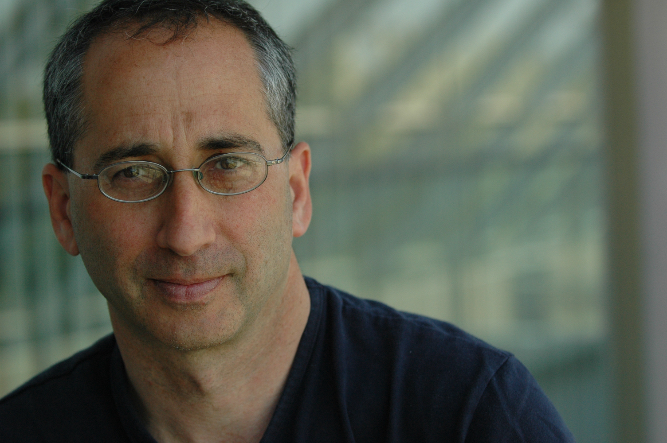
Dr. Art Papier is founder & CEO of VisualDx
Listen to the Podcast:
The podcast of this program will be available Monday, June 16, 2025, after broadcast on June 14. In this week’s podcast, Dr. Chen describes the effort by Dr. David Fajgenbaum to use AI to search the medical literature and find potential treatments for rare diseases. Dr. Papier discusses the use of AI to reduce the chance of misdiagnosis. How should patients and doctors negotiate the use of AI? You can stream the show from this site and download the podcast for free, or you can find it on your favorite platform.
Download the mp3, or listen to the podcast on Apple Podcasts or Spotify.
Transcript
Click on a timestamp to play from that location
| 0:00.0 | I'm Joe Graydon. |
| 0:01.5 | And I'm Terry Graydon. |
| 0:03.0 | Welcome to this podcast of the People's Pharmacy. |
| 0:06.1 | You can find previous podcasts and more information on a range of health topics at |
| 0:11.5 | People's Pharmacy.com. |
| 0:14.3 | For centuries, doctors relied on experience and intuition to diagnose and treat patients. |
| 0:20.8 | How is AI changing medicine? |
| 0:23.1 | This is the People's Pharmacy with Terry and Joe Graydon. |
| 0:31.5 | Dr. Art Papyr has developed a decision support system to help health care professionals diagnose |
| 0:39.8 | skin problems, but he offers a caution. |
| 0:43.2 | If you over-reli on the AI doing work for you, you might lose your natural human abilities |
| 0:51.4 | to do a task like drive, fly a plane, or actually think about, does the diagnosis |
| 0:57.4 | make sense or not. Coming up on the people's pharmacy, digital doctoring will AI save lives |
| 1:05.4 | or cause medical mayhem. |
| 1:20.8 | In the people's pharmacy health headlines, rates of COVID-19 are currently low, |
| 1:25.1 | but researchers are learning more about long-term cardiac complications. |
| 1:29.3 | A study in JAMA Network Open reveals that people who were seriously ill with the infection may have reduced blood flow in the small vessels feeding the heart. |
| 1:35.0 | This condition called coronary microvascular dysfunction limits blood to the heart under stress. |
| 1:42.6 | This in turn may impair cardiac function. This is just one of a number |
| 1:47.3 | of cardiovascular complications that may linger after people seemingly recover from COVID-19. |
| 1:55.2 | GLP-1 agonists remain the most sought-after drugs in the pharmacy. They're prescribed for both type 2 diabetes and weight control. |
| 2:04.5 | Somaglotides sold under the names Ocempic, Wigobi, and Ribelsus |
... |
Please login to see the full transcript.
Disclaimer: The podcast and artwork embedded on this page are from Joe and Terry Graedon, and are the property of its owner and not affiliated with or endorsed by Tapesearch.
Generated transcripts are the property of Joe and Terry Graedon and are distributed freely under the Fair Use doctrine. Transcripts generated by Tapesearch are not guaranteed to be accurate.
Copyright © Tapesearch 2026.