
Show 1185: What Are the Risks of Too Many Meds?
The People's Pharmacy
Joe and Terry Graedon
4.6 • 1.2K Ratings
🗓️ 18 October 2019
⏱️ 56 minutes
🧾️ Download transcript
Summary
Every day, an average of 750 senior Americans are hospitalized as a result of medication reactions and interactions. Part of the problem is that as we grow older and accumulate more health conditions, we also end up with longer lists of prescription drugs for them. In addition, many of us also take medicines to prevent problems, such as statins to lower our cholesterol and reduce the risk of heart disease. Are you taking too many meds?
How Following Guidelines Can Lead to Too Many Meds:
Clinical guidelines are designed to help standardize medical practice and make sure that all patients are getting appropriate treatment. However, in a time-pressured practice setting, some guidelines may end up being used as a way to evaluate doctors’ performance. They were not developed for this purpose, and as a result, patients might end up taking too many meds that aren’t essential for them so that the practitioner can “check the box.” Are all of your prescriptions for drugs that you actually need? How can you find out? Moreover, if you don’t need them all, what should you do about it?
The Prescribing Cascade:
Frequently, a patient sees a health care provider with a specific complaint. Ideally, the provider makes a diagnosis and prescribes the most appropriate treatment. Sometimes, however, even an appropriate medicine can cause side effects. The patient returns to report these new symptoms. Here is where it gets tricky. The health care professional may recognize them as reactions to the initial prescription and change the prescription. But too often, they may simply prescribe a new medicine to treat the symptoms caused by the first drug. If that medicine in its turn causes side effects, they too may be treated with an additional prescription. Before long, the patient can end up with too many meds. Can we short-circuit this process?
Doctors Should Be Empowered to Deprescribe:
Frequently, a primary care physician may be reluctant to discontinue a medicine initially prescribed by a specialist. What if the patient still needs it? Will PCPs get in trouble if they deprescribe medications? In addition, some drugs require specialized protocols for discontinuation so that the patient can stop taking them without suffering unpleasant or even unbearable withdrawal symptoms. How knowledgeable does the doctor feel about this procedure?
The Culture of a Pill for Every Ill Encourages Too Many Meds:
Over the last half-century or so, American culture has changed from one that emphasized self-reliance to one that envisions a pill for every ill. The plethora of drug ads on television all imply that anything that might be bothering you could be fixed with the right medication. No wonder people are so willing to take a fistful of pills, and doctors are so eager to prescribe them! How can we alter our culture to support deprescribing and encourage physicians to pare prescriptions to the minimum necessary? That way older Americans–and the rest of us–will be less likely to take too many meds.
This Week’s Guests:
Shannon Brownlee is Senior Vice President of the Lown Institute, a non-partisan public policy think tank based in Boston. She is also Co-Founder of the Right Care Alliance, a grassroots organizing network of patients, clinicians, and community leaders advocating for a radically better health care system. Her groundbreaking book is Overtreated: Why Too Much Medicine Is Making Us Sicker and Poorer. The New York Times named it the best economics book of 2007. The Lown Institute report is “Medication Overload: How the Drive to Prescribe Is Harming Older Americans.”
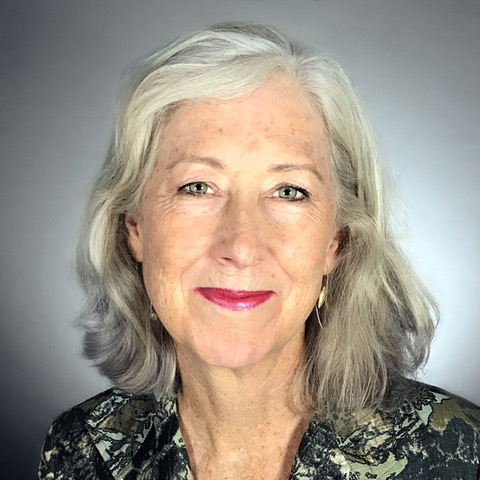
Shannon Brownlee, Senior Vie President of the Lown Institute, author of Overtreated
Cynthia Boyd, MD, MPH is a professor of medicine at the Johns Hopkins University School of Medicine. She holds a joint appointment in health policy and management and epidemiology at the Johns Hopkins Bloomberg School of Public Health. Dr. Boyd is a core faculty member at the Johns Hopkins Center on Aging and Health, the Center for Transformative Geriatric Research and the Roger C. Lipitz Center for Integrated Health Care.
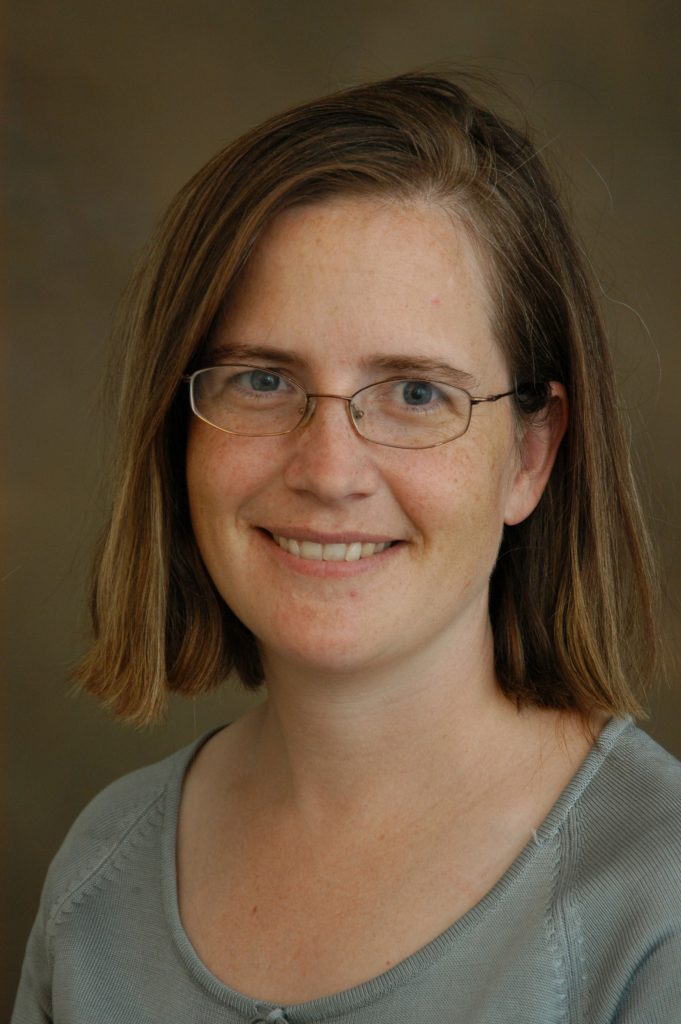
Cynthia Boyd, MD, Professor of Medicine, Johns Hopkins University School of Medicine
Listen to the Podcast:
The podcast of this program will be available the Monday after the broadcast date. The show can be streamed online from this site and podcasts can be downloaded for free. CDs may be purchased at any time after broadcast for $9.99.
Transcript
Click on a timestamp to play from that location
| 0:00.0 | The People's Pharmacy Podcast is supported in part by Cocovia. |
| 0:04.6 | Cocovia, cocovolvinols, support both cardiovascular health and cognitive function |
| 0:10.4 | by promoting |
| 0:13.0 | oxygen and nutrients to vital organs and muscles |
| 0:16.0 | including your heart and brain. |
| 0:18.0 | Cocovia now comes |
| 0:20.0 | and an even more concentrated formula |
| 0:22.0 | with 450 milligrams of cocoa flavinols five times more |
| 0:27.6 | than the leading dark chocolate bar and 15 times more than the leading cocoa powder. |
| 0:33.2 | Cocoa Via has a proprietary process that preserves cocoa flavinols at the highest levels |
| 0:39.1 | and the product undergoes rigorous testing at every stage, which allows them to guarantee the highest |
| 0:45.1 | level of cocoa flovinol's per serving and to provide the purest highest quality product |
| 0:50.8 | possible. |
| 0:51.8 | People's Pharmacy listeners can now try Koca Via for 25% off by using the code |
| 0:58.8 | People's 25 at Koca Via.com, that's COCA-V-I-A-com. |
| 1:09.2 | Billions of dollars are spent advertising prescription drugs on TV. |
| 1:14.0 | Has that led to Americans taking too many meds? |
| 1:17.3 | This is the People's Pharmacy with Terry and Joe Grayden. Every day about 750 older people land in the hospital as a result of prescription drug side effects or interactions. |
| 1:36.3 | Polypharmacy is the other drug problem in America. |
| 1:40.3 | When one medicine causes a side effect, it's not unusual for the health care provider to prescribe another drug to treat that symptom. |
| 1:48.0 | Is there any way to reverse the trend towards increasing prescription drug use in America? |
| 1:53.7 | Can doctors adopt a culture of |
... |
Please login to see the full transcript.
Disclaimer: The podcast and artwork embedded on this page are from Joe and Terry Graedon, and are the property of its owner and not affiliated with or endorsed by Tapesearch.
Generated transcripts are the property of Joe and Terry Graedon and are distributed freely under the Fair Use doctrine. Transcripts generated by Tapesearch are not guaranteed to be accurate.
Copyright © Tapesearch 2026.