
Patreon Bonus #46 - Rebecca Swan
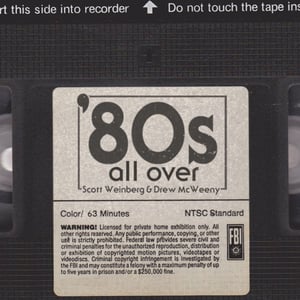
'80s All Over
Scott Weinberg and Drew McWeeny
4.7 • 805 Ratings
🗓️ 17 December 2018
⏱️ 51 minutes
🧾️ Download transcript
Summary
Drew McWeeny has been many things in his life. Laserdisc slinger, Popcorn schlepper, cub reporter, theatre director, hopeless romantic, internet raconteur... but when he came to Los Angeles, it was in answer to the siren song of screenwriting. And this very special bonus episode digs deep into a lot of that history courtesy of today's special guest, filmmaker Rebecca Swan, Drew's writing partner on the Masters of Horror episodes Pro-Life and Cigarette Burns. They talk at length about their favorite films, shared obsessions, the way each informed the other's sensibilities, and much more.
Transcript
Click on a timestamp to play from that location
| 0:00.0 | Ladies and gentlemen, welcome to the 5th Tannen Museum. Getigated to Hill Valley's number one citizen and America's greatest living folk hero. The one and only 5th Tannen. Of course, we've all heard the legend. But who is the man? Inside, you will learn how Fifth Tannen became one of the richest and most powerful men in America. Learn the amazing history of the Tannen family. Starting with his great-grandfather, Puford Mad Dog Tannen, fastest gun in the west. See Biff's humble beginnings. And how a trip to the race track on his 21st birthday made him a millionaire overnight. Share in the excitement of a fabulous winning streak that earned him the nickname the luckiest man on earth. Learn how Biff parlayed that lucky winning streak into the vast empire called Biffco. Discover how in 1979 Biff successfully lobbied to legalizeize gambling and turned hill valleys to lappetated courthouse into a beautiful casino hotel. You just want to say one thing. God bless America. Oh. Hi, everybody. My name is Drew and welcome to a very special bonus episode of 80s all over. I am not joined as always by my co-host, Scott Weinberg, but I am joined by my former co-writer and the co-host of my old podcast, the Motion Captured Podcast and a long time friend, Rebecca Swan. Rebecca, how you doing? Thank you, Drew. I'm doing really good. Thank you for having me on. I appreciate it. Of course, I'm excited because I truly believe that if I am talking about film going in the 80s and my experiences, at some point in that process, you have to be a guest because you were there for so much of it. |
| 2:05.6 | I think that if you are talking about going to the movies in the 80s, at some point you have to mention me. So, yes, you know, it is rather fitting that I am here at least one time for this. Well, you and I met in 1985 and we had both moved to Florida just before that. And for those who listening to the podcast we are very nearly to that stage of the podcast for about six months out and about six months we're going to do that August 1985 episode which is when I moved to Florida and I did it so I could go to a high school that had sort of a media center and a built-in closed circuit television station and that station. And that's where I met you, was making media stuff for them. And we actually did a movie review show way back in the 80s. So as long as we've known each other, we have talked about movies and talked about the goods and the bads and we did 80s all over at the actual moment of the 80s, darn it. You know what's weird is we never really argued too much about movies. There are certainly things that we disagreed about or that we loved more or less. And I think there was oftentimes where we would, if we were opposed on a film, it was more a source of delight to try and figure with the other person's problem was. I can think of one instance where we disagree, we disagreed like completely on it and then you're going to get a kick out of this and that's the movie The Jewel of the Nile. I don't know if I told you, I recently showed my daughter, I told her I was showing her the, um, the remancing the stone trilogy. Um, and she was like, she was like, oh, great. |
| 3:46.8 | Cool. |
| 3:47.2 | So I showed her, um, remancing the stone and she liked it. |
| 4:04.1 | Now I showed her jewel of the Nile and she flipped for it. Like she really loved it. So I was like, well, I couldn't have been that wrong when I said I loved it in the 80s. And I showed her the War of the Roses, which is of course the third film in the trilogy. Yes |
| 4:08.6 | She was sitting there she was ready for it too. And then like about 20 minutes in, |
| 4:10.0 | she kind of looked at me like, what the hell? She was like, she was ready for it too. And then like about 20 minutes in, she kind of looked at me like, what the hell? See, I would love if those were actually the official characters. If the third movie was not an adventure at all, |
| 4:21.4 | it was just them working on their divorce. |
| 4:24.0 | You know what's really weird that I noticed |
| 4:25.4 | in watching the movies again, movie stars today |
| 4:28.7 | take much better care of their teeth. It's strange. Like, it's very... Oh, it's very... I mean, I was watching it going, my god, Michael Douglas's head is teeth done, obviously, since this movie. And Kathleen Turner, you know, beautiful woman, you know, I'm not taking anything. Very ding very dingy teeth. In, I don't know what was going on back then. |
| 4:47.5 | I don't know. Anyway, probably a lot of coffee, you know. Anyway. Well, I think it's very true that movie stars today are required to be a very different physical specimen than a movie star even in the 80s. And the 80s was already, they talked about it as an age of like polish and sort of everything's hyper slick. |
| 5:06.6 | You look at people in the 80s compared to movie stars. |
| 5:09.8 | Now, And the 80s was already, they talked about it as an age of like polish and sort of everything's hyper slick. You look at people in the 80s compared to movie stars now where everybody has to be ready at the drop of a hat to be a Marvel superhero or to do a shirtless scene where they're completely jacked. Everybody has to look like an underwear model now. And back then, anybody could end up as a movie star with the right talent or the right kind of charm. |
| 5:25.7 | I always loved how, well, not really loved, but just was amazed by, I should say, how most movie stars in the 80s had no muscles. It was the way actors are today, you're brought up Marvel. You look at any of those guys, even like Robert Downey Jr., my god, I mean, does a shirtless scene, you look really good. It's like, and of course, |
| 5:44.6 | looking at gardens of the galaxy, |
| 5:47.2 | that's just, I mean, it's shirt was seen? He looks really good. And of course, looking at Guardians of the Galaxy, that's just like muscles on display. I would like to show Robert Downey Jr. now to Robert Downey Jr. and back to school, just to blow his mind. He would look at it and go, no. What is that? He like totally fixed his teeth, too. I really missed his old 1980s teeth. |
| 6:07.0 | He had more and a hutt and teeth in the 80s. He had like the real gap going on. I miss freak Robert Downey Jr. When's that guy going to come back? See, I don't think that guy can come back. I think Freak Robert Downey Jr. was driven by a lot of demons. And then one we have now is funny Whitty Robert Downey Jr. |
| 6:26.2 | who's going to go home and actually take a nap |
| 6:28.7 | and be a normal of demons. And then one we have now is funny witty Robert Downey Jr. who's going to go home and actually take a, you know, nap and be a normal human being. So that's probably good. You reminds me of like an old, old, like, 1940s movie star these days. He's like a Gary Cooper or something, you know? I don't know. Well, he has settled into it now in a way that I think he's very aware of what a movie star is. And I don't think that's who he was when he started. One of the things that I'm really enjoying as I go back through the 80s right now is the rise of that whole sort of school of young actors who felt like they were influenced by the method actors, the generation before them. So the guys like Matthew Modine and Nicholas Cage and and Sean for God's sake, like that and Tom Cruise of course, a huge, I feel like that rise of those Tom Cruise as a method actor. That's kind of interesting. I think the Tom Cruise method film, that would be. I think I think he is, while I don't think he came out of the method school the way that Cage and Pended, I he was, in his own way, just as hungry to work with great filmmakers, I think he's more the newman end of the pool. It's appropriate that that was his mentor and sort of the guy that he chased so much. But watching that rise right now, because we're right in the middle of it in 84, is all those guys are making movies like racing with the moon and birdie and you know Tom Cruise is starting to finally break through and become Tom Cruise |
| 7:47.8 | movie star. Is all those guys are making movies like Racing with the Moon and Birdie and Tom Cruise is |
| 16:25.1 | starting to finally break through and become Tom Cruise movie star? I find that era fascinating and it was so much fun watching it happen at the time because I felt like I was as excited about the history of acting and sort of the challenges of acting as those young actors were and we watched so much of that stuff together and there were many of those guys that I was just delighted by. I just got to do a Pope of Greenwich village again. Mickey, Rorke and Eric Roberts in that film make me cry laughing because they're both just out to win as actors. They just want all of it. You know, Eric Roberts has had a very interesting career. Yeah, and even today every time he pops up, he's at least somewhat fascinating. His legacy hasn't had longevity. People don't talk about Eric Roberts the way they did when you and I were 13, 14, 15, and he was doing star 80 and popo credits village and those movies. But at that point, I mean, my God, star 80 is still one of the craziest performances of that whole decade. Star 80 is one of my favorite movies ever. And I'm not really that big a fan of Bob Fossy. I mean, I can admit that. I'm, you know, I saw Lenny again recently and I didn't really care for it that much when I saw it the first time. But Star 80 though, such a committed performance. I agree with you. And rewatching it recently after Hugh Heffner's death, what I find really fascinating about it is how scathingly angry Fossy is at Heffner and that world. He clearly does not like Hugh Heffner and doesn't care about this whole pornographic sexual revolution. I think Fossy thinks it's bullshit. And that's really interesting because you and I grew up in an age where Playboy was very much put at the center of the culture as no this is a good thing and this is a force for good. And Hugh Hefner is a feminist icon. And like there was a lot of that when we were young in terms of his media presence. In the 70s definitely, Playboy was like the, it was the, you know, it was everything as a kid in the 70s. That was always the goal is getting your hands on a Playboy. But it seems like such an innocent time now. But anyway, let's move back to the 80s. Let's start with something that I know when I met you was very important to you, which is horror in the 80s. When we first started hanging out, you I think were really flush in that discovery of sort of makeup effects and horror films and thinking about what you could do. And I know it wasn't even the slasher movie that excited you so much as it was slasher makeup. And right away like that was part of the fun of as film fans talking back and forth was just the giddy excitement of how things were made. That was a great age to be a horror fan precisely because of that makeup revolution I think. Absolutely. And when I was a teenager, I wasn't one of those horror fans who got into watching the victims die. Even though I enjoy the first four Friday of 13th movies are very close to my heart. I'm not like into it for killing, well back then it would be killing young ladies. And today there's like at least there's a nice mix of gender as being murdered. We need diversity in murder. We really need diversity in murder. We do. I mean, it's like when I write a horror movie these days, like the last movie that you attended the premiere of, Extremity, I was very careful. I didn't want it to seem like okay we're just gonna beat on and murder women for an hour and a half you know it's I you know so I wanted to make sure that there were male characters getting beat on and murdered and um you know it's just I don't know it's such a different time today than it was in the 80 80s. Rebecca Swan believes in a platform of everyone being allowed to be beaten and murdered. That's really what Rebecca Swan's about. In a dramatic setting, yes. I'm actually a pacifist. I think you know that, right? I do everything I can to avoid altercations, violence. I don't even like getting into arguments. But horror has always been a magnet. And what is it about the remove of the fantasy or the remove of seeing something on screen or working things out on screen? Because I feel the same way. I think horror is a huge genre and an important genre and a vital genre. The most important genre. Definitely. Horror is the most important genre there is, period. I dare anyone to change my mind. I'm going to get the table set up with the... Because I believe it. I believe you, because you've said this in the past, I'm sure some other people have too. You can do anything in horror. You can discuss anything in horror. It's the most flexible. You can discuss things without really discussing them. You just keep it below the surface a little bit. It's a fantastic, exciting genre. And the great thing about it is, is it always seems to keep reinventing itself. I think that's fantastic. I mean, like, you know, I'd like say dramas don't typically tend to reinvent themselves every decade. That's what I thought was so exciting in the 80s was it was a moment where horror was going through some pretty radical restructuring and some of it was they were remaking stuff and they were trying to find new ways in and so you get like the thing or you get the blob and some of it was was they were doing their own thing and then they turned into horror franchise machines. You know, in the whole nightmare in Elm Street, Friday the 13th sort of industrial complex that then set in over the decade. But horror in general, that decade was, I think really exciting because it felt like everything was on the table and anything could happen. You brought up makeup effects that was around the time when some of the icons of special effects makeup really brought the art form to a new level. And the R rating just like you could get away with so much more in a PG rating, you could get away with so much more in an R rating back then. They were R rated movies like the movies that we saw. I hesitate to call any movie obscene. Some of those movies kind of borderline on obscene. One of the things that I got recently sort of shocked by, I remember that there was a lot of critical pushback against horror in the early 80s, especially that like you're talking about the explicit to the point of almost obscenity horror. As I go back and I'm reading reading a lot of the fangorias, one of the things that I'm doing is I'm reading all the fangorias because there's so much behind the scenes info and so much gossipy info. In reading that stuff, there's a lot of conversation about ratings where they started to agitate for new ratings. Even before the PG-13 ever happened, Cisco was pushing very hard for an R17 and then an R14. And the difference would be the R14 would be an R where it was just swearing in nudity, but the R17 would be for explicit violence that was basically pornography. So those conversations are happening and that word pornography got used a lot about that violence back then. I, you know, in extremity, I, there's a scene where a psychiatrist compares horror movies to pornography. She says there are no better than pornography. I disagree with that. And I was actually gonna comment about the obscenity thing. I actually believe that if you're making art, I believe it's impossible for at least for me to be, for it to be really truly considered obscene. I suppose it's also about explicit is a different word. And explicit is 100%. Yes, there's plenty that is explicit. Yeah. Obscene iser. I picture like documentary footage of somebody being tortured and murdered. That's, to me, that's... I think solo is obscene, but I think solo is supposed to be obscene. The horror films we grew up on, I think for the most part are puppy dogs. They're trying to entertain you. Friday the 13th has no brain in its head. It's not mean or malicious, and it doesn't really have a political agenda or a point, and it's not about anything. Friday the 13th movie's just want to do what they do so that you go, good boy, good Friday the 13th, you kill the teenagers. On that level, you kind of get mad at that kind of a horror film, but you also shouldn't get that worked up about it, where you're trying change ratings or you're trying to ban it or make it. I'm blown away when I look back at how up in arms, certain critics were, and Gene Siskel might have been the worst of them. He was a real agitator for these movies to be just done away with. He hated them. I would have guessed maybe somebody like Michael Medveder or somebody would have answered. |
... |
Please login to see the full transcript.
Disclaimer: The podcast and artwork embedded on this page are from Scott Weinberg and Drew McWeeny, and are the property of its owner and not affiliated with or endorsed by Tapesearch.
Generated transcripts are the property of Scott Weinberg and Drew McWeeny and are distributed freely under the Fair Use doctrine. Transcripts generated by Tapesearch are not guaranteed to be accurate.
Copyright © Tapesearch 2026.