
Patreon Bonus #42 - The Halloween Season
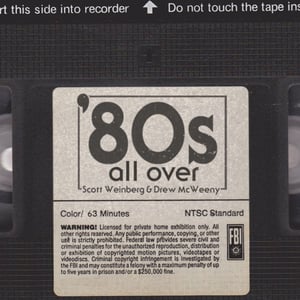
'80s All Over
Scott Weinberg and Drew McWeeny
4.7 • 805 Ratings
🗓️ 23 October 2018
⏱️ 70 minutes
🧾️ Download transcript
Summary
You're in Weinberg's world now, kids. Halloween means horror movies, and as you might have heard, Scott is somewhat of an aficionado of the fright flick. Drew isn't chopped liver when it comes to having chiller bonafides either, and their combined love for the Halloween season is something to behold, as they run down some of their favorite scary movies, the power of the genre as a whole, the (oft-undeserved) critical response it receives, and they even try to scare each other, a little... to varying effect.
Transcript
Click on a timestamp to play from that location
| 0:00.0 | I'm going to get you a drink. |
| 0:02.0 | I'm going to get you a drink. |
| 0:04.0 | I'm going to get you a drink. |
| 0:06.0 | I'm going to get you a drink. I'm going to get you a drink. I'm going to get you a drink. I'm going to get you a drink. I'm going to get you a drink. I'm going to get you a drink.host, Drew McSquearby. I will go with McScreamy, but the scariest thing is that you think that's the scary voice. It coming from me that's kind of scary, isn't it? It's the scary voice. I definitely not let my kids take candy from your house. That's the one scary thing about that voice. That is a way to start. What's up, Scott? Welcome to a very special AT's all over. There you go. There you go. Now you're doing the very whites, I'll scare the scary white voice. There we go. Brought to you by Casper mattresses, although not really. No, definitely not brought to you by anybody, frankly. Nope, no, no, let me finish my bit. Oh, 80s all over, brought to you by our scary patrons. Oh, they are very scary. They're scary because they love us so much. No, I'm excited to do a very special 80s all over Halloween episode because we are welcoming back one of the icons of 80s horror to the horror community this week. I just got in the mail my very special black plastic wrapped first issue of the new Fangoria and boy it has me has me, nostalgic man. Welcome back, fangoria. And we might add, welcome back Michael Myers. Yeah, yeah, it's an interesting moment. It definitely feels like 80s horror is not just horror, but 80s horror is roaring back to life. And I think the success of it last year and you know there is it feels like all the horror sites are run by people who really were formed during the 80s or by the horror from the 80s. And so as much as our generation kind of look back to the 30s and the 50s as the the real sort of signposts, I think the 80s have become the jumping on point for most young horror fans. Yeah, I think you're right. Because a lot of the stuff in the 80s was fairly simplistic and that stuff for younger or early horror fans to like you can not Halloween obviously, which was also 78, but you could get your training wheels on a bunch of Friday, the 13th sequels and build up your confidence to maybe tackle the evil dead or reanimator. You know, and so the non-stop horror franchise thing, it was very prevalent in the 80s. Obviously, we had sequels back in the golden age of Universal Monst monsters. They had plenty of sequels, but I would say that the marketing side of the franchise didn't really take over until the 80s. I mean, you had a hard, you had a Friday the 13th sequel virtually every summer. You had a Halloween, how many Halloween sequels did we get this decade? One, two, three, four, five. And Hell Raysers and whatnot. What have you? It was really easy to just keep churning out part two, three, four, five because also in a way what you're doing is recycling the popularity of the first film because you'd release Friday the 13th, the final chapter. And then you'd have a bunch of nerds exactly like me and my friends running to the store to rent Friday the 13th, 1, 2, and 3 for a hard night. And you know, that stuff is still goes on today, although you don't have to run to the VHS store and drop $15 to rent three old horror movies. I think one of the things that changed and one of the reasons that I feel like horror became, we became much more possessive of horror in the 80s was before then you were really at the mercy of the horror hosts and what was available and what they gave the package rights to and what TV would show. And so like the horror stuff that I got raised on in the 70s was all things I saw on TV or things I probably shouldn't have seen theatrically but did. Whereas in the 80s, I was testing my own limits. And it was my friends and I because of video would decide what we felt like we could handle or what we couldn't handle and we made a lot of mistakes. But it was us and the same thing with cable like we decided, we programmed and it wasn't just the one thing that was on the UHF channel on Saturday night, |
| 5:06.9 | and that's the only horror available to you now. |
| 5:09.4 | Yeah, but that's how I saw the terror party beach. |
| 5:12.1 | Well, that's how I saw a lot of stuff, |
| 5:13.6 | like the early stuff I saw, |
| 5:14.8 | I know neither living dead for me was a UHF Saturday night. |
| 5:19.2 | I didn't know what it was called |
| 5:20.2 | because I came in 15 minutes late. |
| 5:22.4 | And it conquered the world is one that I remember very clearly. Drew, let's talk about this real quick. The idea of scarcity helping to create fans. For example, if you were one meet like me or Drew, and it was a Saturday afternoon, you would have like two options. You would have like some 1956 monster movie or a 1972 martial arts movie. And that was your like two o'clock block. You could find, you could watch either one of those. And that was it. And then at four o'clock, if you were lucky, there'd be two other movie options. And being forced to choose between two movies that you probably wouldn't choose in a video store, I don't know, kind of forces you to appreciate things that you might not have otherwise. I definitely felt like I had to work harder to see things and things felt more special. When they announced that the UHF channel near my house in Texas was going to have a Harry house in week, that was a huge deal. And every single day I would be there to watch one of them in the afternoon and that felt like, oh my god, this is an event. Who knows when they'll ever do this again? A little sidebarger. You a fan. I know Joe Bob breaks, the great Joe Bob breaks, who we hope to have guests in the future. Did some hosting, but I was never a big fan of like the USA Network, like up all night or Captain Commander USA. And my only reasoning was I already am dealing with commercials from these networks. I also don't want 10 or 12 minutes of bumpers full of comedy. I just want to watch a movie. So I was never really a fan of the hosted stuff, although I certainly get why people did like that. Well, because my first horror host when I was a kid was Dr. Paul Barer in Clearwater. And he was the Florida sort of, I think it was Clearwater, Florida, Central Florida, and fairly well known for the region. And he was a guy who like I watched every weekend and I got used to the idea that I had to sit through silly goofy horror host to get to my horror movies. That was almost part of the deal. Like I just thought that's how it worked. You had to have a horror host. And then SCTV had Count Floyd. And I realized that regionally everybody had their own. And whenever I would travel, I would see other horror hosts. So I kind of love that as a thing that existed. I think by the time cable and up all night in USA and that stuff hit, I like the detritus, the stuff like the videos and the weird clips and the things like that way more than I like them showing a whole movie and interrupting it. I either want to go the full misty and have them become a part of the movie where to me, misty is not about making fun of bad movies. It's about making a bad movie into something else where they actually interact with it and make it fun. Or I want, like if I'm going to watch one of those event things and late night cable, I just want the whole hodgepodge. I want you to throw clips at me and bits and things that don't necessarily show me a movie. Like there's a lot of that stuff I really enjoyed because it introduced us to things like the incredible Strange Film Show and there were clips from things that then you would go and track down and I do think it helped alert you to the fact that there was a lot of crazy stuff out there that you could find. Right, but Drew, what is a skeleton's favorite musical instrument? What is it? A trombone. Ah, it is. True. What do witches ask for at hotels? What? Brune Service. Yeah, so we asked our friends up on the Twitter as a little addition to this episode to throw us some many reviews of films that they have watched thanks to the show. So BLC Agnew says, dead and buried remains one of my favorite pieces of hidden treasure that I pointed out to over the past couple of years, a fun twist on several horror conventions with a quality build by a dynamite third act. Keep up the great work. I think there's a lot of people that are gonna bring up Denberry, because that's one that is not in the canon and probably should be at this point. Yeah, I mean, for many years, I mean, I guess throughout the 90s, if somebody had asked me not on the internet, because it didn't exist, hey Scott, name some offbeat horror films from the 1980s. You would say near dark or reanimator stuff that is fairly very well known now, but back then they were still on the up as far as cult or as popularity goes. Denim Buried, we should have done a better job of pimping Gary Sherman's fantastic Denim Buried. Was very happy to meet him in Chicago. And we talked briefly about a handful of his movies and I told him just how much I love his two horror movies this in Romance. Well, there's a lot of and there's a lot of horror filmmakers that will tell you that Gary Sherman has a big name for them because of those movies. And they really like they made a pretty deep impression on a lot of guys who's work people love and I think |
| 10:25.2 | they'd be shocked that they don't know this movie that's so formative for so many of these guys. Let's move now since we are both horror fans and film critics. Let's briefly discuss the problem that are favorite film critics, the late Roger Ebert and the late Gene Tiskel. They really did have a problem with horror films, didn't they? And it's not, I don't mean it as like a screw them, those rotten bastards, but I think |
| 10:48.2 | they both had different but in eight problems with the genre and i say that with respect what do you think i think on rare occasion uh... roger would enjoy a horror film i think uh... gene was and this this is shocking to look back, but Gene was approved and just for violence. And it was really, it's really interesting. If you go back and you read Fingoria from the early 80s, they are public enemy number one. They hate Cisco and they hate Cisco in particular. And he was one of the early guys calling for change in the rating system. He wanted explicit violence. |
| 11:26.7 | He wanted movies like Friday the 13th being X. No question. He just wanted an X and he wanted an X for violence. He was like, we have an X for sex. Why don't we have an X for violence where you just put this porn and you just, if somebody wants to watch this nonsense and you want us to see this and you're a pervert, then great. you can go watch it and should be an X and that should be the end of the conversation. |
| 11:44.7 | Now, did that perspective from reputable and entertaining film critics, did that kind of create in people like you and me kind of like a chip on our shoulder where it was like I know Friday the 13th final chapter is not meant to be a merchandise reproduction, but if you're just going to call it garbage and give it one star then I'm just going to be that much more interested in going to see it well i i my entire experience with har in the eighties was that it was shameful that i should be ashamed for being a harfan and it was from very early on my dad would throw away fangoria magazine if he found it in the house we've covered this in another episode you know what my member what my dad did to my fangoria only i would leave one your bed shredded and shredded into four. He would just shred it in the house. We've covered this in another episode. You know what my, remember what my dad did to my fangouries? Oh, yeah, I would leave it on your bed shredded and shredded into four. He would just shred it once, then twice into like four piles and drop it on my bed. And it, there was something about the notion that if we'd like these things, something was wrong with us. Something was deeply messed up in us for liking something like this. I distinctly remember looking at like the fold out from like spasms and thinking. I was always kind of smart, you know, in many ways. And I remember thinking, yeah, I can see why a parent would look at this and go, that's sick. Oh yeah, and I tried to have that conversation over and over that I was fascinated by the makeup by what was behind it, not by the image, but by what went into the making of the image, and that was the disconnect. And yeah, I like the genre. And I think one of the things that has become clear is we're talking about these is that you and I are not slavishly devoted to a genre where we just blindly, everything that was in that genre was good, and we across the board love everything and do it hospital massacre forever. |
| 13:29.2 | Yeah, and I think there's but I do think that there is a sense that in some Some of these things in for some genre fans. It's all or nothing that you have to be a hundred percent on board and I Find myself frequently rolling my eyes when we get to the fine dissection of the arguments between which is better Halloween 4, Halloween 5. And I'm like, I hate all of them. I hate all of those sequels after a certain point. And I really, I get that when you're a horror fanatic, the really hardcore, and you just want horror 365, you quickly have to learn to love the lumpy and the misshapen and then not quite good. I bet you and I both had that period of our lives where we were into the Halloween sequels. I never thought they were as good as other franchises, but I went to see virtually everyone. I was too young, I think, for three. But after from from four on, I saw everyone in the theaters. And to me, it was just part of the pantheon, not my favorite part of the whole machine. But I was really, I think you and I were very different. And I very quickly became defensive of the things I loved and upset by what I saw as cynical cashing in in on them. I really I don't know that I saw five or six all the way through in theaters. I would see bits and pieces because I worked while they were playing, but I resented and disliked them so much that I would rarely sit through one all the way through. Right, but what is a vampire's favorite fruit? A blood orange? Nice! No, I was going for nectarine, but I will accept blood orange. Alright, okay. Oh my god, you damn! That's impressive. When people think horror in the 80s, the first thing they probably think of is slasher's and or non-stop franchises. Beyond that, we got some really great horror films and I think that while the junk is what people think of first, I don't think that you should ever really trash a decade that gave us, I mean, we mentioned Reanimator, Hell Razor, Near Dark, From Beyond, American Warwolf and London, I mean, the shining. Well look, we had Carpenter working. We had Cronenberg working. We had the Rise of Barker. We had an even Barker Thumbles. Like I think Nightbreed is one of those movies that is deeply, deeply. Woo, woo, woo. 1990. Okay, I'm so sorry, I thought. Oh wait, hold on. Bobby says, let him talk about Nightbreed, you asshole. All right, I thought it was time. But yeah, I think Barker is one of those guys who, even if I don't love everything he did as a filmmaker, I'm so happy he started working in the 80s because I think he pushed it, he pushed a lot of other filmmakers to try more outrageous stuff. One of the reasons that we saw the pushback we did is because we hit this plateau where violence became super realistic and all of a sudden standards loosened and you could show things not only you could technically show them but you were allowed to show them. Like they were just okay to show in theaters. |
| 16:45.0 | And so you did, you ran into this weird thing where I'm sure for like, I always think of my great, great grandmother, or my great, yes, my great grandmother who when I started going to movies would still go to movies with us. And she went to go see Star Wars with us, she went to go see stuff into the early 80s with us. and i know she saw |
| 17:05.0 | one of the two friday that one of the first two friday the thirteenth movies |
| 17:08.1 | because you really wanted to go see stuff into the early 80s with us and I know she saw One of the two Friday one of the first two Friday the 13th movies because she really wanted to go and She would tell us stories that she got told verbally from people who had been in the Civil War So for her to live long enough to go to the movie theater and see something like Friday the 13th I've got to imagine that felt like the end of civilization to go from silent films to throats being realistically slashed on camera. But then again, if you lived during the Civil War, you probably heard about a lot worse carnage than what goes on in Friday the 13th. Sure, she's heard about it. But the idea that films suddenly caught up and could show these things, like it really did, it must have felt like a cultural landslide for people that had never seen the explicit before. That's a very good point in that, and it kind of ties into my question. I didn't want to just brick wall that. It kind of feeds into this question of, if I'm not mistaken, probably most Mr. Ebert and Mr. Siskel were probably adamantly enthusiastic about the films of Sam Peckin-Paul, without which we wouldn't have the slightly permissive standards that allowed for the graphic violence. So it's like, on one hand, why is the slow-motion massacre of Bonnie and Clyde art, but the slow-motion beheading of of jason's mother garbage now i'm not come you know not i'm not comparing that you know i'm not comparing the two i'm just saying what why is one acceptable and what not well and certainly that fight was was just as vocal like the body and client fight the wild bunch fight there were critics to push back against those and it was interesting watch, like, you know, I've said before that Pauline Kale gave me permission to be contrary to what was going on in terms of what was the mainstream take on something. And it was for me, it was her love of Brian De Palma and her refusal to allow anybody to put him in a box of making him disreputable or not worth the conversation or sleazy, which are all words that were used about his work. And you know, dressed to kill, there was huge controversy about that movie. And by the time you got the body double, the poem is seem to be chasing that controversy. He knew full well that there would be people riled up by the work he did. And she took him seriously, and she took the violence in his movie seriously, and she took the way he makes sex in violence seriously. And she was certainly not the only critic. David Hansen gave Halloween to a horrific review when he came out and called it important. And had the foresight to say, what is happening stylistically in this movie will change things we'll change the way other people approach. And this is landmark. This is something real. This is not just a killer's killing a teenager. There's something happening in this movie. I hope that anytime something is seen as disreputable, there is at least one critic who gets in there and tries to see it for what it is and tries to take a step back and have that cultural outside the moment ability. It's very hard when you're being hit by change and I do think that those guys were resistant to what they saw as the classic stylization of film going away. Yeah, and what you say earlier that like it's hard being hit by change is the reason that you're only allowed to give strippers dollar bills. True. Another comment, another comment from Michael Olson at Dark Light Prod's, I upgraded Wolfen Dead and Buried Creep Show and Q to Blu-ray. I rewatch the thing regularly. I have sleep away camp in cue for rewatch. All are ever ending. All are never ending because they're so unique. If you ask this question next year, you'll get the usual suspects. All right, so thank you Michael. Here's another one you'll love. This is from T. Sucka Love. Tee. I'm sorry. This one you'll love. From T. Sucka Love said, possession is a film I would have never known about if it weren't for 80s all over. I'm excited to hear that because it is a film I probably would have eventually gotten around to but would not have done any time soon and boy, it's definitely going to end up in my rotation now every year. Andrew Cardin at Awards Connect says, blood beach, not the least bit scary, but for the irresistible pairing of John Saxon and Bert Young, it's an absolute must-see. And I gotta say, Drew, you know, Bert Young looks like a six-week-old pumpkin that was left outside in a Kansas cat farm. Yeah, so one of the things that I've noticed Scott in doing research for this and sort of going back through things and old things, I've been reading a lot of old fangos and I love in the, there are sections both in the beginning and the end of each issue where they kind of talk about stuff that's in development and |
| 22:11.7 | projects that are coming up and if you really go back and you read all of them and you trace them through |
| 22:16.0 | 81 through about 85 86 |
... |
Please login to see the full transcript.
Disclaimer: The podcast and artwork embedded on this page are from Scott Weinberg and Drew McWeeny, and are the property of its owner and not affiliated with or endorsed by Tapesearch.
Generated transcripts are the property of Scott Weinberg and Drew McWeeny and are distributed freely under the Fair Use doctrine. Transcripts generated by Tapesearch are not guaranteed to be accurate.
Copyright © Tapesearch 2026.