
Patreon Bonus #41 - Jason Bailey
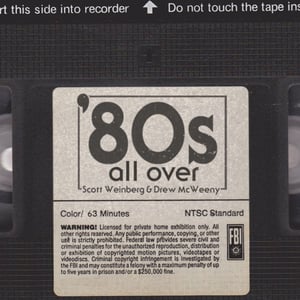
'80s All Over
Scott Weinberg and Drew McWeeny
4.7 • 805 Ratings
🗓️ 9 October 2018
⏱️ 74 minutes
🧾️ Download transcript
Summary
Drew is flying solo for this episode while Scott soaks up Fantastic Fest, but that doesn't mean he's without friends: Film critic Jason Bailey steps in to talk about his favorite and most formative '80s films, and the conversation is made all the better for the fact this is literally the first time, after years and years of talking and swapping stories online, that these two wordslingers are having a real life, real-time conversation about cinema, and they take that opportunity to do what they both do best. Go on some serious DEEP DIVES into their favorite films.
Transcript
Click on a timestamp to play from that location
| 0:00.0 | I |
| 0:26.2 | Hi everyone, welcome to a very special I hope you enjoyed this episode. For you Patreon and subscribers here at 80s all over. I'm Drew McQueenie. I am not joined by Michael Ghost Scott Weinberg this week because he is fantastic festing. So while he's right now watching Flash Gordon with everybody there at the Alamo Drafthouse, I am joined from New York by the one and only Jason Bailey, a long time online friend who I'm excited to finally speak with tonight. Jason, thanks very much for being here, sir. Drew, thank you so much for having me and it's such a pleasure to be on one of my favorite podcasts. Oh, thanks, man. Well, I am excited because one of the things that excites me about doing 80s all over is the notion of deep dive sort of film criticism, which I don't think there's enough of. And I think a lot of what you write is deep dive stuff where you get intrigued by an idea or a notion or a through line with stuff. And to me, that's some of the most exciting kind of archaeology that we do is film critics, because that's where you start to draw connections or see bodies of work or realize that an idea plays itself out. And right now, I know you're working on something about New York. To me, that is one of the most exciting things about that is watching the city change as one of the most film locations in the world. Yeah. No big time. I mean, that was really what kind of drew me to it originally was the idea that I am of the opinion that every movie that's shot on location in New York is basically two movies. It's in the foreground is the narrative, the story that you're being told about these characters. And then in the background, it's a documentary about what New York was at that particular moment. |
| 2:08.4 | And so one of the pleasures, especially if you're someone |
| 2:11.0 | who lives in New York or spends a lot of time in there, |
| 2:13.6 | is going back and seeing movies from the sevenies. |
| 2:16.1 | And me like, oh, that intersection where they flipped that car |
| 2:19.0 | and taking a poem on two, three, |
| 2:20.2 | there's a Starbucks there now. |
| 2:21.6 | And sort of situating the New York that you know with the New York that has been photographed so extensively throughout the city's history. Well, the 80s in particular, like, when I worked in New York, I worked there for a chunk of the 90s, the mid 90s, like 94, 95, right in that era, and it was as the city was changing from sort of that older, dangerous New York to the more cleaned cleaned up Disney version or at least that was the image they were selling. And so I like, I came in just at the tail. I got to see a little bit of Times Square, but not really Times Square and it's glory. And when I look at like 80s movies and they just run through Times Square, I want to stop it and step into it and just kind of turn and look in 360 degrees. And I love that, man. Yeah, I feel the same way. And, you know, and the only problem with having this sort of obsession is that you find yourself watching movies and not paying attention to what's supposed to be happening because you're like, you're squinting at street signs. You're like, are they at 56? That's where I used to work. |
| 3:25.8 | You know, you have to sort of be able to watch movies |
| 3:29.1 | with two brains at the same time. |
| 3:30.9 | Well, I know my girlfriend lived in Venice |
| 3:33.1 | for many, many years and we were watching Max Dugan |
| 3:36.6 | returns recently and it was the neighborhood |
| 3:40.2 | that she had lived in. |
| 3:41.3 | So like as we're watching, her brain just could not stop taking apart the geography of what we're looking at and what that neighborhood looks like now. And oh my god, that's the place where we went to this thing. And it's crazy. Like I, but truly, I think it's one of the valuable things about film that film does capture cultural snapshots, cultural moments. And the 80s from end to end, I think, is filled with massive change and sort of massive cultural shifts that we captured on film. And it's why I believe it is so rich a conversation and so much deeper a conversation than just the 30 movies that everybody normally talks about. Exactly. I could not agree more. And as someone who, you know, I'm a tiny bit younger than you in Scott, but not much. So I was born in 75. So you know, especially like the period that you're right now getting to and the chronology of the podcast is really when I started being aware of movies and sort of turning into a movie geek and reading listings and reading reviews and seeing things as they came out on tape. And that really was what was so glorious about that early video store era was the, you know, the democratization of the video store shelf and the fact that you could see things that were maybe a little offbeat, that were a little obscure, that had something different to say, even in a period that really was sort of dominated by these sort of slick, big studio films. Yeah. I think that is one of the exciting things about the 80s is that shift from the the late 70s sort of very autorgriven, at least the notion of the autorgriven film. And then watching those guys struggle to redefine themselves over like it's hard for me to believe that there was a period where Scorsese struggled to even figure out where he fit in our business. But we're hitting that era right now. And it's, I get it. Like where would you fit if you were him? And suddenly everything was driven by this sudden push towards the mall and the suburban dollar and that rush to hit that gold rush moment of, oh my god, we can make $100 million with a movie. Yeah. So as a little or kid than me, I'm curious, especially for people who do what we do, who did you read first? Who were some of the people that that you read early on. And what led you to reading about movies? |
| 6:28.8 | Because I think there's two different kinds of film fandom when we're young. There's the stuff we're watching. And there's also the other media that we're ingesting and how we choose to do that. Sure. I mean, I started out as I think a lot of people around my age did by watching Cisco and Ebert. They were, you know, it's not unique, but they were very much the gateway into film criticism for me. And I was watching them from when I was like absurdly young, like I was watching them when they were on PBS. I was watching sneak previews at like seven years old, before I really even understood what film criticism was or who these guys were. And so I followed them through the different television series. The first one I ever really read was my local, I'm from Wichita, Kansas. And so I read the local, the hometown paper critic who was not very good, but it was at least seeing in print, oh, this is what this is. You write 700 words about this movie and why it's good or why it's bad. I think the first critic I was actively reading was Ebert, not through, I didn't have access to the Chicago sometimes or anything, but my birthday is in November and starting with, I want to say like my 12th birthday, I asked for the movie yearbook every year. Oh nice. Okay. Or the movie home companion as it was originally called. But every year that was my number one birthday request was to get that year's addition because it always came out right around late October, early November, my birthdays November 14th. So I got that every year and would sit and read it like a novel, read it cover to cover. As I had it for a few editions, I'd start to skip the ones that were in their regular. But that was such a huge component in terms of not just learning how to write about movies and learning how to read about movies, but also in terms of forming taste, you know, that Rogers ideas about movies were so curious and so explorative. But also, like me, he was a Midwestern guy. So that sort of plain spoken approach that he had, where he was just like, you know, your cool uncle who was over for Family Dinner telling you about this Francois Truffaut movie. I think you'd really like it. It's about making movies, you know? Like that was so key to learning about movies and learning about writing movies. Yeah. Were there magazines that you got into as a kid or once you started to get older? What was the first sort of film press or like larger film press that you digested? It sounds silly because it's so pop-oriented, but honestly it was entertainment weekly. I totally fare. I think for a lot of people, that was the first real mainstream one. Exactly, yeah. And like again, I'm just the right age. Like I was 14 when they started publishing. I still remember like my total recall cover and my another 48 hours cover. But that was, that magazine sort of, you know, all in approach to popular culture that everything was sort of worth at least considering was really key for me. And also it was for a kid in which it took Kansas, the fall movie preview, I remember being a huge deal for me as a teenager because this was pre-internet, pre-every film site has a fall preview. So it was very just getting a taste of what was coming, but also the fact that that really was a comprehensive fall movie preview, and there were titles and filmmakers in there that I had never heard of, that I would not have been aware of were it not for that little paragraph, at the end of the November section of the 1993 EW fall movie preview. One of my big, I am a New Yorker now moments. I'll never forget this. We moved to New York in August, late August, early September. And that night, as we were unpacking, I ran down the street to the riot aid as you do to get your toothpaste and whatever. And the entertainment weekly fall preview was on the newsstand at that right aid. And I picked it up and I took it home and I remember sitting in bed with my wife, reading that thing, covered a cover, and realizing about halfway through holy crap, I can see all of these movies on the day they come out now. Yep. Yep. That was, that is a thing that they do far less of now in terms of the advertising, but it used to be a knife in my heart when a TV commercial will come on for a movie. I would go, oh my God, the commercial would get to the end and they go, in limited release this Friday. And I'd be like, oh, no. In select cities this Friday. I know it it was never a select city drew and never ever was. We were never selected. Yeah. That is that the closest I lived to a select city was when I was in Ched Nuga and Atlanta we get things sometimes. And we were drive down specifically to see things. That's why I saw a stranger than Paradise because it was not in not now where I lived. So all right, well listen, one of the things that we do is we have guests on and we ask them to bring with them lists of movies that are not the the accepted canon because yes, we're about to do our June 84 episode and we're going to talk about Ghostbusters and Gremlins and there will be plenty to say I'm sure. But I'm more excited that month that we finally get to do the Pope of Greenwich Village. So it's that to me is the thing that makes this so much fun is when we get to those months where you know, yeah, we're going to talk about you know the five or six things that you absolutely know and and birdie also came out that month. So let's do Bernie. That is what is getting me through some of these truly insane months we're doing right now, is knowing we got the little gems coming. So I wanna know, and I love that we don't ask the guests to tell us ahead of time, we just do it on the air. So hit me with your first one, Jason. What's your first date? |
| 13:06.2 | These gem. Let's start with one that ties into the run up conversation in that it is both a great New York movie and a movie from Scorsese's kind of wilderness period. And that is after hours from 1985. A terrific sort of wind up go all night. New York is terrifying. Tribeca Soho, downtown New York, dark comedy starring Griffin Dunn, and you know, where's Ann Arquette, John Hurt, and just a terrific ensemble cast and teaching Chong. One of teaching Chong is only Martin Scorsese movie. Isn't that an amazing crossover? The fact that they can say that they were directed by him and mean it. When I was working in New York, one of the nights that I was there, the company that we were working for, wanted us to experience New York as a series of strata as a city that has this face that it shows you and this face that it shows you and this face. And so one night the people that we worked for set it up so that we had some security with us and they sent us on a tour of the city that progressively got skisier over the course of the night where it like started at a club that anybody could get to, we went to the limelight at one point. We ended up at the vault for a little while. Things started to get much darker and weirder. The night ended at an after-hours bar that got busted by the cops. It was truly an insane evening. And at the end of it, I, all that I kept flashing on was after hours. And the fact that that city is unique in the way it can offer you that experience where you can cross into a different world by going around this corner and being in this neighborhood and then five blocks over and two blocks up. It's a different planet. And, and it just depends on what time and night it is, and it depends on what else is happening and letting out. And I think there are very few films that capture that quite as well. And I didn't know it for a decade after I saw After Hours, but it was one of those things where at the end of that night, I just went, oh, oh, that's an even better film than I really, Oh wow, okay, I get it it really can feel like this. |
| 15:28.8 | Yeah, yeah. No doubt. No, it's it really grabs something sort of unique and scary about the city. And about what New York movies were at that particular moment? Because one of the things I really get into in the book is the, you know, there are movements of New York cinema, particularly when New York production really took off in the mid-60s. Because it was a boom in production that was near simultaneous with the city going into the toilet. And ironically enough, a boom in production that was enabled by the city, that was part of the establishment of the mayor's office of TV film radio, which made it exponentially easier to make movies. And so it was that much easier for people to document the city going into the toilet. It was a really unfortunate bit of timing. So, you had sort of a period, there were like, initially these kind of these kind of like, you know, earnest gritty dramas, things like midnight cowboy and panic and needle park that were, you know, these sort of snapshots of the city decaying. And then there was a period in the sort of the early 70s of kind of dark comedies of desperation, things like, you know, where's Papa and little murders and the landlord that are, you know that sort of find it funny that the city's dangerous now and that you can't cross Central Park at night. And then that gave way to the sort of more exploitative 70s and early 80s, you know, things like Death Wish and the warriors that really sort of pushed the idea that the city is really scary and dangerous. I want to see somebody mash up the out of towners with death wish and see those two kind of combined. Yes, exactly. And then weirdly, in around the mid 80s, there was kind of, those movies were so extreme when you talk about things like the exterminator and the exterminator too and maniac and stuff like that. Those movies were so out there that really all they could do was sort of retreat to comedy. And so in the mid-80s there's a real movement and I think of after hours as being sort of the quintessential one of these but a movement of movies that are about New York isn't it wacky how New York is insane. So it's things like after hours, it's things like desperately seeking Susan, the back half of crocodile Dundee, even coming to America, I think would fall into that realm. But after hours, I think is the best of the bunch because it is quirky and funny and insane, but there's also real darkness to it. There's real danger out there for him. And it comes across in Griffin Dunn's performance, and it really comes across in the kind of unsettling way that Scorsese moves the camera in this movie. Well, that's, and that's something that I feel like he doesn't get enough credit for is there's a, there's a, an aggressive directorial style that kicks in with after hours that I think is a is president after hours in color of money and it that begins more pronounced for him. But until then it's a different Scorsese language wise. And I don't and I'm fascinated by the energy, which is more ramey-esque. And it's that kind of aggressive camera energy where things fly across rooms. I also feel like after hours is a great, great post-AIDS movie where the anxiety about simply leaving your house to have human contact is, if I leave my house with the intention of maybe taking my pants off, my world could end. That's 100% right. Yes. And does that film get the anxiety of, because he, Rosanna Arquette, the scenes where he's in her apartment and the early scenes and there's still a chance that maybe this night's going to be an interesting night. Maybe there's some connection and the glimpses of scar tissue and the hints of things that maybe have got my god. It just, there is so much that right away begins to be come anxiety inducing and then the film just finds ways to crank it up for him. Yeah, no, you're right. And it is a horror movie energy. It is Raymy Esk, you're right. And I hadn't thought of in those terms, but the camera movements are so fast. They're so much faster than anything he was doing, except for maybe the stuff in the ring and raging bowl. Right. And that's, and it's that aggressive animal energy that feels like it suddenly spilled out into all of the way he's thinking about New York in this movie. Absolutely. |
| 20:05.5 | And he's cutting on a moving camera, which is not something I think that he was doing a lot of before then. I'm thinking specifically of like that first diner scene there, they cut into that scene with the camera already in motion. It's like an impatience to the camera work in there that, yes, that recurs 100% in color of money and the stuff on the, on the billier table. And I think what is, |
| 20:25.0 | is really has sort of codified into, into just his style by the time he gets to good fellows. Oh God, yeah. I'm, and I can't say enough about the impact Griffin done had as a performer for me. And it's the one two punch of American War Wolf and after hours. And that, that gap of a couple of years helped because you kind of he went away. And you're like, okay, I guess I guess Griffin done that was sort of the one and then he kills it in this. And the idea that that's really it as far as the substantial body of Griffin Dunn's work. There's a lot of Griffin smaller Griffin Dunn performances, but those are the two like Front and Center, |
| 21:05.2 | oh my god performances. |
... |
Please login to see the full transcript.
Disclaimer: The podcast and artwork embedded on this page are from Scott Weinberg and Drew McWeeny, and are the property of its owner and not affiliated with or endorsed by Tapesearch.
Generated transcripts are the property of Scott Weinberg and Drew McWeeny and are distributed freely under the Fair Use doctrine. Transcripts generated by Tapesearch are not guaranteed to be accurate.
Copyright © Tapesearch 2026.