
meta_pixel
Tapesearch Logo
Log in
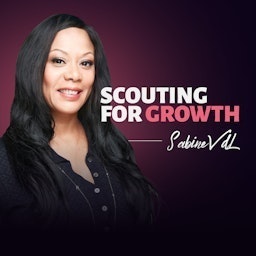
Scouting for Growth

Oliver Wyman Series: Steve Abel – Unlocking Legacy & Transforming Tech in Insurance

Scouting for Growth

Sabine VanderLinden

Business:entrepreneurship, Business, Entrepreneurship, Technology

4.835 Ratings

🗓️ 8 May 2024

⏱️ 41 minutes

🧾️ Download transcript

Summary

Legacy systems didn’t become a problem overnight. But today, they are one of the biggest brakes on growth in insurance. In this episode of Scouting for Growth, Sabine VanderLinden is joined by Steve Abel, Partner at Oliver Wyman, to tackle one of the most difficult—and unavoidable—topics for incumbent insurers: legacy debt and system modernisation. Steve brings a calm, pragmatic lens shaped by decades of working inside complex insurance organisations. He starts by reminding us that legacy systems were once the right answer. A few decades ago, insurers ran on one or two core administration platforms that did almost everything. IT costs were lower, complexity was manageable, and long implementation cycles were simply accepted as the price of stability. Then the world changed. As insurance products diversified, regulations multiplied, and customer expectations accelerated, the technology landscape exploded. Systems proliferated. Customisations piled up. Spreadsheets became the glue holding processes together. And somewhere along the way, multi-year implementations became normalised—even though business speed kept increasing. Steve is refreshingly honest: many carriers made good technology bets in the past. Those systems delivered value. But success yesterday doesn’t guarantee fitness today. Modernisation programmes now fail at alarming rates—30–60% by most estimates—often because organisations underestimate complexity, over-customise, or pursue transformation without a clear business case. The key question Steve urges leaders to ask isn’t “Can we modernise?” It’s “Is this worth it for our business model?” If your business is relatively standardised, a modern core platform may work well with limited customisation. But if differentiation depends on constant tailoring—and you still end up relying on spreadsheets—then it’s time to rethink the approach. A major opportunity Steve highlights is the emergence of modular, cloud-based ecosystems. Instead of monolithic, all-in-one systems that take years to implement, insurers can now assemble capabilities—claims, pricing, finance, analytics—around shared data assets. In this model, data becomes an enterprise-wide resource, reusable across processes and calculations, rather than locked inside individual platforms. Speed is the new strategic constraint. Where insurers once paced decisions in decades, then years, they must now think in months. The ability to integrate, adapt, and evolve quickly—without destabilising the core—has become a defining competitive advantage. For incumbent insurers, this episode delivers: A grounded reality check on why so many modernisation programmes fail Guidance on when large-scale transformation does and does not make sense Insight into ecosystem-based architectures as an alternative to monolithic cores A framework for evaluating technology investments through a business-first lens For InsurTechs and technology partners, it offers a clearer understanding of: Why carriers move cautiously Where real opportunity exists in the modernisation journey 🎧 If you’re wrestling with legacy debt, planning a major system upgrade, or trying to modernise without losing momentum—this episode is essential listening. Because the goal isn’t to replace legacy for the sake of it. It’s to build speed, resilience, and relevance—without breaking the business.

Transcript

Click on a timestamp to play from that location

0:00.0

The Hi there, welcome to this special episode of scouting for growth, where we wanted to explore the world of insurance, technology and innovation.

0:25.4

I'm your host, Samin van der Linden, and today we are delighted to have Steve Abel,

0:31.9

partner at Oliver Wyman, John S.

0:35.0

As shared in my previous solo session,

0:38.0

I wanted to bring a little bit more depth into the world of digital transformation that is affecting us all and Steve accepted to join me on this

0:47.2

podcast the next one and also during our discussion with Brian McD, the chief information officer at Victor Insurance to provide

0:56.5

contacts on this very unique relationship.

1:01.2

Steve has over 25 years of experience

1:03.8

consulting and executive roles, specialising in program management

1:07.2

operation, shared services, enabling technology, and far more. In this specific episode we will dive into the

1:16.3

challenges and solution related to legacy debt and system modernization for incubant insurance carriers or insurance companies across the globe.

1:28.7

We will discuss the pitfalls of investing in expensive core system vendors and the need for shift

1:36.9

toward commoditized technology potentially today.

1:40.7

We will also go into Oliver Wyman's new capabilities and how they can help insurers unlock value from their existing systems and transition away from legacy environment. We know the whole

1:54.0

the whole sector is dependent on margin acquisition and so therefore has

1:59.0

acquired so many legacy system I've heard from companies I've worked with they have hundreds

2:04.7

200 300 of those systems that they have to deal with every day.

2:09.6

We will then dive into the importance of fostering a culture of innovation and collaboration to overcome the challenges associated with legacy debt.

2:20.0

And then we will look into the role of Cloud Solution

2:22.5

and one of my really favorite discussion,

2:25.5

machine learning and artificial intelligence

2:28.6

in transforming industries, but here,

...

Please login to see the full transcript.

Disclaimer: The podcast and artwork embedded on this page are from Sabine VanderLinden, and are the property of its owner and not affiliated with or endorsed by Tapesearch.

Generated transcripts are the property of Sabine VanderLinden and are distributed freely under the Fair Use doctrine. Transcripts generated by Tapesearch are not guaranteed to be accurate.

Copyright © Tapesearch 2026.