
Numb girls & the humiliation of caring too much
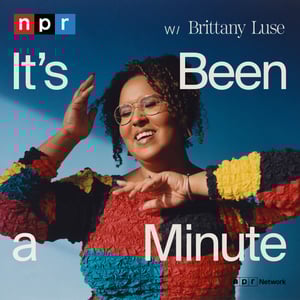
It's Been a Minute
NPR
4.7 • 9.2K Ratings
🗓️ 10 April 2026
⏱️ 26 minutes
🧾️ Download transcript
Summary
In this episode, host Brittany Luse is dissecting our current obsession with numbing ourselves to the moment and tuning out. This so-called “numb girl” attitude and aesthetic is defined by detachment, irony, and a world weary cynicism. Think the "Gen Z pout," "expressionless Botox chic,” a deadpan voice, or selfies with a vacant gaze. Of course, It appears effortless and nonchalant, but it’s highly curated and self-aware — it’s the perfect mask for avoiding humiliation in a world that is always there to judge you. But is avoiding the pain of the world good for us?
Brittany is joined by writer Rayne Fisher-Quann aka Internet Princess and freelance cultural critic Sophie Lou Wilson to get into why all the cool girls are dissociating and what we lose when we numb ourselves to the world around us.
(0:00) News fatigue, detachment, & irony are cooler than ever
(5:02) Gucci runways to political nihilism: numbness went mainstream
(10:15) Lobotomy Chic: an ironic joke turned beauty trend
(14:57) The privilege of dissociating. Who can afford to disconnect?
(18:08) Is numbness a form of feminist resistance?
(20:15) How to un-numb and reconnect with humanity
This episode contains mentions of suicide. If you or someone you know may be considering suicide or is in crisis, call or text 9 8 8 to reach the Suicide & Crisis Lifeline.
Support Public Media. Join NPR Plus.
Follow Brittany on Instagram: @bmluse
For handpicked podcast recommendations every week, subscribe to NPR’s Pod Club newsletter at npr.org/podclub.
See pcm.adswizz.com for information about our collection and use of personal data for sponsorship and to manage your podcast sponsorship preferences.
NPR Privacy Policy
Transcript
Click on a timestamp to play from that location
| 0:00.0 | Let me ask you a question. Do you care or are you so over it? Because people on and offline |
| 0:10.0 | have started bragging about how numb they are to pretty much everything these days. You can see it in the |
| 0:15.6 | Gen Z pout, the pride of expressionless Botox chic, the boastful statements from people saying, |
| 0:21.9 | I don't follow the news. I'm thinking about this now because a few weeks ago, I had this |
| 0:26.7 | conversation with beauty writer Jessica Defino about this lifeless aesthetic that's all over social |
| 0:31.9 | media in the beauty world. Here's how she describes this cultural obsession with numbness. |
| 0:37.3 | It's this pose of acting like you don't care, and maybe the pose becomes so real that |
| 0:43.3 | you actually don't really care. |
| 0:46.3 | Like, there's an element of like that effortless. |
| 0:48.8 | Yeah, like devil may care, like whatever. |
| 0:51.3 | Yeah, nonchalance. |
| 0:52.6 | Nonchalance. |
| 0:53.4 | And I think that has like escalated to dissociation. |
| 0:57.0 | And dissociation is a big part of like glamour and beauty today. |
| 1:02.8 | I want to go deeper on my being numb is so cool right now. |
| 1:07.5 | To get into it, I'm joined today by Rain Fisher-Quan, a culture writer who coined the term |
| 1:11.9 | dissociative pout, and Sophie Wilson, a culture writer who wrote a piece about why we are so |
| 1:17.2 | obsessed with lobotomies, which is very relevant to this conversation, and you'll find out why |
| 1:22.4 | soon. Rain, Sophie, welcome to It's Been a Minute. Hi. Thank you for having me. |
| 1:30.2 | Hello, hello. |
| 1:31.6 | I'm Brittany Luce and you're listening to It's Been a Minute from NPR, a show about what's going on in culture and why it doesn't happen by accident. |
| 1:51.7 | Okay, I want to start off with just kind of like a survey of the land. |
... |
Please login to see the full transcript.
Disclaimer: The podcast and artwork embedded on this page are from NPR, and are the property of its owner and not affiliated with or endorsed by Tapesearch.
Generated transcripts are the property of NPR and are distributed freely under the Fair Use doctrine. Transcripts generated by Tapesearch are not guaranteed to be accurate.
Copyright © Tapesearch 2026.