

Melissa Stangl and Daniel Cleland - Soltara Healing Center: Where Integration meets Tradition
Psychedelics Today
Psychedelics Today, LLC
4.6 • 598 Ratings
🗓️ 21 April 2020
⏱️ 72 minutes
🧾️ Download transcript
Summary
In this episode, Kyle interviews Melissa Stangl and Daniel Cleland, Co-founders of Soltara Healing Center. They talk about integration, Shipibo healing lineage, accessibility of psychedelics, and psychedelic tourism.
3 Key Points:
- Soltara is a Healing Center dedicated toward integration as well as practicing and preserving the Shipibo tradition of Ayahusca healing.
- It doesn't make sense to take nature based traditions and turn it into instant gratification and business. The further you get from tradition, the less beneficial it may be.
- Tourism for Ayahuasca can bring both harm and benefits to the local community. Reinforcing the heritage, paying the healers very well and giving back to the forests in terms of sustainability are all ways that Soltara is using Ayahuasca tourism to help the local communities.

Support the show
- Patreon
- Leave us a review on iTunes
- Share us with your friends – favorite podcast, etc
- Join our Facebook group - Psychedelics Today group – Find the others and create community.
Navigating Psychedelics
Show Notes
About Melissa
- Melissa originally comes from the STEM field
- She was working in corporate America and was in search for a deeper meaning
- She met Dan and after joining one of his initial ayahuasca journeys into Peru, it changed her mindset about healing
- Dan looked for someone to help him after starting up his first ayahuasca center in Peru, and so she dropped everything and moved to the jungle to make it happen
- After witnessing the healing potential working within the Shipibo tradition, and the need for integration within the community, she later founded Soltara with Dan in Costa Rica
About Daniel
- Daniel grew up in a small town in Canada
- He followed the typical life trajectory, go to school, go to college, get a job, etc
- He didn't have big ambitions at the time, very in line with the middle class area that he grew up in
- After entering the work-force, he was in un-ambitious jobs
- He thought "are there just 30 years of doing this until this is over?"
- He felt a strong pull towards South America
- He was very close to nature in his upbringing
- He got a job leading tours
- He had a personal crisis that led him to do some soul searching
- Within the span of a few years, the trajectory pushed him to build his own healing center in Peru
Pillars of Soltara
- They feel very strongly about having the Shipibo healers lead the ceremony, and everything that they (Mel, Dan and the team) do is to help honor the tradition
- They focus a lot on integration
- For the Shipibo culture, their life is integraton, but for a lot of people that are coming from the Western world and other places, that is not the case
- They started collaborating with clinical psychologists to help create a program that puts the retreat at the start of the program, the work comes after
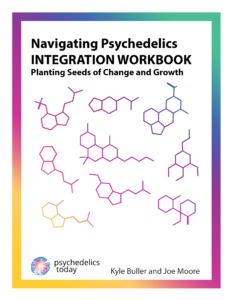
- Soltara includes a workbook for integration afterward
- Our transition times in modern life are shamed, getting your period, having a mid life crisis, having a psychedelic experience, but these experiences can be very sacred
- "Connecting to the sacredness of life is so healing and so needed for modern-day society" - Melissa
Container for Safety and Integration
- The sensationalism is more around the experience itself
- People think that you just go in and have the experience and then your life is changed forever and that is not the case
- A place where people not only can find who they are, but then be who they are in that container, and meet people and create community, is so powerful
- Kyle said when he attended his retreat there, he can't shake how safe he felt
He said it really stood out to him, for someone who is looking at integration and so involved in this field
- Kyle said when he attended his retreat there, he can't shake how safe he felt
- "I would like to bring people to this tradition in a way that is accessible, and I think that starts with safety" - Melissa
Corporadelic
- There are new products, treatment centers, etc
- The further away you get from tradition, the less beneficial it may be
- Dan says it doesn't make sense to take nature based traditions for instant gratification, monopoly, and business
- The ceremony is the healing part, the ayahuasca allows one to connect with the plants, and that it is just the songs in ceremony that really create the healing
- Melissa says she understands that the science is helping the movement, but she is so afraid that big corporations will just run with this and ruin tradition around it
- Kyle says during his experience at Soltara, he just felt flooded with gratitude to experience the medicine healing in nature and in the Shipibo culture, where it is natural
Ayahuasca Tourism
- Tourism for Ayahuasca causes harm but also brings benefits to the community too
- Dan says they are expanding the work, they are not taking away from the traditions
- It takes a certain capacity to travel to the jungle, speak the language, figure out where to go, how to get there, and how to receive healing is not typically possible for the vast majority of people
- The Shipibo is receiving really good pay doing this work, which isn't typically possible for the indigenous people
- This is also reinforcing the heritage, encouraging the children to continue the traditional path
- Now it's not only a cultural heritage, it's also a way to make a living for the community members
- You don't cut down trees to grow ayahuasca, you grow ayahuasca among the trees, so it's protecting the jungle
- In recent years there has been more information and collective awareness to ask the hard questions, Bia Labate has been on the forefront of this, asking the indigenous leaders the important questions of how to keep Ayahuasca tourism sustainable, beneficial and protected
Sustainability
- They just completed a fundraiser for the Amazon
- They have been collaborating with Amazon Watch, and they raised over $10,000
- They are working to plant new Ayahuasca, not to harvest but just to put back into the jungle
Final Thoughts
- Melissa suggest listeners to watch Reconnect, a movie about a man's journey to Soltara
Links
About Melissa Stangl
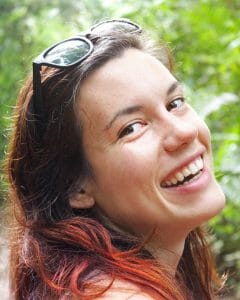
After taking a leap of faith in September 2015 to step out of Corporate America and into the Amazon jungle, Melissa has since used her background in engineering, science, and management to help advance the plant medicine and psychedelic movements – first by helping run a top-rated ayahuasca center in Peru as Operations Manager, and then as Director of Business Development – and now as Founding Partner and COO for Soltara. She is passionate about using her technical, managerial, and problem-solving skills to help bridge the gap between the Western world and the incredible healing potential of plant medicines and holistic health. Melissa is honored to be a part of this project and working with such a high-quality team that understands the importance and sacredness of this work. Her ethos is one of authenticity, professionalism, respect for tradition, transparency, and high-quality service. These mutual tenets are the team's vision for Soltara as a whole, and she is grateful to take part in creating a space that is a strong conduit for healing, sustainability, and knowledge, empowering each guest to become global beacons for positive change.
About Daniel Cleland
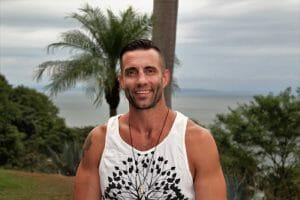
Daniel Cleland is the Founding Partner/Chairman and CEO of Soltara Healing Center. He is an international entrepreneur, traveller, and author of the book, Pulse of the Jungle: Ayahuasca, Adventures and Social Enterprise in the Amazon. Originating in Walkerton, Ontario, he has spent over a decade globe-trotting and hosting group tours all over Latin America and in the deepest parts of the Amazon to work with traditional indigenous medicine practices. After completing his Master's of Intercultural and International Communication, Daniel founded the company Pulse Tours, a company operating in Peru which became one of the highest rated shamanic retreat centers in the world before he sold it completely in 2017. He believes in supporting sustainability initiatives around the world, such as a free solar power installation that he spearheaded for an entire village in the Amazon in 2017, and the work being done by Amazon Rainforest Conservancy, a Canadian NGO wherein Daniel sits as a member of the advisory board.
 Get a 30 day free audible trial at audibletrial.com/psychedelicstoday
Transcript
Click on a timestamp to play from that location
| 0:00.0 | Hello, everybody. Welcome back to psychedelics today, a weekly podcast exploring the science and culture of the emerging psychedelic field with your host, Kyle Buller and Joe Moore. |
| 0:18.7 | Today on the show, I am joined by Melissa Stangle and Dan |
| 0:21.4 | Cleland, the co-founding partners at Soltara. Soltara is an online global community, an oceanfront |
| 0:28.6 | retreat center in the mountainous tropical forests of Costa Rica's Nicaa Peninsula. They work with |
| 0:34.6 | Peruvian Chippebo master healers and offer plant medicine ceremonies along with other holistic healing modalities. |
| 0:41.4 | Sultara's vision is to empower you with the tools and knowledge and space to release what doesn't serve you, affect positive change, and to live your truth. |
| 0:49.8 | I believe that's actually the meaning of Sultara is to release. |
| 0:54.1 | So to release what doesn't serve you. |
| 0:56.0 | Love it. I just want to give a huge shout out and thank you to Dan and Melissa for joining me on |
| 1:01.7 | the show. And also just a lot of gratitude to what they're doing, what they're creating down in |
| 1:07.0 | Costa Rica. And also for inviting me down to check out what they are creating down there. |
| 1:12.5 | I went down to Soltara back in January and was hoping to record a podcast there, but |
| 1:19.1 | you know, things just didn't line up. So I was able to record afterwards, which I think was actually |
| 1:24.1 | pretty cool because then I really had time to decompress and think about my |
| 1:27.9 | experience. So, yeah, just huge shout out. Thanks so much for having me down and showing me |
| 1:34.4 | what you're creating down there, Dan and Melissa. I'm really thankful for it. So in this episode, |
| 1:39.0 | we get into the background story of Soltara, Dan and Melissa's bio history, what they've been up to, |
| 1:46.2 | how Sultara came to be, and kind of the process of creating that. We dive into integration, |
| 1:53.2 | the importance of integration, and touch on a little bit about their integration workbook |
| 1:58.3 | that they provide to participants. Talk about the Shepibo healing, healing lineage, the healing potential of community and group |
| 2:06.0 | work, and also the expansion and accessibility of psychedelics. |
| 2:10.7 | And then we also touch a little bit on capitalism, psychedelics, and exploring ayahuasca tourism. |
... |
Please login to see the full transcript.
Disclaimer: The podcast and artwork embedded on this page are from Psychedelics Today, LLC, and are the property of its owner and not affiliated with or endorsed by Tapesearch.
Generated transcripts are the property of Psychedelics Today, LLC and are distributed freely under the Fair Use doctrine. Transcripts generated by Tapesearch are not guaranteed to be accurate.
Copyright © Tapesearch 2026.