

Ido Cohen - Re-Turn to Wholeness: Jung and Integration
Psychedelics Today
Psychedelics Today, LLC
4.6 • 598 Ratings
🗓️ 11 June 2019
⏱️ 83 minutes
🧾️ Download transcript
Summary
In this episode, Kyle interviews Dr. Ido Cohen, co-founder of The Integration Circle. In the show they talk about themes that arise from transformative experiences and the different ways to integrate them through attitude change, environment and community.
3 Key Points:
- A common theme after a transformative experience is the calling for an attitude change. The experience is only the first step, the integration is where the real work begins.
- Environment is a critical part in integration. You can't always change your environment, but you can change your relationship to it by forming new coping mechanisms than the ones used before a transformative experience.
- Joining consciousness events, finding a therapist and looking for integration circles are all great way to not feel so ashamed or alone after a transformative experience.

Support the show
- Patreon
- Leave us a review on iTunes
- Share us with your friends – favorite podcast, etc
- Join our Facebook group - Psychedelics Today group – Find the others and create community.
Navigating Psychedelics
Trip Journal Integration Workbook
Show Notes
About Ido
- Ido is a Clinical Psychologist based in San Francisco
- He works with individuals and couples in integration groups
- Ido graduated from the California Institute of Integral Studies (CIIS)
- He did his post-doctoral internship at C.G. Jung Institute in San Francisco
- He went to India and it opened up the psycho-spiritual realm for him
- He realized there is a lot more to this reality than what we see
- He had a powerful Ayahuasca experience, and it led him to choose his dissertation project
-
- He wanted to know how to take his experience and integrate it into his daily life
Integration
- Ido began talking to people who had big transformative Ayahuasca experiences (pre, during and after)
- He interviewed people at a year out of an Ayahuasca experience, so they had time to reflect
- "For most people, something is calling them. Either curiosity or suffering." - Ido
- The message comes through a relationship that we are having with something
- People felt that they had to go through something personal before they were able to go into archetypal realms
- A theme afterward was difficulty of re-entry (integration)
- Another common theme was people realizing that they need to change their attitude in order to heal
- It starts with small steps, maybe instead of watching TV for 2 hours you go for a hike for 2 hours, you open up to make room for change
Ego and Self
- Jung's idea of ego-self access; there is the ego that takes things and organizes them and processes things into our reality, and then the self that is the unconscious, the imaginary and dream state
- The idea is to look at the relationship between the two
- Are they fighting or are they in harmony?
- The role of community is so important
- "We need to learn to integrate not just the negatives, but also the positives." - Ido
- Having pleasurable experiences can feel unsafe to a person who has been through a lifetime of negatives
Transformative Experiences
- Personal and Environmental
- Most people have these experiences, and come back to the same urban environment, the same work mindset, the same cultural ideals about "achieving", the instant coffee mentality
- "We want things fast because we don't want to suffer, we don't want to wait, we don't want to invest, we don't want to change." - Ido
- "When people come back with this new experience but to an old environment, then the question is, 'How can I not let the pressure of this old environment get in the way of my experience?'" - Ido
- It really is all about changing your attitude
- Maybe go journaling, go into nature, go dancing, etc.
- "How do I honor my process and not succumb to the pressures of using the same coping mechanisms as I had before?" - Ido
- Integration is a complex process
Environment
- You can't always change your environment, but you can change your relationship to your environment
- You can start looking for integration circles
- You can start looking for therapy
- You can go to consciousness events, meditation/yoga groups
- It really depends on the person but it's all about finding resources that help you feel more connected, less ashamed, and less alone
- One of Ido's clients said to him "I realize I have to break my own heart if I really want to change"
Spiritual Bypass
- Ido suggests a great book on understanding spiritual bypass
- Spiritual Bypassing: When Spirituality Disconnects Us from What Really Matters
- When you start to be really critical about an experience, that's where you need to be more curious
- Shift from criticism to curiosity
- Jung says that this is 'the lifelong process where we are slowly descending into our authenticity'
Final Thoughts
- Seek community
- Don't do it alone, even if you think you can, you don't have to
- If you're shy, come anyway, were all just doing our best
- Encourage people to seek out knowledgeable communities
- Take yourself seriously, honor these sacred experiences and honor yourself
Links
About Ido Cohen
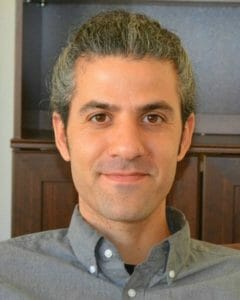
Ido offers depth oriented psychotherapy to the bay area out of San Francisco. Ido conducted his doctoral dissertation study for 6 years, researching the integration process of Ayahuasca ceremonies in western individuals, using a Jungian psychology lens. Ido is committed and passionate about supporting individuals engaging in psychedelic, entheogenic and other consciousness expanding practices, as they integrate their experiences to create long lasting and sustainable change. In addition to his psychotherapy practice, he offers individual and group preparation and integration services.
Transcript
Click on a timestamp to play from that location
| 0:00.0 | Hello and welcome back everybody to Psychedelics today. This is your host, Kyle Buller. In this |
| 0:24.9 | episode, I got to chat with Dr. Iido Cohen, one of the co-founders over at the, the integration |
| 0:31.4 | circle, an integration network and circle that's based out of San Francisco. |
| 0:38.4 | Dr. Cohen completed his sci di at the California Institute of Integral Studies, |
| 0:44.3 | CIS, over in San Francisco. |
| 0:47.3 | And during his time there, he spent his time researching the integration process of ayahuasca. |
| 0:53.2 | So his doctoral dissertation was on the integration process of ayahuasca. So his doctoral dissertation was on the integration process of ayahuasca ceremonies and Western |
| 1:00.1 | individuals and also incorporated a Jungian framework or lens to view this work. |
| 1:06.7 | So in this episode, we chat about his dissertation, some of his findings, what he, some common |
| 1:14.2 | themes with integration and interviewing people that went through ayahuasca ceremonies. |
| 1:22.1 | And then we get to chat about the integration process, how he approaches that. |
| 1:27.0 | And we also explore kind of different |
| 1:29.3 | frameworks of maybe understanding what integration is. We kind of came to the agreement that, |
| 1:37.3 | you know, should be kind of a holistic approach incorporating the pre, the like pre session during the session after the session that's all |
| 1:47.5 | encompassing the integration process it's not just looking looking at the experience after |
| 1:54.0 | the psychedelic experience or ceremony that everything plays a role into integration process |
| 2:00.0 | and integration yeah includes all those |
| 2:01.9 | pieces. So this was a really interesting conversation. I really wish we could have chatted for |
| 2:08.5 | hours or longer because we were getting into some really interesting things towards the end, |
| 2:13.8 | but just didn't have enough time. So I'm going to keep this intro a little short because we did |
| 2:18.8 | go over a little bit in the interview, which was totally okay on my end. I kind of lost track of |
| 2:24.9 | time chatting with Dr. Cohen. And so hopefully you'll hear more from him in the future. I'm sure |
... |
Please login to see the full transcript.
Disclaimer: The podcast and artwork embedded on this page are from Psychedelics Today, LLC, and are the property of its owner and not affiliated with or endorsed by Tapesearch.
Generated transcripts are the property of Psychedelics Today, LLC and are distributed freely under the Fair Use doctrine. Transcripts generated by Tapesearch are not guaranteed to be accurate.
Copyright © Tapesearch 2026.