
History and Haunts of Oz: Sydney Harbour National Park
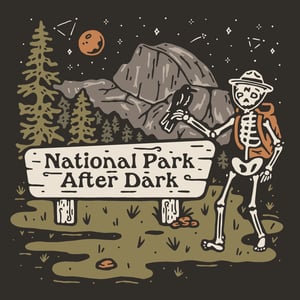
National Park After Dark
Danielle LaRock & Cassandra Yahnian
4.6 • 5.8K Ratings
🗓️ 28 October 2024
⏱️ 91 minutes
🧾️ Download transcript
Summary
Transcript
Click on a timestamp to play from that location
| 0:00.0 | What we cannot see with the naked eye has always driven us forward in our quest for understanding. |
| 0:08.0 | The limits to our vision have limited us for centuries until we began to question just because we cannot see it |
| 0:15.9 | does that truly mean it isn't there? That inquiry changed the way we viewed the world |
| 0:21.1 | and beyond. Telescopes picked up faraway galaxies |
| 0:24.5 | and opened our minds to more questions, |
| 0:27.0 | including opening the door to conversation |
| 0:29.6 | about intergalactic intelligent life. |
| 0:32.4 | Microscopes honed in on miniscule organisms, |
| 0:35.0 | answering long-pundered questions about disease |
| 0:38.0 | which puzzled us for most of human history. |
| 0:41.0 | Spectrum analyzers helped us see radio waves so we could better |
| 0:45.2 | understand the function of our hearts. We take this knowledge and these devices |
| 0:50.1 | for granted now, but before their invention anyone who poised theories about what is One of history's best exemplifications of this is Ignaz Semmelweis. |
| 1:04.4 | The Hungarian physician who noticed women in the maternity ward were dying at an alarming rate |
| 1:09.6 | after being treated by doctors who performed autopsies. |
| 1:13.5 | His hypothesis of death particles that were somehow being |
| 1:16.4 | transferred from cadavers to new mothers during delivery |
| 1:19.6 | was literally laughed at. |
| 1:21.7 | Today we remember him as the father of hygiene and |
| 1:24.3 | washing our hands is second nature. But at a time where so much of what we consider to be |
| 1:29.3 | valid rode on what we could literally see right in front of us, |
| 1:32.8 | Somelweis only earned widespread acceptance years after his death. |
... |
Please login to see the full transcript.
Disclaimer: The podcast and artwork embedded on this page are from Danielle LaRock & Cassandra Yahnian, and are the property of its owner and not affiliated with or endorsed by Tapesearch.
Generated transcripts are the property of Danielle LaRock & Cassandra Yahnian and are distributed freely under the Fair Use doctrine. Transcripts generated by Tapesearch are not guaranteed to be accurate.
Copyright © Tapesearch 2026.