
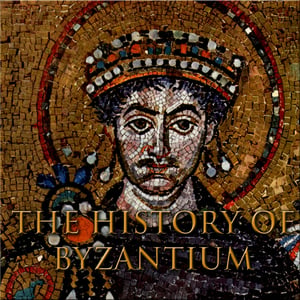
Episode 169 - Constantinople in 1025
The History of Byzantium
Robin Pierson
4.8 • 4.9K Ratings
🗓️ 19 August 2018
⏱️ 38 minutes
🧾️ Download transcript
Summary
Hosted on Acast. See acast.com/privacy for more information.
Transcript
Click on a timestamp to play from that location
| 0:00.0 | Hello everyone and welcome to the history of Byzantium. |
| 0:12.8 | Episode 169 Constantinople in 1025 |
| 0:21.7 | Two episodes of the regular podcast ago, we talked about what had changed in the Roman |
| 0:27.3 | capital since episode 10 of the show. But our focus was largely on the major monuments |
| 0:34.2 | and famous buildings. We didn't talk about the rest of the city and that's what we're |
| 0:39.4 | going to do today. Episode 10 of the podcast was set in 518 AD. We're now in 1025. |
| 0:48.3 | Obviously, to cover the past 500 years in one episode is going to involve some breezy summarising, |
| 0:54.9 | but it should give you the highlights of urban development and point toward the issues |
| 0:59.6 | which will be relevant for our next century of narrative. |
| 1:06.1 | Let's begin with a quick recap of the major moments in the city's development. |
| 1:12.1 | In 518, Constantinople bore the imprint of Theodosius' family who had built many of the famous |
| 1:19.0 | columns and squares that we've talked about. The long reign of Justinian and the rebuilding done |
| 1:25.6 | in the wake of the Nicarayats gave the city a facelift. When you visit Istanbul today, |
| 1:32.4 | it's largely Justinian's monuments that survive in the east of the old city, a testament to his |
| 1:40.0 | investment in sturdy architecture and a reflection of the wealth of the empire at that stage. |
| 1:47.3 | What followed was the collapse under Sassanid and Arab invasions. The bread doll was cancelled, |
| 1:53.7 | the races curtailed, the baths closed. The city's population shrank and huddled around the southern |
| 2:01.5 | shore. Buildings were abandoned, streets stood empty. Various measures were taken to cater for |
| 2:09.0 | this compact populace, such as turning the public squares into livestock markets. |
| 2:16.8 | During the 9th century, a slow recovery began. The fading away of the caliphate and the success |
| 2:23.3 | of the Macedonian dynasty brought peace and prosperity. The capital's population began to grow quickly |
| 2:30.3 | again and merchants from across the Mediterranean viewed Constantinople as an ideal trading |
... |
Please login to see the full transcript.
Disclaimer: The podcast and artwork embedded on this page are from Robin Pierson, and are the property of its owner and not affiliated with or endorsed by Tapesearch.
Generated transcripts are the property of Robin Pierson and are distributed freely under the Fair Use doctrine. Transcripts generated by Tapesearch are not guaranteed to be accurate.
Copyright © Tapesearch 2026.