

Breaking Convention Series: Dr. Torsten Passie - The Science of Microdosing Psychedelics
Psychedelics Today
Psychedelics Today, LLC
4.6 • 598 Ratings
🗓️ 30 July 2019
⏱️ 82 minutes
🧾️ Download transcript
Summary
Download
In this episode, Kyle sits down with Dr. Torsten Passie, Professor of Psychiatry and Psychotherapy with the Hanover Medical School in Germany. In the show, they cover a range of topics on Dr. Passie's studies on microdosing.
Dr. Torsten Passie will be taking part in a special panel dedicated to microdosing at Breaking Convention 2019 (August 16-18, Greenwich, London), also featuring Amanda Fielding of the Beckley Foundation, Dr David Erritzoe of Imperial College, London, Dr Devin Turhune (Goldsmiths), and Dimitris Liokaftos, exploring myriad aspects of microdosing, including its effects, unknowns, and media representation presented by BC director Nikki Wyrd. Find out more about Breaking Convention: https://www.breakingconvention.co.uk/
3 Key Points:
- Psychedelic research in the University setting died off after 2004, but is finally seeing an increase as the psychedelic revolution continues to grow.
- There is very little to no documentation of doctors doing self-experimenting with psychedelic drugs. It's becoming popular for therapists to use the substances used on their patients, more common to do the self-work before doing the work on others.
- Even if microdosing does not produce any significant effects and it is all placebo, the trend is a new way to introduce it into our society.
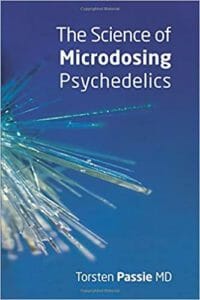
The Science of Microdosing Psychedelics


Support the show
- Patreon
- Leave us a review on iTunes
- Share us with your friends – favorite podcast, etc
- Join our Facebook group - Psychedelics Today group – Find the others and create community.
Navigating Psychedelics
Trip Journal Integration Workbook
Show Notes
About Dr. Passie
- Dr. Passie has been researching psychedelics for 25 years
- He specializes in the therapeutic use of psychedelic drugs
- He has found difficulties in researching psychedelics during prohibition
- Dr. Passie had a mystical experience before using psychedelics and then became interested in psychedelic use
- He had grown up as an atheist, a materialist, and his experience required him to change his psychological state
- His perception of reality was irritated and he had to see a therapist to integrate this experience
- He said that this was frustrating because he was young and still in search for his identity
- Through all of this, he decided to study medicine and become a psychedelic doctor
- He became very conscious that he was on the right track
Research Studies
- The researchers were the only ones doing studies on psychedelic states, there wasn't much happening at the Universities
- He did studies with cannabis, ketamine and even laughing gas
- The research then was on how cannabinoids can help with psychosis
- They were not successful with that, but it came to be that CBD was a neuroleptic and an anti-psychotic
- Research pretty much stopped after 2004 due to new laws and the cost of the research
- Dr. Passie does mention that in the past 10 years research has really taken off again and that we are really seeing the renaissance of psychedelic culture
- In most of the literature of doctors doing self-experimenting, there is very little to no documentation of doctors doing self-experimenting with psychedelic drugs
- Kyle mentions that MAPS has included into their training protocol to allow for therapists to have self-experiments with the substances that they are using on patients
- Kyle also mentions he can't imagine trying to hold space in breathwork without having had his own experiences with breathwork
- Dr. Passie says that the history of self-experimentation with psychedelics has shown that the participants can become 'gurus' and lose their objectivity, he uses Timothy Leary as an example
- But with only a few times of self-experimentation, maybe 2-4 times, he doesn't see risks
HPPD
- Hallucinogen persisting perception disorder (HPPD) is a disorder in which a person has flashbacks of visual hallucinations or distortions experienced during a previous hallucinogenic drug experience
- Dr. Passie thinks there is a selection bias in what is published about HPPD
- Its more common to have a study published that talks about an adverse effect of LSD than a benefit of it
- Hundreds of thousands of studies were conducted in the 50's, and no one claimed that this phenomenon came up
- And now one person has conducted a study, claiming that this phenomena exists
- Dr. Passie says that this pattern happens among people who are prone to anxiety and who are dissociative
- He says that most subjects that claim to experience HPPD, have experienced visuals even before ever taking LSD
Microdosing
- It has been known to not have any effects from 15-20 micrograms of LSD
- 20-50 micrograms of LSD is considered mini-dosing, where you can feel some type of effects from it, but not as much as the full dose
- Dr. Passie says it is strange for people to claim to have increased cognition during microdosing based on conventional data that shows that LSD produces poor cognitive function
- He thinks that whatever the effects are of LSD at a high dose, that the effects at a low dose are the same, just less, not completely different effects
- He believes that there is some placebo effect with microdosing
- In terms of the microdosing trend, Dr. Passie is critical about the productivity factor, he does believe in the creativity factor though
- The flow state may also be increased with microdosing
- He claims that in his own experience with microdosing, he doesn't experience the flow state, in fact he experiences a feeling of agitation
Combinations
- In a study, when patients took a microdose first, and then a little while later, they took a different full psychedelic dose, the microdose impacted the experience of the full dose
- It lessened the effects of the full dose psychedelic
Psychedelics and Sleep
- Dr. Passie mentions a study where patients were given LSD, both high and low doses, during sleep
- What was found was that LSD impacts REM sleep patterns
- The dreams were not altered
- The REM phases got longer during the beginning of sleep, and then much shorter near the end of sleep
- It shows that the impact of sleeping patterns brings someone to feel much different the next day
The Microdosing Trend
- Microdosing has much to be explored yet
- But even if microdosing does not produce effects, the trend is a new way to introduce it into our society
- "Microdosing might be a new assimilation process of psychedelics into our culture" - Torsten
- Instead of the 60's where we are taking huge doses, we are taking tiny doses as a slow approach to assimilate psychedelics back into society
Links
The Science of Microdosing Psychedelics
About Dr. Torsten Passie
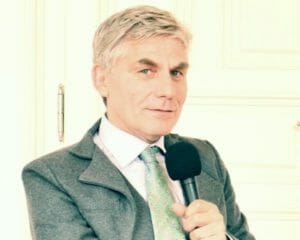
Torsten is a professor of psychiatry and psychotherapy affiliated with Hannover Medical School, and led the Laboratory for Consciousness and Neurocognition. He has conducted clinical research on psychoactive substances and has written several books including The Pharmacology of LSD (2010) and Healing with Entactogens (2012). Between 2012 and 2015 he was visiting professor at Harvard Medical School.
Transcript
Click on a timestamp to play from that location
| 0:00.0 | Hello, everybody, welcome back to psychedelics today. A weekly podcast exploring the science and culture of the emerging psychedelic field with your host, Kyle Buller and Joe Moore. |
| 0:28.0 | Today on the show, I get to chat with Dr. Torsten Passy. Dr. Passy is a professor of psychiatry and psychotherapy affiliated with the Hanover Medical School in Germany. |
| 0:36.7 | He's conducted clinical research on psychoactive drugs and has written books such as |
| 0:41.6 | the pharmacology of LSD and healing with intactogens. |
| 0:46.6 | He was also a visiting professor at Harvard Medical School in 2012 to 2015. |
| 0:55.0 | And from 1998 to 2010, he was a scientist and psychiatrist at Hanover Medical School in Germany, |
| 1:02.7 | where he researched addictions and the psychophysiology of altered states of consciousness, |
| 1:09.0 | their healing potential, and including research |
| 1:12.7 | with hallucinogenic drugs, including cannabis, ketamine, nitrous oxide, psilocybin. |
| 1:19.4 | And in 2012, 2015, he was a visiting professor at Harvard Medical School. |
| 1:26.2 | And he's also the author of a new book from psychedelic |
| 1:29.8 | press called The Science of Microdosing Psychedelics. And this is a wonderful book. Gives a really |
| 1:36.7 | awesome overview of the history of microdosing, a lot of studies on what was done in the early |
| 1:43.8 | years with low-dose psychedelics, |
| 1:46.7 | and highly recommend this book. |
| 1:51.0 | There's a, there's a, um, a nice quote by James Faddenman on the back here, um, his review. |
| 1:59.2 | Finally, a book about microdose research I can recommend |
| 2:02.3 | without reservation. So, yeah, this is definitely a book if you're interested in microdosing. |
| 2:08.0 | This is a must have just because all the wonderful research that Dr. Passy has put into |
| 2:13.6 | this to really kind of outline the history and yeah just some of the early research done |
| 2:20.0 | with mini dosing and low dosing so make sure you go check that out you can probably grab it on |
| 2:25.2 | amazon and maybe go over to psychedelic press and and check it out there and this episode is also |
... |
Please login to see the full transcript.
Disclaimer: The podcast and artwork embedded on this page are from Psychedelics Today, LLC, and are the property of its owner and not affiliated with or endorsed by Tapesearch.
Generated transcripts are the property of Psychedelics Today, LLC and are distributed freely under the Fair Use doctrine. Transcripts generated by Tapesearch are not guaranteed to be accurate.
Copyright © Tapesearch 2026.