

Balázs Szigeti, PhD and David Erritzoe, PhD - Microdosing Research and the Effects of a Self-blinded Study
Psychedelics Today
Psychedelics Today, LLC
4.6 • 598 Ratings
🗓️ 22 January 2019
⏱️ 94 minutes
🧾️ Download transcript
Summary
Download
In this episode, hosts Kyle and Joe interview Balázs Szigeti, PhD and David Erritzoe, PhD to discuss the self-blinded microdosing study in collaboration with the Imperial College London.
In this episode, they explore the self-blinding study and it's pros and limitations, with the aim to collect data on microdosing and its possible benefits.
3 Key Points:
- Microdosing (LSD) has the least amount of research so far among research on drugs like Psilocybin, MDMA and Ketamine.
- This microdosing study includes a procedure on how self experimenters can implement placebo control. This will help determine whether microdosers feel benefits due to the placebo effect or because of the pharmacological action of the microdose.
- Just because microdosing may have a placebo effect (the way a user feels while taking it) it may actually have benefits that one cannot necessarily 'feel' (users may become more creative, have better problem solving skills, etc).

Support the show
- Patreon
- Leave us a review on iTunes
- Share us with your friends – favorite podcast, etc
- Join our Facebook group - Psychedelics Today group – Find the others and create community.
Navigating Psychedelics
Show Notes
About Balázs
- Balazs attended his undergrad in the UK at Imperial College and studied Theoretical Physics
- He moved to Scotland to get his PhD in Computational Neuroscience
- He became interested in psychedelics via the Global Drug Survey
- He was doing MDMA research and then the microdosing project came to him
About David
- He is a medical doctor and works in clinical psychology doing research
- He does brain imaging and his background has been in addiction, depression and schizophrenia
- He did his postdoc at Imperial and worked with Robert Carhart Harris
- He worked in a clinical trial working with people of treatment resistant depression
- He is currently working on an online survey for microdosing
Psychedelic Medicine
- MDMA for PTSD is the most advanced in terms of available scientific evidence for psychedelic medicine
- There is already a big gap in psilocybin vs MDMA for treatment
- There isn't much research on microdosing yet
- In order to do research on microdosing, you'd have to bring in a 'patient' and have them in the lab for many hours at a time, very frequently, and it's not practical
The Microdosing Study
- In this microdosing study, they are testing cognitive function
- The user will have to fill out a questionnaire throughout the duration of the microdose
- There were a lot of things, very political for the downfall of psychedelic science
- When the double-blind method was introduced for science, it used methods that would have compromised the 'setting' of taking psychedelics
- There is a manual that the users have to follow for the setup process
- Its a semi-randomized process where they take the microdose over 4 weeks and it may be either the psychedelic or a placebo
- It works on a method of a dose hidden in a capsule assigned to a QR code, where the user doesn't know what they take until the end of the study
- This is a study inviting people that plan to microdose a blotter based psychedelic
- Its a hands-off study of observation, based on a users own plan on taking the substance
Limitations of the Study
- Its half-way between a clinical study and an observational study
- They aren't sending the users the LSD, they are just providing the platform for the users to share their experience on
- In this trial, the flaw is that the research team doesn't know the dose size of the blotter the user takes, it could start as a 100mg, more, less. Its a variable that cannot be controlled
- The fix would be to have the LSD sent to the lab, tested for dose size, and then sent back to the user (anonymously), but since it's illegal it cannot be done
- It's also hard to determine even distribution of a blotter into microdose size
- They don't know if the user is cutting the blotter paper like a pie or in squares
- Also, because the drug is being bought on the black market, they wont know if there are adulterants in the drug unless the user tests the drug themselves
- David and Balázs also say that based on current findings, most LSD tested is pure LSD, where a drug like MDMA is more common to contain an adulterant
- They do have plans to extend the study to include plant based psychedelics and volumetric dosing
What is a Psychedelic Microdose?
- Psychedelic microdosing is not the same as Pharmacological microdosing
- A microdose in pharmacological context is 1/100th of a dose, where a psychedelic microdose is more like 1/10th of a dose
Is Microdosing Worth it?
- People like David Nichols and Ben Sessa think microdosing is pointless
- It could be that microdosing is a glorified placebo effect
- Most people who are microdosing have had previous experience with psychedelics
- People are doing it because they believe there is a benefit that comes from it
- The placebo control is the most important component of this self-blinded method
- People say that microdosing stimulates their creativity, but creativity is hard to measure
- One thing they could measure is personality through a personality assessment
- One thing that has been studied is an increase in the 'Openness' personality trait after psychedelic use
- The flaw is that a personality test is a person answering questions about themselves
Current Findings
- The benefit of this study, is it doesn't take people out of their natural, personal setting
- Based on the feedback already received, the users are getting their guess right only half of the time, on whether it is the microdose or the placebo
- Just because microdosing may have a placebo effect (the way they feel while taking it) it may actually have benefits (users may be more creative, have better problem solving skills, etc).
- Homeopathy is widely believed to be a placebo effect in the scientific community, but the homeopathy is continuing to grow
Links
About Balázs Szigeti, PhD
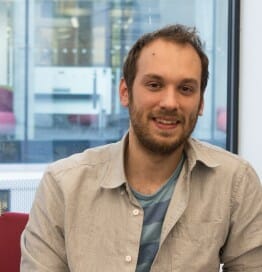
Dr. Balazs Szigeti has studied theoretical physics at Imperial College, but turned towards neuroscience for his PhD studies at the University of Edinburgh. His main work is about the behavioural neuroscience of invertebrates, but he has a diverse scientific portfolio that includes computational neuroscience and driving forward the OpenWorm open science initiative. Balazs is also the editor of the Dose of Science blog that is published in collaboration with the Drugreporter website. Dose of Science discusses and critically assesses scientific studies about recreational drugs. Recently Balazs has started a collaboration with the Global Drug Survey to quantitatively compare the dose of recreational users of various drugs with the scientific literature.
About David Erritzoe, PhD
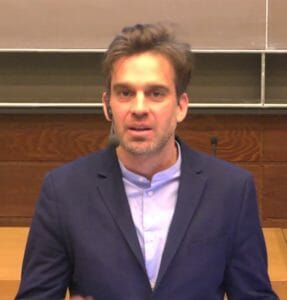
Dr. David Erritzoe is qualified as a medical doctor from Copenhagen University Medical School and currently holds an Academic Clinical Lectureship in Psychiatry at Imperial College London. Alongside his clinical training in medicine/psychiatry, David has been involved in psychopharmacological research, using brain-imaging techniques such as PET and MRI. He has conducted post-doc imaging research in the neurobiology of addictions and major depression. Together with Prof Nutt and Dr Carhart-Harris he is also investigating the neurobiology and therapeutic potential of MDMA and classic psychedelics.
Transcript
Click on a timestamp to play from that location
| 0:00.0 | Hello and welcome back to Psychedelics today, everybody with your host, Kyle Buller and Joe Moore. |
| 0:24.4 | Today on the show, we get to chat with Dr. Blaszengetti and Dr. David Oritzso to chat about this |
| 0:31.9 | self-blinded microdosing study that's in collaboration with the Imperial College London, the Beckley Foundation. |
| 0:40.3 | So I guess to give a little bit of background about our guest, Dr. Zaggetti studied theoretical |
| 0:46.2 | physics at the Imperial College London, but then turned towards neuroscience in his PhD studies |
| 0:52.2 | at the University of Edinburgh. Plasj is also the editor of |
| 0:55.9 | the Dose of Science blog that is published in collaboration with the drug reporter website. |
| 1:02.1 | Dose of Science discusses and critically assesses scientific studies about recreational drugs. |
| 1:08.0 | Recently, Blasj has started a collaboration with a global drug survey to compare the dose |
| 1:15.0 | of recreational users of various drugs with the scientific literature. A better understanding on how |
| 1:22.5 | people accurately use drugs provide important context for the interpretation of scientific studies. |
| 1:30.3 | Dr. Orritso, academic clinical lecturer over at the Neuropsychopharmacological Unit, |
| 1:39.3 | or Psychopharmacology Unit, Department of Psychiatry and Division of Brain Science over at the Imperial College of London. |
| 1:49.0 | Qualified as a medical doctor at the Copenhagen University Medical School in 2001 and currently holds an academic clinical lectureship in psychiatry at the Imperial College London. |
| 2:00.9 | Alongside his clinical training in medicine and psychiatry, David has been involved in |
| 2:06.3 | psychopharmacological research using brain imaging techniques such as the PET and MRI, together |
| 2:12.5 | with Dr. David Nutt and Dr. Carrhar Harris. He's investigating the neurobiology and therapeutic potential |
| 2:20.7 | of MDMA and classic psychedelics. So in this episode, we explore the self-blinded microdosing |
| 2:27.9 | study. This project is being run by an international group of scientists at the Imperial |
| 2:32.7 | College London who are experiencing |
| 2:34.7 | conducting trials with psychedelic substances. And the aim of this study is to collect data on |
| 2:41.9 | microdosing, which is really important. There's a lot of, you know, claims out there about the |
... |
Please login to see the full transcript.
Disclaimer: The podcast and artwork embedded on this page are from Psychedelics Today, LLC, and are the property of its owner and not affiliated with or endorsed by Tapesearch.
Generated transcripts are the property of Psychedelics Today, LLC and are distributed freely under the Fair Use doctrine. Transcripts generated by Tapesearch are not guaranteed to be accurate.
Copyright © Tapesearch 2026.