
Are You Too Independent? It Might Be a Trauma Response
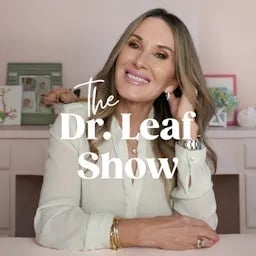
The Dr. Leaf Show
Dr. Caroline Leaf
4.7 • 3.3K Ratings
🗓️ 25 February 2026
⏱️ 34 minutes
🔗️ Recording | Apple Podcasts | RSS
🧾️ Download transcript
Summary
Transcript
Click on a timestamp to play from that location
| 0:00.0 | We celebrate independence so loudly that almost no one stops to ask, |
| 0:04.3 | at what point does self-sufficiency start becoming a shield? |
| 0:09.0 | In a world that praises the person who handles everything, |
| 0:12.4 | it's easy to confuse emotional distance with emotional maturity |
| 0:15.8 | and isolation with competence. |
| 0:18.9 | Hyper independence is not a personality trait. |
| 0:22.4 | It is actually a harmful thought pattern. |
| 0:25.1 | And this way of thinking often stems from past experiences where it felt safer not to ask |
| 0:30.2 | for help. |
| 0:31.3 | And it's further intensified by toxic culture that glorifies independent productivity, |
| 0:36.5 | pressuring you into carrying every burden by |
| 0:38.9 | yourself. This isn't about blaming yourself for being capable. Capability is beautiful. |
| 0:44.7 | Autonomy is healthy. But when every instinct tells you to keep people at arm's length, |
| 0:50.5 | to never rely on anyone, to downplay your own needs because you don't want to feel vulnerable, |
| 0:57.0 | something deeper is happening beneath the surface. Research on avoidance-driven coping |
| 1:03.0 | shows that people who over-function emotionally often aren't stronger, they are simply more |
| 1:08.4 | practiced in silence. They are better at appearing okay. They are |
| 1:12.8 | better at solving every problem on their own because somewhere along the way, their mind learned |
| 1:17.9 | that asking for support wasn't actually safe or reliable or worth the emotional risk. |
| 1:24.0 | And the culture around us reinforces this. We applaud the lone achiever, the one who never cracks, the one who never needs help. |
| 1:32.6 | We romanticize the idea of being unbothered. |
| 1:36.0 | But underneath that celebration is something far less glamorous. |
... |
Please login to see the full transcript.
Disclaimer: The podcast and artwork embedded on this page are from Dr. Caroline Leaf, and are the property of its owner and not affiliated with or endorsed by Tapesearch.
Generated transcripts are the property of Dr. Caroline Leaf and are distributed freely under the Fair Use doctrine. Transcripts generated by Tapesearch are not guaranteed to be accurate.
Copyright © Tapesearch 2026.