
80. The Future of Fuels
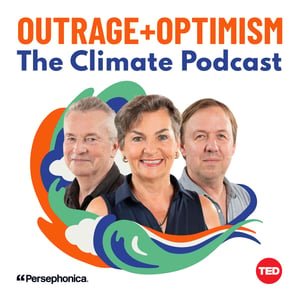
Outrage + Optimism: The Climate Podcast
Persephonica
4.7 • 1.1K Ratings
🗓️ 27 November 2020
⏱️ 59 minutes
🧾️ Download transcript
Summary
This is our second episode of an Outrage + Optimism investigative series on The Future of Transport. There’s no denying that for over a century, fossil fuels have played a key role in humanity’s progress. But at a cost. They account for two-thirds of global greenhouse-gas emissions, and the pollution from burning them kills more than 4 million people a year.
So in a year where cars sat unused, and oil prices crashed...what is the future of fuels? We know that in order to meet the Paris Agreement, we need to reduce CO2 emissions by 50% by 2030. Because even though COVID-19 is expected to reduce energy-related CO2 emissions by 7% this year, we need massive changes in how we move people and things.
So will we see the end of the internal combustion engine? How will the world go electric? Can hydrogen scale to meet our energy demands? Our hosts Tom Rivett-Carnac, Christiana Figueres and Paul Dickinson pull out the roadmap to a zero-emission future, hit the road looking for answers to a decarbonized transport sector with experts who are in the driver's seat.
Read Tom’s blog to find out more from behind the scenes.
Watch David Lammy’s TED Talk before listening next week!
—
This series is sponsored by NESTE
Twitter | Facebook | LinkedIn | Instagram
—
Guests this week:
Ramez Naam, Singularity University
Monica Araya, Climate Champion
Twitter | Facebook | LinkedIn | Instagram | Ted Talk
Mary Nichols, CA Air and Resources Board
Martin Daum, Daimler
Twitter | LinkedIn | Instagram
Alejandro Agag, Formula E
Facebook | Twitter | Instagram | LinkedIn | YouTube
Craig Knight, Hyzon Motors
Twitter | LinkedIn | Facebook | Craig LinkedIn
Sara Forni, CERES
Robert Llewellyn, Fully Charged
Twitter | FC Twitter | Fully Charged YouTube
—
Keep up with Christiana Figueres here:
Instagram | Twitter | LinkedIn | Facebook
—
Tom Rivett-Carnac:
Instagram | Twitter | LinkedIn
—
Follow @GlobalOptimism on social media!
Facebook | Twitter | Instagram | LinkedIn
—
Don't forget to hit SUBSCRIBE so you don't miss another episode of Outrage + Optimism!
Hosted on Acast. See acast.com/privacy for more information.
Transcript
Click on a timestamp to play from that location
| 0:00.0 | Hi, everyone. Welcome to this week's episode of Outrage Optimism. Tom here, I just wanted to take a word at the top of the episode to let you know that today the episode we are bringing you is the second in the special series on the future of transport. |
| 0:14.0 | Attentive listeners will remember that about four weeks ago we brought you the first in the series, which was an investigation into the future of aviation. |
| 0:22.0 | And today we've moved on to the future of fuels. |
| 0:25.0 | This is a great episode. It's different to our normal conversations. We have lots of different guests. We have conversations. We take you on a journey to explore what the future of fuels will be. |
| 0:35.0 | We tell amazing stories about how the world we are trying to create is emerging all around us and how exciting this future is going to be. |
| 0:43.0 | We're grateful to our sponsor nest Dave having made this podcast possible and to all of the guests for participating and to you for listening. Hope you enjoy it. Here's the episode. |
| 0:55.0 | Hello and welcome to Outrage Optimism. I'm Tom Riviccarni. I'm Cristiana Figueroz. And I'm Paul Dickinson. This week in a break from our normal format we bring you the second in a special series of episodes looking at the future of sustainable transport. |
| 1:20.0 | In a year when across the globe cities fell silent, cars did stationary and oil prices crashed. We'll be looking at how emerging energy sources will shape the kind of vehicles will drive in the years to come. |
| 1:42.0 | There's no denying that for over a century fossil fuels have played a key role in humanity's progress but at a cost. They account for more than two thirds of greenhouse gas emissions and the pollution from burning them kills more than four million people a year. |
| 1:57.0 | So in keeping with this podcast mission to balance both outrage and optimism will be bringing you plenty of both. |
| 2:05.0 | We'd all been born into a world where we sat in traffic jams with thousands of engines going bumping out toxic carbonogenic gas. It was like that's normal. |
| 2:17.0 | There is so much outrage out there when you really look at what pollution does to people. In particular I think the symbol of that outrage at least in my case is the tailpipe. |
| 2:30.0 | And I thought at the time from the one has got a problem and I thought at the time we should create a green version of the sport we should we should move in that direction. |
| 2:40.0 | What's clear is the internal combustion engine for ground transport is dead dead dead dead dead. |
| 2:47.0 | Now even though the coronavirus pandemic is expected to result in a record seven percent decline in energy related greenhouse gas emissions this year. |
| 3:01.0 | The international energy agency has warned against complacency because the road to a decarbonized transport sector is indeed long and winding and without the ambition commitment and stubborn optimism of people like the ones you're about to hear from. |
| 3:15.0 | Global emissions could still continue to rise to a point where there's no going back. That's on this episode of outrage and optimism. |
| 3:26.0 | This episode is brought to you thanks to the support of our sponsor Neste. Neste is in the business of fighting climate change by producing renewable fuels and circular solutions. |
| 3:46.0 | Originally a local oil company from Finland Neste has transformed into a leader in the field of renewable diesel and jet fuel from refined waste products which offer an immediate solution to cutting the global carbon emissions of road and air transport. |
| 4:02.0 | So one of the interesting things about the last five years since Paris has been the driving down of costs of renewable energy and I think all of us have kind of witnessed that and we've been amazed at the fact that really today it is cheaper to generate solar and wind than really any other form of electricity. |
| 4:26.0 | And I think most people listening to this podcast are probably familiar with that fact but probably what people are less familiar with and what I myself was certainly less familiar with is the fact that transport is also transforming at an equally rapid pace to the point where decarbonized transport systems are going to become the norm within just a few years. |
| 4:45.0 | Where are you guys on this issue? Have been tracking this as closely as you have the decarbonization of power? |
... |
Please login to see the full transcript.
Disclaimer: The podcast and artwork embedded on this page are from Persephonica, and are the property of its owner and not affiliated with or endorsed by Tapesearch.
Generated transcripts are the property of Persephonica and are distributed freely under the Fair Use doctrine. Transcripts generated by Tapesearch are not guaranteed to be accurate.
Copyright © Tapesearch 2026.