
457 -Companion Planting Starts in the...Kitchen?
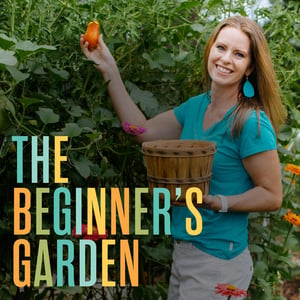
The Beginner's Garden with Jill McSheehy
Jill McSheehy
4.7 • 830 Ratings
🗓️ 3 February 2026
⏱️ 35 minutes
🧾️ Download transcript
Summary
Companion planting can feel confusing fast. Charts, rules, and exceptions make it hard to know what really works.
But what if you already understand companion planting better than you think?
The foods you naturally cook together often grow well together, too.
In this episode, I share a simple way to think about companion planting by looking at familiar kitchen pairings. Tomatoes and basil. Onions and peppers. Carrots and celery. When you connect what belongs together on your plate with what thrives together in the garden, companion planting starts to feel intuitive instead of overwhelming.
free download: The Beginner's Garden Resource Vault
Get complimentary access to a library of printable charts, guides, and tools to help you grow food with less overwhelm.
👉 http://journeywithjill.net/free-garden-downloads
Key Takeaways
-
Why familiar food pairings often translate to successful garden companions
-
How cool-season and warm-season crops affect timing and placement
-
Practical examples of companion planting that actually work
-
Which plant pairings to avoid and why
-
How to simplify garden planning without memorizing charts
Resource Links
- Register for the Productive Garden Masterclass: http://journeywithjill.net/masterclass
-
Beginner's Garden Resource Vault (free):
http://journeywithjill.net/free-garden-downloads -
Friday Emails (newsletter):
https://journeywithjill.net/gardensignup -
Recommended Brands & Products:
https://journeywithjill.net/recommended-brands-and-products/ -
Complete Garden Planner:
https://shop.journeywithjill.net/
Sponsors for This Episode
Organic Rev
I use Organic Rev to support strong roots and healthy soil.
Use code JILL10 for 10% off.
👉 http://journeywithjill.net/organicrev
As an affiliate, I earn from qualifying purchases.
Disclaimer
Gardening advice shared in this podcast is based on my own experience in Zone 8a (Arkansas) and from the feedback I receive from others in different gardening contexts. Your results may differ depending on your location, climate, and growing conditions. Always check your local extension service or trusted resources for region-specific guidance.
Some links mentioned may be affiliate links, which means I earn a small commission at no extra cost to you if you make a purchase. As an Amazon Associate, I earn from qualifying purchases.
Transcript
Click on a timestamp to play from that location
| 0:00.0 | Companion planting. It's one of those topics we love, but we can easily get confused by. |
| 0:06.8 | But what if the way we naturally pair foods in the kitchen has been quietly teaching us companion |
| 0:15.1 | planting all along? Now, if you love cooking, you instinctively know what goes together. Tomatoes with basil, |
| 0:22.6 | onions with peppers, carrots with celery. You really don't have to think about that too much. |
| 0:28.1 | But if you're more like me, cooking is not intuitive and I am definitely not a natural in the kitchen. |
| 0:35.5 | Actually, when I do decide to whip something up, my husband looks |
| 0:40.3 | at me like, do you know what you're doing? Because typically, I have to follow recipes very closely. |
| 0:47.2 | But even then, whether you love cooking or you just follow instructions like I do, you start to |
| 0:52.4 | notice something. The same vegetables and herbs |
| 0:55.9 | show up together again and again. And that's when something interesting occurred to me. One day it hit |
| 1:03.1 | me. What if the combinations we're so used to seeing in the kitchen are giving us clues to what |
| 1:10.2 | actually belongs together in the garden |
| 1:12.4 | and what doesn't. Because here's the thing. As a beginning gardener, a lot of us learn |
| 1:18.6 | companion planting like it's a chemistry exam, charts, rules, exceptions, warnings, and all of |
| 1:24.8 | this feels confusing and impossible to remember. But cooking, even if you're not a |
| 1:31.3 | chef like me, cooking is intuitive. It's cultural, it's seasonal, and it's built on generations |
| 1:38.9 | of trial and error. And when you start lining up what we naturally cook together with what actually grows well together, |
| 1:46.5 | something clicks. Suddenly, companion planting stops feeling mysterious and starts feeling obvious. |
| 1:55.1 | So today I want to explore that idea with you. We're going to look at the plants you already know |
| 2:00.4 | foods you've probably |
| 2:01.6 | cooked or eaten your whole life, and let's see how those same relationships play out in the garden. |
| 2:07.9 | We'll look at some natural pairings, both in the kitchen and the garden, as well as unnatural |
... |
Please login to see the full transcript.
Disclaimer: The podcast and artwork embedded on this page are from Jill McSheehy, and are the property of its owner and not affiliated with or endorsed by Tapesearch.
Generated transcripts are the property of Jill McSheehy and are distributed freely under the Fair Use doctrine. Transcripts generated by Tapesearch are not guaranteed to be accurate.
Copyright © Tapesearch 2026.