

316: Diversity, Adversity, and Healing
Feeling Good Podcast | TEAM-CBT - The New Mood Therapy
David Burns, MD
4.6 • 899 Ratings
🗓️ 31 October 2022
⏱️ 70 minutes
🧾️ Download transcript
Summary
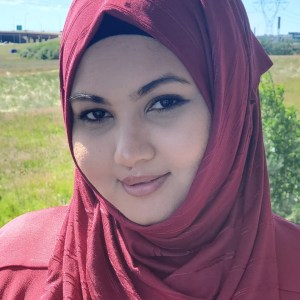
Audrey Kodye
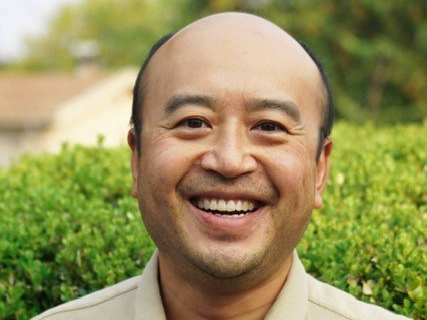
Sunny Choi
Diversity: Trauma and Training
featuring Sunny Choi and Audrey Kodye
Rhonda and I are proud to feature Audrey Kodye, a psychologist with a private practice in Canada, and Sunny Choi, LCSW, who specializes in the treatment of underserved populations in the San Francisco Bay Area. In today's podcast, these beloved TEAM-CBT therapists bring us an important discussion on the impact of racial, gender, religious and sexual bias, including tips on how to incorporate relevant questions into our initial evaluations of all new patients, as well as illuminating ideas on how to maximize treatment effectiveness with TEAM-CBT.
Both Audrey, who was born in Mauritius, and Sunny, who was born in Hong Kong, describe their experiences with bias and violence, both when growing up, and as adults, and how these experiences shaped core feelings of not being "good enough."
Sunny explained that how he incorporated the negative messages that were triggered by his traumatic experiences:
I grew up in a privileged family in Hong Kong, and was favored as a male child. When we came to the United States, I was 12 years old and undocumented. I got beaten up because I had slanted eyes, and I was hated because I was gay. I worked super hard, getting a degree in engineering from UCLA and a master's in management from Stanford, and became successful, but got more and more depressed due to my belief that I "wasn't good enough."
Now I work with marginalized populations, the poor, people of color, LGBTQ, immigrants, and abused women.
Audrey said:
I've also felt like I wasn't good enough. . . . I'm a light-skinned black woman from Africa, from a lower-class family in Mauritius. . . . My ancestors had to be very resilient due to prejudice, and I'm very proud of them. I've also struggled with social anxiety and depression due to the racial trauma I've experienced.
Sunny and Audrey have both been helped by TEAM-CBT, and feel it has a great dealt to offer and have appreciated that diversity is celebrated in the personal work so many people do in David and Jill's Tuesday training group. They say that "TEAM has helped us and our patients as well!."
They gave some valuable tips on how to incorporate diversity awareness in to treatment with TEAM, but the same tips would be helpful to anyone interacting with a friend or colleague who may have been the victim of abuse.
Sunny added:
"I got scared and anxious when thinking about this topic prior to today's podcast. What I've been through has definitely shaped my behavior, my thinking, and my feelings, and the hatred is still happening today."
He tearfully described the experience of his cousin who has a Chinese restaurant in Oakland, and someone threw a rock through the window to act out on their hatred for Asian Americans.
Audre said:
"I also felt sad and anxious while preparing for the podcast. It's not easy to talk about racism and discrimination, and I felt a lot of self-doubt about my own experiences with racism and discrimination before the podcast, because they have so often been invalidated. People get defensive and are often incredulous. They don't believe it. So you run into conflict and opposition and defensiveness when you try to speak out."
David agreed and emphasized how sensitive and defensive people can be when our "blind spots" are confronted, especially when we've been in a state of denial, thinking of ourselves as totally innocent when we're not!
They discussed three keys in thinking about racism and discrimination:
-
Systemic racism: the Five Secrets of Effective Communication can be helpful. For example, it is important to acknowledge the anger your patients may feel because of the injustices they experience.
-
Micro-aggression: These are subtle put-downs that may sound like compliments, and might even be intended as such, but are really hurtful. For example, when learning that Sunny is gay, someone may say, "Well, Sunny, you certainly don't act gay!" This statement, which might sound innocent, actually implies that you're "less than" or "less of a man" if you're gay!
-
Internalized oppression: This is when the person who is being targeted turns against himself or herself, and internalizes the message that "I'm not good enough," or "I'm defective."
David points out that this is similar to Freud's model of depression, which he thought of as "anger turned inwards." Although Aaron Beck railed against this construct, I have to admit that the negative thoughts of people who are depressed nearly always do have a hostile, bullying tone.
David also compares racial discrimination and hatred to the three components of "Abuse Contract" he often explains in his work with abuse victims. There are three parts to the contract:
-
I get to abuse you, physically, psychologically, sexually, or financially for my please.
-
We have to keep it secret. If you ever tell on me, or even imply that I'm doing something wrong, I'll REALLY hurt you.
-
It's all your fault. You're the dirty bad one, and you deserve what I'm doing to you. I'm a god who is superior and without fault.
And in spite of the absurdity and cruelty of this "contract," human beings seem to have the capacity to buy into it, and this includes children and adults as well.
Sunny also emphasized that Asians especially are told NOT to be angry, and that's why it can be so helpful to use the Five Secrets with trauma patients as well as Positive Reframing to encourage acceptance of anger and seeing that it can be entirely healthy and justified.
Sunny and Audrey provided additional tips on working with marginalized groups. The most important thing is to ask about trauma and encourage the person to talk about it, as opposed to keeping these experiences hidden, even in therapy. He They said that many patients will open up immediately, and will often use the entire therapy hour just venting. The experience of being heard and supported can be deeply appreciated, and can also provide important clues to the origins of the patient's feelings of depression, shame, and anxiety.
Simple, obvious questions are all that are needed, such as: "Have you ever experienced racism, rape or sexual trauma, or homophobia. Have you ever been bullied or beaten?
Sunny gave many additional examples of subtle racism when he was working in Silicon Valley as a manager. But colleagues he didn't know often thought a person he was supervising was the manager, and he was the person being supervised.
Audrey described similar experiences when people told her she was super smart, and that was probably because she was "mixed"--that is, not purely of African descent--or because she'd worked "really hard," implying others who belong to her ethnic group do not. Again, an apparent compliment which is really a subtle put-down.
Sunny tearfully described how he took years and years of voice training, trying to change his accent to sound "less Chinese." Now he says, "I finally feel okay with who I am!"
Although, I think Rhonda and David might say, Audrey and Sunny, we love you, and you're way more than "okay" in our eyes. You're our teachers and you're showing us the way, and making us aware of our own many errors and biases, in a kindly and loving way. Thank you!"
Thanks for listening today!
Rhonda, Sunny, Audrey, and David
Transcript
Click on a timestamp to play from that location
| 0:00.0 | Hello and welcome to the Feeling Good podcast, where you can learn powerful techniques |
| 0:11.6 | to change the way you feel. I am your host, Dr. Ronda Borovsky, and joining me here in the |
| 0:16.8 | Murrieta studio is Dr. David Burns. Dr. Burns is a pioneer in the development of |
| 0:22.3 | cognitive behavioral therapy and the creator of the new team therapy. He is the author of Feeling |
| 0:27.4 | Good, which has sold over 5 million copies in the United States and has been translated into over |
| 0:32.7 | 30 languages. His latest book, Feeling Great, contains powerful new techniques that make rapid recovery |
| 0:39.2 | possible for many people struggling with depression and anxiety. Dr. Burns is currently an |
| 0:44.7 | emeritus adjunct professor of clinical psychiatry at Stanford University School of Medicine. |
| 0:51.0 | Hello, Rhonda. Hello, David. |
| 0:57.1 | And welcome everyone to episode 316. |
| 1:00.2 | We welcome our listeners around the country and across the world. |
| 1:02.4 | And today we have two guests. |
| 1:03.6 | All of our guests are special. |
| 1:06.1 | And these two people are also extremely special. |
| 1:09.9 | We have Sonny Choi and Audrey Kodi. |
| 1:12.1 | Audrey, am I saying your last name correctly? |
| 1:13.3 | It's Codai. |
| 1:14.9 | I apologize. |
| 1:21.0 | I'm going to introduce them, and then I have a lovely, quick endorsement to read. |
| 1:23.4 | But first, let me just tell you who they are. |
| 1:30.1 | Sonny's been on our podcast before, and he is a clinical, licensed clinical social worker and a clinical therapist focusing on providing services to underserved populations, |
| 1:36.2 | such as ethnic minorities, LGBTQ clients, and low-income clients. |
... |
Please login to see the full transcript.
Disclaimer: The podcast and artwork embedded on this page are from David Burns, MD, and are the property of its owner and not affiliated with or endorsed by Tapesearch.
Generated transcripts are the property of David Burns, MD and are distributed freely under the Fair Use doctrine. Transcripts generated by Tapesearch are not guaranteed to be accurate.
Copyright © Tapesearch 2026.