
24/07/2024
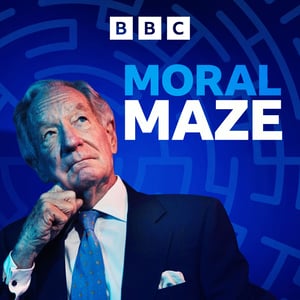
Moral Maze
BBC
4.4 • 626 Ratings
🗓️ 25 July 2024
⏱️ 56 minutes
🔗️ Recording | Apple Podcasts | RSS
🧾️ Download transcript
Summary
The Modern Olympics were founded in 1896 by a Parisian with serious moral principles . Pierre De Coubertin even made up a word for it: Olympism: ‘a way of life based on the joy of effort ..and respect for universal fundamental ethical principles. He thought that sports at an international level could foster respect and peace between nations. This week as the Games get underway in De Coubertin’s city, athletes have been meeting to do just that, talk about the role that sport plays in building bridges. But how much does the modern games live up to these highminded ideals? For detractors, it’s a bloated megagames, always billions over overbudget that displaces communities and marginalises the excluded. What about nationalism and the place of the politics in the competition? The way De Coubertin conceived the idea with nations competing for international glory, means it’s impossible to put nationalism and politics aside. He insisted it was individuals, not countries in competition but the medal tables tell a different story. And the Olympics has often been the battleground to show the triumph of one ideology over another, particularly during the Cold War. Does the Olympics really promote peace as it’s goals suggest or is just ‘war minus the shooting’ as George Orwell wrote. Do the Olympics cause more harm than good? WITNESSES: Dr Shakiba Moghadam, Dora Pallis, Prof David Case Large, Prof David Papineau PANELLISTS:Giles Fraser, Anne McElvoy,Ash Sarkar, Mona Siddiqui Presenter: Michael Buerk Producer: Catherine Murray Assistant Producer: Ruth Purser Editor Tim Pemberton
Transcript
Click on a timestamp to play from that location
| 0:00.0 | BBC Sounds, Music, Radio, podcasts. |
| 0:05.1 | Good evening. George Orwell was, in every sense, a spoil sport. |
| 0:08.8 | He hated games, particularly the Olympics. |
| 0:11.7 | And I fancied as I walked past his statue outside Broadcasting House this evening, |
| 0:15.8 | a brooding sourness at the prospect of them starting up again in Paris this week. |
| 0:20.4 | To him, international sport |
| 0:22.7 | was war minus the shooting that led inevitably, he said, to orgies of hatred. The idea behind |
| 0:29.8 | the reinvention of the Olympics was precisely the opposite, of course. They were perceived as a moral |
| 0:34.9 | project to channel national rivalries into peaceful competition. |
| 0:39.9 | There were ambiguities from the start. |
| 0:42.1 | Berne de Coubertin, the founder of the modern games, |
| 0:45.3 | originally got interested in sport because France had just been humiliated in the Franco-Prussian war. |
| 0:51.0 | And he thought if the French got into games the way the British did, |
| 0:56.3 | they'd put up a better show next time. |
| 1:04.3 | Since then, both staging and winning the games have become as much a matter of national prestige as individual excellence. |
| 1:07.9 | Hitler and Mussolini used them to showcase fascism. |
| 1:13.3 | Stalin was so upset his football team lost the Olympic final, he exiled them all to the Arctic Circle. Money at 2012 London Games cost a million pounds per athlete, politics, |
| 1:22.0 | even in Munich, 1972, murderous terrorism have played a part in the Olympic story. |
| 1:28.2 | And yet the ideal remains. |
| 1:30.3 | The trial of strength, speed, skill, for honour alone. |
| 1:34.6 | So, the Olympic Games, do they do more harm than good? |
| 1:37.9 | Now, moral maze tonight, the panel, Anne McHelvoy, executive editor of the Politico News and Commentary site, |
... |
Please login to see the full transcript.
Disclaimer: The podcast and artwork embedded on this page are from BBC, and are the property of its owner and not affiliated with or endorsed by Tapesearch.
Generated transcripts are the property of BBC and are distributed freely under the Fair Use doctrine. Transcripts generated by Tapesearch are not guaranteed to be accurate.
Copyright © Tapesearch 2026.