
#177 King Philip’s War 1: The Kindling of War
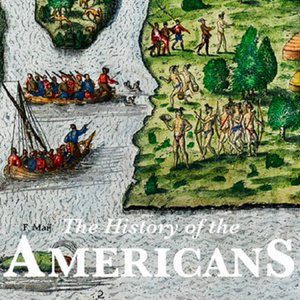
The History of the Americans
Jack Henneman
4.9 • 632 Ratings
🗓️ 16 March 2025
⏱️ 39 minutes
🧾️ Download transcript
Summary
This episode looks at the background causes of the brutal war between the New English colonies of Plymouth, Massachusetts Bay, and Connecticut and their indigenous allies against a tribal alliance including both the Wampanoags and the Narragansetts between 1675 and 1678.
King Philip’s War is the most widely used name of that bloody and arguably existential war. In surveys of American history, it is often the only event between the founding of Jamestown, Plymouth, and Massachusetts Bay and the end of the 17th century that rates more than a sentence or two. This is for good reason, insofar as King Philip’s War changed the trajectory of New England’s history. It is thought to be the bloodiest war in American history as a proportion of the affected population. As many as 1000 colonists died, including perhaps 10 percent of the English men of military age. Three thousand Indians were killed, and as many as a thousand were sold into slavery abroad. The war altered the relationship between the European colonists and the Indians of the region to a far greater degree than the Pequot War or any of the other conflicts that had preceded it, shattered the military and cultural power of New England’s most powerful indigenous nations, and so devastated the English that by some estimates per capita wealth in the region did not return to the level of 1675 until the eve of the American Revolution a century later. The New England frontier, for better or worse, did not advance for forty years after King Philip’s War.
Suffice it to say, we should understand the issues that broke the long peace in the summer of 1675, almost exactly 350 years ago.
Maps of New England during King Philip’s War
X/Twitter – @TheHistoryOfTh2 – https://x.com/TheHistoryOfTh2
Facebook – The History of the Americans Podcast – https://www.facebook.com/HistoryOfTheAmericans
Selected references for this episode (Commission earned for Amazon purchases through the episode notes on our website)
Lisa Brooks, Our Beloved Kin: A New History of King Philip’s War
Jill LePore, The Name of War: King Philip’s War and the Origins of American Identity
Matthew J. Tuininga, The Wars of the Lord: The Puritan Conquest of America’s First People
Pekka Hämäläinen, Indigenous Continent: The Epic Contest for North America
Philip Ranlet, “Another Look at the Causes of King Philip’s War,” The New England Quarterly, March 1988.
Transcript
Click on a timestamp to play from that location
| 0:00.0 | Welcome to the History of the Americans podcast, episode 177. |
| 0:11.4 | I'm your host, Jack Heneman. |
| 0:13.9 | I'm recording this episode on the aides of March, 2025, in Austin, Texas. |
| 0:24.4 | We are telling the history of the lands now encompassed by the United States from the beginning without intentional presentism. The year is 1675. Pecha Hamalayanan |
| 0:33.7 | set the scene in his book Indigenous Continent, the epic contest for North America, |
| 0:40.5 | quote, after more than a century and a half of European colonization on the continent, |
| 0:47.3 | there still was no complete European map of North America. |
| 0:51.7 | Each colonial power perceived the continent from its specific vantage point, |
| 0:56.3 | focusing on a particular slice or slices of it and leaving the would-be colonists exposed. |
| 1:03.1 | The English knew the Atlantic coast and Hudson Bay, the Spanish knew New Mexico and Florida, |
| 1:09.4 | and the French knew the St. Lawrence Valley. |
| 1:12.3 | Only the French, owing to their alliance with interior native nations, had an inkling of the |
| 1:18.4 | vast indigenous continent that stretched out to the horizon from their colonial enclaves. |
| 1:24.8 | Nowhere were Europeans able to dictate to the Native Americans. |
| 1:29.8 | A precise map of North America in 1675 would have shocked those white interlopers who had |
| 1:36.9 | claimed the land for themselves. |
| 1:40.0 | The map would have shown a hatchy belt of English colonies on the coastal plains, |
| 1:45.6 | extending from the contested Acadia, the French claimed it too, to the Chesapeake Bay and the south. |
| 1:53.8 | It would have shown the tiny recently established Charlestown, |
| 1:58.1 | two English posts in James Bay, and an Indian village, only 15 miles from Boston. |
| 2:06.9 | We would also have shown 35 Spanish missions in Florida, reaching from the Atlantic seaboard 200 miles into the interior, |
| 2:16.2 | run by a mere 40 Franciscan priests who ministered to thousands |
... |
Please login to see the full transcript.
Disclaimer: The podcast and artwork embedded on this page are from Jack Henneman, and are the property of its owner and not affiliated with or endorsed by Tapesearch.
Generated transcripts are the property of Jack Henneman and are distributed freely under the Fair Use doctrine. Transcripts generated by Tapesearch are not guaranteed to be accurate.
Copyright © Tapesearch 2026.