
#156 War on the Hudson Part 2
The History of the Americans
Jack Henneman
4.9 • 632 Ratings
🗓️ 5 July 2024
⏱️ 36 minutes
🧾️ Download transcript
Summary
Late in the morning on June 7, 1663, soldiers of the Esopus Indians attacked the fortified Dutch settlements of New Village – now Hurley, New York – and Wildwyck, now Kingston. New Village was fundamentally destroyed. Wildwyck, more populous and better defended, fought off the attack but not before suffering grievous casualties. At New Village, three Dutch men were killed, and 34 women and children were taken captive and carried away. In Wildwyck, twelve men, including three of the garrison soldiers, died immediately, along with two children. Eight more men were injured, including one who died a few days later of his wounds, and the Esopus Indians took ten women and children prisoner.
So began the Second Esopus War.
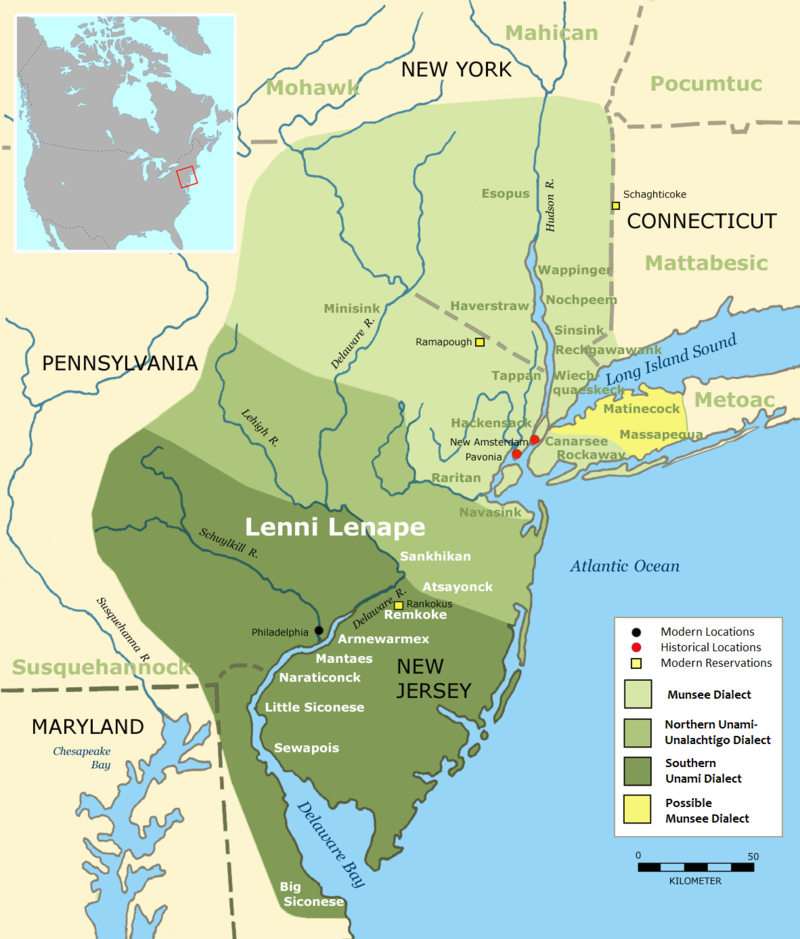
Map of the Indian nations and language groups in the area, discussed in the opening minutes of the episode:
Selected references for this episode (Commission earned on Amazon links)
Martin Kregier, Journal of the Second Esopus War (Translation of the diary kept by the captain of the Dutch military response to the attacks at the New Village and Wildwyck)
Robert S. Grumet, The Munsee Indians: A History
Marc B. Fried, The Early History of Kingston & Ulster County, N.Y.
Transcript
Click on a timestamp to play from that location
| 0:00.0 | Welcome to the History of the Americans podcast episode 156. I'm your host, Jack Heneman, |
| 0:13.2 | and I'm recording this episode on July 4th, 2024 in New Orleans. Happy Independence Day, everyone. |
| 0:22.1 | A decent respect for the opinions of mankind |
| 0:25.6 | requires that we tell the history of the lands |
| 0:29.5 | now encompassed by the United States |
| 0:31.7 | from the beginning without intentional presentism. |
| 0:36.4 | In the last episode on the timeline, War on the Hudson Part 1, |
| 0:42.3 | we talked about the Asopus Indians, |
| 0:44.8 | who occupied both banks of the Hudson River |
| 0:47.6 | in the vicinity of Kingston, New York. |
| 0:50.9 | The Asopas were part of a larger tribal group |
| 0:54.0 | that in the 1720s would come to be known as the Muncie's. |
| 0:59.4 | Robert S. Gremitt in his 2009 book The Muncie Indians A History puts them in context. |
| 1:07.0 | Quote, just 400 years ago, four bears of Delaware-speaking people, who had later |
| 1:15.1 | be known as Muncie's, lived quietly in an ancestral homeland that was wholly their own. |
| 1:22.5 | It was a land of dense forests, broad marshlands and clear waters that stretched across the mid-Atlantic slope |
| 1:30.2 | of North America between the Lower Hudson and Upper Delaware River valleys. Two islands, |
| 1:37.9 | Manhattan on the lower Hudson and minisink in the Upper Delaware, lay at the margins of this homeland. |
| 1:46.6 | Near its eastern end, Indians on Manhattan, looking out on the bay on a fall morning in 1609, |
| 1:54.2 | saw Henry Hudson's ship, the half-moon, sail into and up the river that would bear its captain's name. |
| 2:03.6 | 150 years later, descendants of these same Manhattan Islanders living at Menacek, |
| 2:10.7 | that's on the Delaware River in the far northwest corner of New Jersey, for those of you |
... |
Please login to see the full transcript.
Disclaimer: The podcast and artwork embedded on this page are from Jack Henneman, and are the property of its owner and not affiliated with or endorsed by Tapesearch.
Generated transcripts are the property of Jack Henneman and are distributed freely under the Fair Use doctrine. Transcripts generated by Tapesearch are not guaranteed to be accurate.
Copyright © Tapesearch 2026.