
Show 1346: The Roots of the Herbal Industry
The People's Pharmacy
Joe and Terry Graedon
4.6 • 1.2K Ratings
🗓️ 29 June 2023
⏱️ 59 minutes
🧾️ Download transcript
Summary
Until 1994, when Congress passed legislation on dietary supplements, most people using herbal medicine made it themselves or got it from a friend or family member with a green thumb. Before that time, most stores selling herbs in tinctures, capsules and tea bags were small, and so were the companies supplying them. Now, though, the herbal industry has taken off. What should consumers know so they can use its products safely?
The Roots of the Herbal Industry:
Herbalist Rosemary Gladstar grew up in California and learned a lot about herbs from her Armenian grandmother. In addition, she learned as much as she could from every other herbal expert she encountered. Back in 1972, Rosemary started an herb store in her hometown of Sebastopol. A few years later, she organized the first gathering of herbalists to share their passion and expertise.
Rosemary Gladstar has started a few different herbal companies. Her favorite way of engaging with herbalism is still as a community herbalist, though. She draws upon her knowledge of herbs to provide her neighbors with botanical medicines they can use in case of respiratory infections or other problems. For the most part, she creates these formulations with herbs she grows herself.
How Has the Herbal Industry Changed?
Now, in contrast, the herbal industry has gone global. Companies travel the world to source their herbal teas and tinctures. Moreover, some herbs are available primarily as extracts, which may require sophisticated processing. What should consumers know about this business?
The Business of Botanicals:
Anthropologist Ann Armbrecht has traveled the world studying the herbal industry. She describes how the business of botanicals has changed over the decades. US consumers have to be vigilant, because there is no federal oversight ensuring that herbal medicines meet quality standards. Consequently, we need to ask questions about where the herbal products we take are coming from. How are they produced? Are they grown under organic conditions (or even better regenerative organic certified)? Who creates the formulations?
Dr. Armbrecht describes the Sustainable Herbs Program of the American Botanical Council. This nonprofit organization (ABC) has been educating people about the herbal industry since 1988. It provides valuable information on specific botanical medicines as well as the herbal industry.
This Week’s Guests:
Rosemary Gladstar is internationally renowned for her technical knowledge and stewardship in the global herbalist community. Known as the “God Mother” of modern Herbalism, she has been learning, teaching and writing about herbs for over 40 years. Rosemary is the author of twelve books and director of The Science and Art of Herbalism, an in-depth home study course with thousands of students enrolled across the globe. https://sagemountain.com/
https://www.amazon.com/s?k=rosemary+gladstar+books&i=stripbooks&crid=2A80H5O3SWXPL&sprefix=Rosemary+Gladstar%2Cstripbooks%2C116&ref=nb_sb_ss_ts-doa-p_2_17
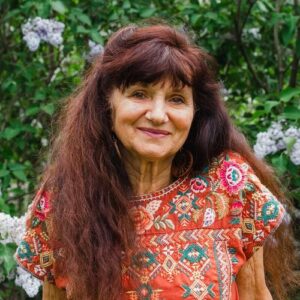
Rosemary Gladstar, Godmother of herbalism
Ann Armbrecht, PhD, is the director of the Sustainable Herbs Program under the auspices of the American Botanical Council. She is a writer and anthropologist (PhD, Harvard 1995) whose work explores the relationships between humans and the earth, most recently through her work with plants and plant medicine. She is the co-producer of the documentary Numen: The Nature of Plants and the author of the award-winning ethnographic memoir Thin Places: A Pilgrimage Home, based on her research in Nepal. Her latest book is The Business of Botanicals: Exploring the Healing Promise of Plant Medicines in a Global Industry.
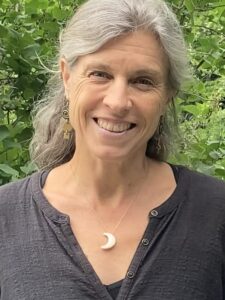
Ann Armbrecht, PhD, author of The Business of Botanicals
Listen to the Podcast:
The podcast of this program will be available Monday, July 3, 2023, after broadcast on July 1. You can stream the show from this site and download the podcast for free.
Transcript
Click on a timestamp to play from that location
| 0:00.0 | I'm Joe Gradyton and I'm Terry Grady. Welcome to this podcast of the People's Pharmacy. |
| 0:06.1 | You can find previous podcasts and more information on a range of health topics at |
| 0:11.5 | People's Pharmacy.com. |
| 0:14.0 | Until the late 20th century, |
| 0:17.0 | pharmacists and physicians valued herbal medicines. |
| 0:20.0 | What happened to this tradition? |
| 0:22.0 | This is the People's Pharmacy with Terry and Joe Grady. After the Second World War, conventional medicine embraced synthetic pharmaceuticals and dismissed botanical medicines. |
| 0:41.0 | But the public wasn't ready to discard the healing |
| 0:45.3 | traditions of herbalism. |
| 0:47.0 | herbs have become big business. Walk into any Whole Foods market, grocery store, or pharmacy, |
| 0:53.8 | and you'll find a vast array of herbal products. |
| 0:57.1 | We'll trace the evolution of this business |
| 0:59.1 | from a tiny corner store in Sebastopol, California, |
| 1:02.3 | to the giant global marketplace of the 21st century. |
| 1:05.3 | Coming up on the people's pharmacy, Health Headlines, people who can't handle statins have a new alternative to lower their cholesterol. |
| 1:22.0 | A large study of Bmpidoeic acid published in April |
| 1:26.4 | showed that this cholesterol lowering drug can reduce heart attacks among people with established |
| 1:31.6 | cardiovascular disease. |
| 1:33.0 | A new analysis of more than 4,000 of the study volunteers who were at very high risk for heart disease |
| 1:40.0 | but did not yet have it shows that maimedoeic acid can reduce deaths and heart attacks for them. |
| 1:47.0 | Follow-up over nearly 40 months revealed that 5.3% of those on the drug experienced a heart attack, stroke, coronary revascularization, or death from |
| 1:57.5 | cardiovascular causes. Among those on placebo, that figure was 7.6%, yielding a relative risk reduction of 30%. |
... |
Please login to see the full transcript.
Disclaimer: The podcast and artwork embedded on this page are from Joe and Terry Graedon, and are the property of its owner and not affiliated with or endorsed by Tapesearch.
Generated transcripts are the property of Joe and Terry Graedon and are distributed freely under the Fair Use doctrine. Transcripts generated by Tapesearch are not guaranteed to be accurate.
Copyright © Tapesearch 2026.