
meta_pixel
Tapesearch Logo
Log in
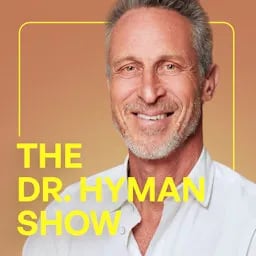
The Dr. Hyman Show

A Fish Story: How To Improve Your Health While Protecting The Oceans with Paul Greenberg

The Dr. Hyman Show

Dr. Mark Hyman

Health & Fitness, Nutrition, Medicine

4.68.7K Ratings

🗓️ 12 February 2020

⏱️ 86 minutes

🧾️ Download transcript

Summary

Fish is one of the most nutritious food sources on the planet, especially when it comes to protein. But I’m usually scared to eat it. That’s because some seafood is at risk for toxicity that can harm our health, not to mention certain aquaculture methods are contributing to declining populations and even the acidification of our oceans. It’s not all bad, but it is complex. There are several important things we should think about in order to reap the health benefits from fish and act as environmental stewards at the same time. 


To better understand seafood I sat down to talk with Paul Greenberg for this week’s episode of The Doctor’s Farmacy. Paul is the bestselling author of Four Fish, American Catch, and The Omega Principle. A regular contributor to the New York Times and many other publications, Mr. Greenberg is the writer-in-residence at the Safina Center, a Pew Fellow in Marine Conservation and the recipient of a James Beard Award for Writing and Literature. He appears frequently on American and international radio and television programs and is the featured correspondent and co-writer of the 2017 PBS Frontline documentary The Fish On My Plate which, along with his TED talk, has reached millions of viewers.


This episode is brought to you by ButcherBox. ButcherBox is committed to humanely raised animals that are never given antibiotics or added hormones and since they take out the middleman you get extra savings. Right now ButcherBox has a special offer, get 2lbs of wild-caught Alaskan sockeye salmon and 2 grass-fed filet mignon steaks for free in your first order PLUS $20 off your first box - just go to ButcherBox.com/farmacy. Make sure you order before February 25, 2020 to take advantage of this great deal.


Here are more of the details from our interview: 


  • Why I’m scared to eat fish and why Paul is optimistic about our oceans (6:55)


  • Overfishing and the declining fish population around the world (17:57)


  • How our monoculture is leading to the creation of dead zones in our waters (25:48)


  • Pros and cons of aquaculture (27:26)


  • The nutritional value and toxin levels of farmed salmon (31:37)


  • The decline of our oceans from an environmental point of view and the death of phytoplankton (38:36)


  • The most effective way to test for mercury exposure (44:10)


  • The best types of fish for you to eat (53:13)


  • Fish oil, omega-3 deficiency, and veganism (1:00:47)


  • The issue of microplastics in the ocean (1:15:44)


  • Resources:

Marine Stewardship Council (MSC) https://www.msc.org/home 

Aquaculture Stewardship Council (ASC) https://www.asc-aqua.org/ 

Best Aquaculture Practices (BAP) https://www.bapcertification.org/ 

Monterey Bay Aquarium’s Seafood Watch https://www.seafoodwatch.org/

Greenpeace’s Carting Away the Oceans Report: 2018 Supermarket Seafood Ranking https://www.greenpeace.org/usa/research/carting-away-the-oceans-10/

Seek out a “Community Supporting Fishery” or CSF through www.localcatch.org 


Hosted on Acast. See acast.com/privacy for more information.

Transcript

Click on a timestamp to play from that location

0:00.0

Coming up on this week's episode of the doctor's pharmacy.

0:02.6

I want people to come to the fish conversation not feeling like all is lost.

0:06.8

I want people to come to the fish conversation to know that the oceans are still extremely vital.

0:11.1

Hey everyone, it's Dr. Mark Heim in here.

0:15.5

Now I'm always being asked how to source high quality meat and seafood.

0:19.6

So I want to share one of my favorite resources with you that I use to get high quality protein in my own diet.

0:27.0

Now unfortunately, most meat and seafood at the grocery store is not serving our health or the planet for that matter.

0:34.2

Conventional race animals have higher levels of inflammatory fats, not to mention all the antibiotics, hormones, and other harmful compounds that we just should not eat.

0:44.4

In the seafood, well that can be full of heavy metals and other toxins or just lacking nutrients in general because they're farm raised.

0:51.7

And don't even get me started on the environmental and the inhumane aspects of conventional meat and seafood production either.

0:59.1

That's another huge issue that we can improve by shopping more consciously.

1:04.2

And that is why I love butcher box.

1:08.4

They make it super easy to get you mainly raised meat that you can trust delivering it right to your doorstep.

1:15.0

Butcher box has everything you could want like a hundred percent grass fed and grass finished beef, wild caught, Alaska and Sakai salmon, and the shipping.

1:22.8

Well it's always free.

1:24.4

Butcher box is committed to humanely raised animals that are never given antibiotics or added hormones.

1:29.7

And since they take out the middle man, you get extra savings.

1:34.3

There's a major stipulation that I always tell my patients about when it comes to animal protein.

1:38.4

Quality needs to be a priority.

1:41.3

And with butcher box, you can feel good knowing you're getting the highest quality meat and seafood.

1:46.0

It will help you thrive.

1:47.4

Right now at butcher box, they have a special offer.

...

Please login to see the full transcript.

Disclaimer: The podcast and artwork embedded on this page are from Dr. Mark Hyman, and are the property of its owner and not affiliated with or endorsed by Tapesearch.

Generated transcripts are the property of Dr. Mark Hyman and are distributed freely under the Fair Use doctrine. Transcripts generated by Tapesearch are not guaranteed to be accurate.

Copyright © Tapesearch 2025.