
3/8: American Civil Wars: A Continental History, 1850-1873 Hardcover – May 21, 2024 by Alan Taylor (Author)
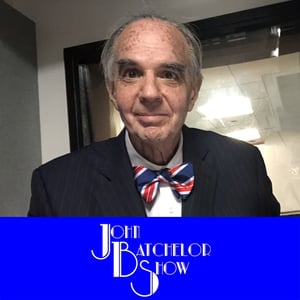
The John Batchelor Show
John Batchelor
4.5 • 2.8K Ratings
🗓️ 10 August 2024
⏱️ 14 minutes
🧾️ Download transcript
Summary
by Alan Taylor (Author)
https://www.amazon.com/American-Civil-Wars-Continental-1850-1873/dp/1324035285
In a fast-paced narrative of soaring ideals and sordid politics, of civil war and foreign invasion, the award-winning historian Alan Taylor presents a pivotal twenty-year period in which North America’s three largest countries―the United States, Mexico, and Canada―all transformed themselves into nations. The American Civil War stands at the center of the story, its military history and the drama of emancipation the highlights. Taylor relies on vivid characters to carry the story, from Joseph Hooker, whose timidity in crisis was exploited by Robert E. Lee and Stonewall Jackson in the Union defeat at Chancellorsville, to Martin Delany and Mary Ann Shadd Cary, Black abolitionists whose critical work in Canada and the United States advanced emancipation and the enrollment of Black soldiers in Union armies.
1865 RICHMOND
Transcript
Click on a timestamp to play from that location
| 0:00.0 | This is CBSi on the world. I'm John Bachelor visiting with Professor Alan Taylor of the University of Virginia |
| 0:07.0 | his new book American Civil Wars, A Continental History 1850 to 1873. |
| 0:14.2 | The three republics, well two republics and one Dominion, watching each other at this time and |
| 0:21.6 | watching especially the outspoken and aggressive voices of men from |
| 0:27.4 | the South. There was an opinion at the time that the South dominated the U.S. Congress. It was called the |
| 0:34.4 | slaveocracy and it was organized and aggressive with some very, very well-spoken |
| 0:40.8 | politicians. We need to meet some of them to understand the rhetoric |
| 0:45.6 | of the period. Professor John C. Calhoun, I always think of him coming into the |
| 0:51.6 | room and you can smell sulfur. |
| 0:53.8 | Who was he? What do we need to know about him? |
| 0:56.8 | Well you could also smell intellect. |
| 0:58.4 | He's one of the smartest men to ever be in the US Senate. |
| 1:02.2 | And he had started out his career as a great nationalist in the 18th. |
| 1:08.4 | But as the South began to lag behind the northern states in population and economic development. |
| 1:16.7 | That meant lagging behind in political power in the House of Representatives. |
| 1:22.3 | And Calhoun then became very concerned about a future in which the northern states |
| 1:29.7 | would be dominant and they might interfere in Southern society and in particular |
| 1:35.1 | with the defining institution of Southern society which was chattels slavery. |
| 1:40.1 | So Calhoun devoted his later career not to boosting the United States, but by trying to limit the |
| 1:49.6 | power of the federal government to do anything within the states. |
| 1:54.8 | He became a great champion of states rights. |
| 1:57.8 | Now he's a complex man in that he was not on board with many other southerners who were trying to expand slave society into Texas, Mexico, Cuba, Sano Domingo, in that he saw that as expanding the power of the federal |
... |
Please login to see the full transcript.
Disclaimer: The podcast and artwork embedded on this page are from John Batchelor, and are the property of its owner and not affiliated with or endorsed by Tapesearch.
Generated transcripts are the property of John Batchelor and are distributed freely under the Fair Use doctrine. Transcripts generated by Tapesearch are not guaranteed to be accurate.
Copyright © Tapesearch 2026.