
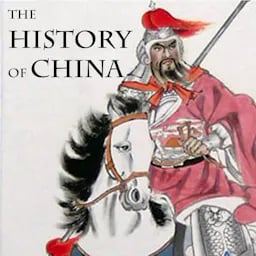
#240 - Ming 27: The Solecism of Power
The History of China
Chris Stewart
4.6 • 1.2K Ratings
🗓️ 9 September 2022
⏱️ 42 minutes
🧾️ Download transcript
Summary
Transcript
Click on a timestamp to play from that location
| 0:00.0 | You're listening to an airwave media podcast. |
| 0:30.9 | Hello and welcome to the history of China. |
| 0:37.6 | Episode 240, the Solicism of Power. |
| 0:44.2 | To speak now of the true temper of empire, it is a thing rare and hard to keep. |
| 0:50.0 | Both temper and distemper consist of contraries. |
| 0:53.8 | But it is one thing to mingle contraries, another to interchange them. |
| 0:58.6 | The answer of Apollonius to Vespasian is full of excellent instruction. |
| 1:03.4 | Vespasian asked him, what was Nero's overthrow? |
| 1:07.6 | He answered, Nero could touch and time the heart well. |
| 1:11.6 | But in government, sometimes he used to wind the pins too high, sometimes to let them down too low. |
| 1:18.8 | And certain it is that nothing destroyer authority so much as the unequal and untimely |
| 1:24.0 | interchange of power pressed too far and then relaxed too much. |
| 1:28.9 | This is true that all the wisdom of these last times in princes affairs is rather fine |
| 1:34.3 | deliveries and shifting of dangers and mischiefs when they are near, then solid and grounded |
| 1:39.3 | courses to keep them aloof. But this is to try masteries with fortune. |
| 1:44.8 | And let men beware how they neglect and suffer matter of trouble to be prepared. |
| 1:49.6 | For no man can forbid the spark nor tell when it may come. |
| 1:53.6 | The difficulties in princes' business are many and great, but the greatest difficulty |
| 1:58.4 | is often in their own mind. For it is common with princes, say it's tassitus, to will |
| 2:04.7 | contradictories. Sunt Ploronque regum volentates, at inter say contrariere. |
| 2:12.1 | The desires of kings are often vehement and contradictory with one another. |
| 2:16.7 | For it is the solidism of power to think to command the end and yet not to endure the mean. |
... |
Please login to see the full transcript.
Disclaimer: The podcast and artwork embedded on this page are from Chris Stewart, and are the property of its owner and not affiliated with or endorsed by Tapesearch.
Generated transcripts are the property of Chris Stewart and are distributed freely under the Fair Use doctrine. Transcripts generated by Tapesearch are not guaranteed to be accurate.
Copyright © Tapesearch 2026.