
236: A Word to Remove from Our Vocabulary for Stronger Relationships - Should
The Simple Sophisticate - Intelligent Living Paired with Signature Style
Shannon Ables
4.7 • 944 Ratings
🗓️ 3 December 2018
⏱️ 27 minutes
🧾️ Download transcript
Summary
"You should read this."
"You should do this."
"You shouldn't be wasting your time doing . . . "
Over the past couple years I have been wrestling with the uncomfortability that piques me any time a friend, family member or even complete stranger states something including the word "should" in the declaration.
And after much grappling, I discovered the root of my uneasiness each time the word would be stated/written with such ease from a speaker. Rather than motivating or inspiring one to act in a particular manner, it was dictating.
The strength of a civilized society is how well it effectively communicates. Defined by Livestrong, effective communication is the act "of sharing information, thoughts and feelings . . . through speaking, writing or body language to require that transmitted content [be] received and understood by someone in the way it was intended".
The gift of a free society, of a democratic society, is that the people have choices of what they will or will not do. And while, arguable, yes, having what often feels like infinite choices can be numbing, inspiring us to choose either the easy route or no route at all due to paralysis, we do have a choice.
Because we have choices about who we build friendships with, who we choose to share our hearts with, and how we choose to build our lives, once we recognize that letting go and refraining from telling others how to live is a pillar for stronger, healthy relationships, we no longer are cowed into being dictated to by those who know no other way to lead or direct.
In our modern society, when we eliminate "should" from our vocabulary, we not only strengthen our relationships, we convey respect to others and their journey as well as our own. How? Let's take a look at benefits of letting go of the word "should" from our everyday conversations with others and ourself.
When we refrain from using the word "should" (also, should not) in our vocabulary . . .
1.We exemplify our open-mindedness
When we don't have expectations regarding how others "should" act, we communicate nonverbally, that there are many different ways for people to live. Simply because someone goes about life differently than we do, does not mean it is wrong. It is merely different. Ultimately, by not using the word "should", we open the door for further communication so that more understanding of both sides can be brought forth.
2. We communicate responsibility for our life journey
Not only is using "should" unhelpful for our relationships with others, it is also disastrous for the relationship we have with ourself. When we tell ourselves what we "should" be doing, we are implying judgment upon our actions, as if we do not have control - when we know cognizantly we absolutely, we do have control.
A better approach to this unhelpful default of how we communicate with ourselves is, as was shared on Tiny Buddha, is to remind ourselves of the benefits of the behavior we would like to practice, but is more difficult to perform. As well, by reminding ourselves of the characteristics we wish to project to the world and the values that are important to us, it becomes easier to do what we know would be best to live the life we love living.
3. We reduce destructive self-criticism
In episode #122 (Why Not . . . Have Self-Compassion?), I shared in detail the benefits of reducing or eliminating self-criticism in order to improve the overall quality of our lives. After all, how we treat ourselves is how we allow others to treat us, so when we show ourselves respect, we headline to the world that we know and believe ourselves to be deserving of respect.
4. We become honest observers of our lives (emotions, actions, etc.) and navigate them healthily for positive growth
Writer Hannah Braime shared honestly that when she would feel jealous or angry, she would beat herself up verbally for feeling said feelings. In actuality, she discovered that instead of ignoring them, she needed to explore them, in order to better understand herself and how she engaged with the world around her. In so doing, we learn, we become students of life, and enable real growth to occur.
5. We celebrate the vast goodness, rather than moan when our narrow and limiting expectations were not met
As I shared in a recent KATU segment on the keys to contentment, the difference between having expectations (which includes using the word "should") and hope (keeping an open mind) is that we are better able to see all the awesomeness that surrounds us. The analogy I used was expectations is akin to viewing life through a peep hole (narrow), versus viewing life through a house that has floor to ceiling windows and walls - wide open.
6. We shift our outlook to being positive, rather than looking for the problems, the hiccups, the one detail that just isn't right in our minds
By choosing to keep an open-mind, we see more, we come to understand there is far more goodness and awesomeness than we may have initially believed because we are not drilling down and solely focusing on that one singular behavior, outcome, etc.
7. We and others we work with and around become more productive
Inspired workers, inspired people are more engaged, filled less with fear and thus have more energy to produce good work. Fear cultivates stress, stress expends energy, and that is energy that can be used for positive progress rather than gently walking a tightrope trying to figure out what we are supposed to do to avoid the wrath of our boss, our colleague, our partner, our friend, our parents, etc.
8. We begin to be inspired to work and tend to tasks that are on our to-do list, rather than doing them with dread or displeasure.
Changing the way we think and speak, eliminating the "should", is a shift, and for most of us, a big shift, that will take time. But if we are only living in such a way because we think we "should", we are not living well.
We want to live our everydays with purpose, but also contented engagement. Knowing why we are doing anything is a simple way to provide motivation rather than dread. When we have purpose for what we are doing, we can engage with an uplifting and happy disposition, rather than just trying to complete something in order to get it done.
Writer Jack Ninivaggi points out that when we look at the word "should" as it is defined, we can better understand how destructive using it in our everyday language can be: "Verb: 1. used to indicate obligation, duty, or correctness, typically when criticizing someone's actions." Approaching a conversation that aims at seeking change is less likely to be effective when the tone is critical. As noted initially, inspiring action yields more of the results we seek more often.
The words we use are powerful, and as has been discussed on the blog and podcast before, sometimes we get into defaults that are not positively enhancing our lives. Check your dialogue and how you speak to those you love - which includes yourself. Are you inspiring or dictating? If you are doing the latter, perhaps that is why some relationships have peetered out or are not as strong as you would like. And if you have embodied the former, keep up the practice as it is a habit that while seemingly insignificant, can truly life changing.
~SIMILAR POSTS/EPISODES FROM THE ARCHIVES YOU MIGHT ENJOY:
~Why Not . . . Cultivate Contentment Today?
~One Small Adjustment Away from Contentment
~Learn more about TSLL's Weekly Newsletter
Petit Plaisir:
~A Simply Luxurious Holiday Playlist
~TSLL's 2018 Holiday Gift Guide
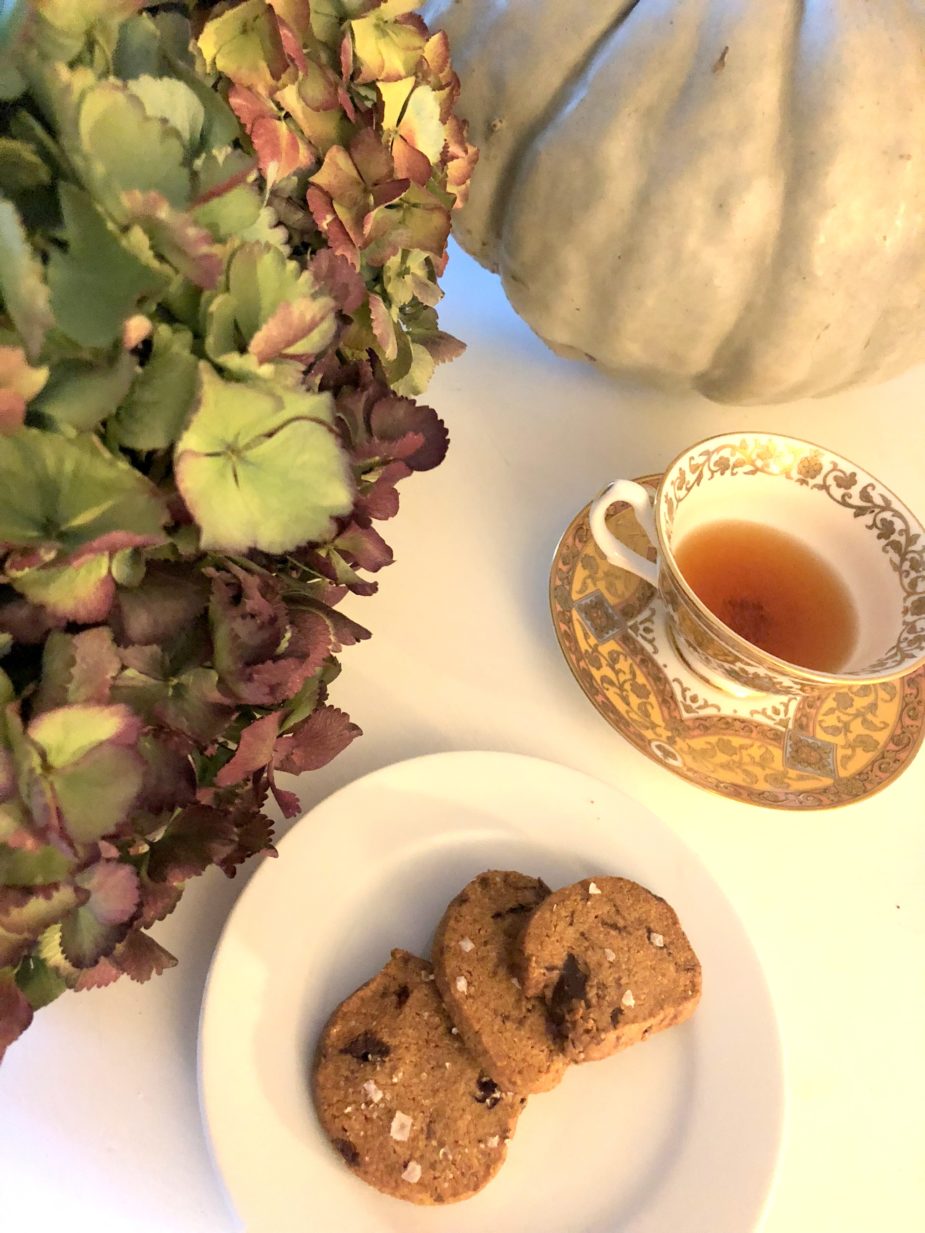
~Chocolate Almond Praline Cookies (a Petit Plaisir from #183)

Transcript
Click on a timestamp to play from that location
| 0:00.0 | Welcome to the simple Sophisticate Podcast, where intelligent living is paired with signature style. |
| 0:16.3 | I'm your host, Shannon Ables. |
| 0:18.8 | And whether you're listening on your commute, exercising, working in the garden, or sitting down with a hot cup of tea or a |
| 0:25.0 | cafe ole, thank you for tuning in. Let's get started. Welcome to the 236th episode of the Simple Sophisticate and welcome to December |
| 0:50.0 | happy holidays everyone today's topic is actually one that will strengthen |
| 0:54.6 | your relationships, whether it's at home, at work, with friends, with romantic partners, |
| 1:00.0 | everywhere you go and especially during this time of year when we're with a lot of |
| 1:04.8 | different people than maybe we normally are, sometimes we're with family more often, |
| 1:08.9 | and we also may hear a lot of different expectations or feel a lot of expectations from people. |
| 1:15.2 | There's a simple way to hopefully improve every relationship we step into with regards |
| 1:21.1 | to what energy and word choice we bring to the conversation. |
| 1:25.7 | So we're going to talk about what that word is here in a second, but before I get to today's |
| 1:30.2 | topic, this week's Petit-Plazir is a bit of a three-fer, more than a two-fer, but a three-fer, and hopefully |
| 1:36.9 | it'll get you started to dive into this holiday season with a cheerful heart and excitement for this festive time of year, however you enjoy |
| 1:45.4 | spending it. So stay tuned as we'll talk about those at the end of this episode. |
| 1:50.3 | But let's get right into today's topic. Today's topic is titled a word to remove |
| 1:56.7 | from our vocabulary for stronger relationships. Should. So we're going to focus on that word should and why it might be a good idea to |
| 2:06.4 | consider number one am I saying it more than I realize? Am I receiving it or |
| 2:11.6 | hearing it more than I really realize? |
| 2:14.0 | And if so, how can I shift that and why should I shift that? |
| 2:18.0 | So just to begin our conversation, a few examples, |
| 2:22.0 | general examples, but examples. You should read this. You should do this. You |
... |
Please login to see the full transcript.
Disclaimer: The podcast and artwork embedded on this page are from Shannon Ables, and are the property of its owner and not affiliated with or endorsed by Tapesearch.
Generated transcripts are the property of Shannon Ables and are distributed freely under the Fair Use doctrine. Transcripts generated by Tapesearch are not guaranteed to be accurate.
Copyright © Tapesearch 2026.